
Every drug, device and therapy that reaches patients starts as a study, and for more than two decades the public record of those studies in the United States has lived in one place: ClinicalTrials.gov. Run by the National Library of Medicine (NLM) at the National Institutes of Health, the registry has quietly undergone one of the largest technology overhauls in federal health data. In May 2026, NLM announced that its multi-year modernization of both the public website and the submission sys...
More
ClinicalTrials.gov
The ‘Miracle’ Berry that could replace sugar

This miracle berry that grows in West Africa contains Miraculin, a glycoprotein which was first extracted back in 1968. The local population knew the effects for much longer and chewed the fruit pulp to make sour maize bread tastier. The surface of our tongue is covered by a multitude of different receptors to detect tastes from sweet to umami. Just like sugar and artificial sweeteners like aspartame, the miraculin in the berry binds to your sweet taste receptors, but far more strongly. The acid...
More
Scientists Discover the Key to Making Slow Melting Ice Cream

Scientists have discovered a naturally occurring protein that can be used to create ice cream that is more resistant to melting than conventional products. The protein binds together the air, fat and water in ice cream, creating a super-smooth consistency. The new ingredient could enable ice creams to keep frozen for longer in hot weather. It could also prevent gritty ice crystals from forming, ensuring a fine, smooth texture like those of luxury ice creams. The development could allow products ...
More
Scientists explain earthworms’ ability to counteract plant toxins
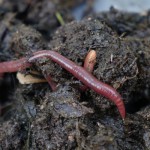
Earthworms have chemical compounds that help them overcome toxic plant defenses to digest difficult leaf litter.
Researchers have identified unique chemical compounds in the digestive tracts of earthworm species which counteract the defensive toxins produced by plants, allowing earthworms to consume them safely.
Many plants produce defensive chemicals called polyphenols. By binding gut enzymes, polyphenols inhibit the digestion of plant matter. Dead plants retain these chemicals even as th...
More
Hendo – The world’s first real hoverboard

Making large complexes float might be a way to avoid the severity of damages caused by earthquakes. The amazing Hendo hoverboard is the brainchild of married couple and entrepreneurs Greg and Jill Henderson. Henderson postulated that making large complexes float might be a way to avoid the severity of damages caused by California earthquakes.
It could be utilized to move people and goods more efficiently, for saving lives and livelihoods during earthquakes and floods.
The hoverboard’s cor...
More
A revolutionary way to treat acne with nanoparticles
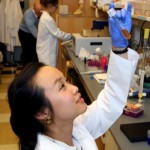
Lauric acid – a natural product found in coconut oil and human breast milk -- shines as a possible new acne treatment.
A revolutionary and Innovative system of using ‘nano- bombs’ to treat acne has been developed by Dissaya Nu Pornpattananangkul, a doctoral bioengineering student at the University of California San Diego .
Common acne also known as "acne vulgaris," afflicts more than 85 percent of teenagers and over 40 million people in the United States and current treatments have undesir...
More