
Most people who learn to scuba dive start the same way: in a pool, with rented gear, and an instructor reminding them to watch their depth and air. The dive computer on their wrist is supposed to make that easier, yet many entry-level models have small, hard-to-read screens and menus that feel built for experts. Garmin is aiming squarely at that gap. According to Garmin's announcement on November 3, 2026, the new Descent X10 is a dedicated dive computer designed to put "critical dive informatio...
More
dive computer
AquaFresco – Reinventing laundry

AquaFresco provides the state-of-the-art filtration technology which regenerates 95% of laundry wastewater. Three MIT grad students have invented a washing-machine filter that cleans wastewater and reuses it over and over again. “Washing machines are one of the major sources of detergent pollution in rivers,” Huang says. “Current laundry technology is not sustainable. A regular washer discards the water right into the drain after one usage, but less than 1 percent is the actual waste component.”...
More
Drive-by heat mapping

Technology that can scan large areas to find which buildings are leaking heat and wasting energy. The latest news from MIT is regarding Essess bringing “drive-by” innovations to energy efficiency in homes and businesses. Over the past few years, Essess Inc. has deployed cars mounted with imaging sensors to drive around the U.S. creating heat maps that show which homes aren’t sealed properly, wasting energy and their owners’ money.
The startup deploys cars with thermal-imaging rooftop rigs tha...
More
Researchers creating rapid diagnostic test for blood infections.
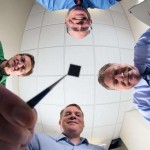
BYU is leading a collaborative team that has just kicked off a massive multidisciplinary effort to combat a threat to global health, the rising prevalence of bacteria that can’t be treated by antibiotics. Four BYU professors from three colleges have joined forces on the multi-year, National Institutes of Health-sponsored effort to create a faster diagnostic test for drug-resistant blood infections. As it stands now, diagnostic tests for these types of infections can take up to three days to prod...
More
MIT invents ‘breakthrough’ 3D printer that can print 10 different materials simultaneously
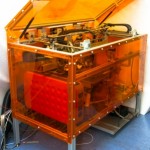
Researchers from MIT's Computer Science and Artificial Intelligence Laboratory (CSAIL) have made a breakthrough in the field of 3D printing, developing a 3D printer prototype that is able to print up to 10 different materials simultaneously onto a single object.
Delivering resolution at 40 microns or less than half the width of a human hair, the “MultiFab” system is the first 3-D printer to use 3-D-scanning techniques from machine vision, which offers two key advantages in accuracy and conven...
More
Journey to Mars: Detour to the Moon is the best way to travel to the Red Planet.

As NASA gears up for a mission to Mars, planning a route to the Red Planet is important. Now, researchers have found that to save on weight and have concluded that a detour to the moon is the best route to Mars. Previous studies have suggested that lunar soil and water ice in certain craters of the moon could potentially be mined and converted to fuel. With the assumption that this tech exists at the time of a Mars mission, taking a detour to the moon to refuel actually reduces the mass of a mis...
More
Tiny technology helps save the honey bees.

Microsensors may be the key to solving the mystery behind the collapse of honeybee colonies. Australian researchers announced that they have attached tiny, top-of-the-line trackers to about 10,000 healthy honeybees in an effort to find out what is driving a decline in the pollinators’ global population. The experiment, supported by an international group of scientists, farmers, beekeepers, and tech companies, is the latest to use tracking and tagging technology to study animal behavior and resp...
More
Hendo – The world’s first real hoverboard

Making large complexes float might be a way to avoid the severity of damages caused by earthquakes. The amazing Hendo hoverboard is the brainchild of married couple and entrepreneurs Greg and Jill Henderson. Henderson postulated that making large complexes float might be a way to avoid the severity of damages caused by California earthquakes.
It could be utilized to move people and goods more efficiently, for saving lives and livelihoods during earthquakes and floods.
The hoverboard’s cor...
More
NASA developed technology aims to save commercial airlines fuel and time

NASA’s latest technology for commercial airlines could save them fuel and time. The space administration's software is called the Traffic Aware Planner. This software helps to reduce fuel consumption, carbon emissions and cut travel times in commercial airlines.
This latest technology is loaded on a tablet and will not require any major change to the already established aviation roles of pilots and ground crew, so the technology can be implemented right away. The app works by reading the plan...
More
The Reveeco EcoVéa recycling shower

Possibly the world’s most intelligent shower, EcoVéa recycles water within your shower to push the limits of water conservation. The EcoVéa is a revolutionary ecological shower system that provides considerable water and energy savings, whatever the length, flow, or temperature of the shower. You can now enjoy long, comfortable, guilt-free showers.
Promising a savings of up to 80% on both water and energy, the Ecovea system recycles water for immediate reuse, letting you shower in a sort of g...
More
Young scientist bags Google science prize for Ebola express detection kit.

Olivia Hallisey of Greenwich, won the top prize for her Ebola test kit in the fifth annual Google Science Fair, which honored nine students aged 13 to 18 from all over the world last week. The Connecticut-based sophomore from Greenwich High School invented the much needed "novel temperature-dependent, rapid, simple and inexpensive Ebola detection platform." It could soon be much easier to diagnose Ebola thanks to this student’s new invention.
Aid workers in Ebola-stricken regions could soon b...
More
A Novel Stethoscope Save Costs and Save Lives

A new cardiac stethoscope funded by the National Science Foundation (NSF) helps doctors detect heart failure more effectively than ever before.
Despite advances in medicine that make many heart conditions treatable, the absence of effective, early diagnosis often leads to sudden, unexpected deaths. Annually more than one million patients are hospitalized due to heart failure and the cost of health care services, medications to treat heart failure etc. are tremendous. Furthermore most of the p...
More