
Quantum computers usually live in a handful of corporate labs, far from the people who might use them. On November 6, 2026, IBM, the University of Chicago, the State of Illinois and the Illinois Quantum and Microelectronics Park (IQMP) unveiled an IBM Quantum System Two in Chicago, the company's first quantum computer in Illinois and, in IBM's words, its most advanced system available.
The machine is now operational at Hyde Park Labs, hosted by the University of Chicago, and is built around...
More
IBM Quantum System Two
Magnetic 3D printing from Northeastern could help newborns

Researchers at Northeastern University are developing patient-specific 3D printed medical devices for newborns. Anything to do with babies tugs at the heartstrings of most anyone, so the idea of patient-specific catheters made to offer greater support to premature newborns is exponentially inspiring. Their innovative designs are different indeed in that they use magnetic fields to mold 3D printed material into customized devices and products. Meant to be more durable, as well as lightweight, Nor...
More
RapidSOS acts as a fast “data pipeline” for 911

Mobile app automatically sends a caller’s location and medical data to dispatch centers.
RapidSOS, a startup with MIT roots, is gearing up to release a one-touch 911 app that automatically sends location and preset medical data from a smartphone to dispatch centers, with aims of drastically reducing the time it takes first responders to get to a scene.
According to the Federal Communications Commission (FCC), around 70 percent of 911 calls today are made via mobile phones. Yet when fieldin...
More
Smart Pills for collecting data inside the body
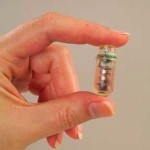
Imagine if a vitamin sized pill could collect medical data from your body. Companies such as SmartPill have come out with wireless devices contained in tiny capsules to collect information from inside the body.
The SmartPill capsule includes miniaturized sensors or cameras, a printed circuit board and tiny batteries that work to collect medical data as it makes its way through a person's gastrointestinal tract.
Once swallowed, the device collects the required information, stores the data a...
More