
Your skin is superb at keeping things out, which is great until a medicine needs to get in. A team at Georgia Tech has designed a fix that looks, under a microscope, like a tiny spiky ball, and on November 4, 2026 the university described a new version built to disappear after use.
A cream-friendly alternative to patches
Mark Prausnitz, a Regents' Professor in Georgia Tech's School of Chemical and Biomolecular Engineering, has spent years working on ways to move drugs through the skin's oute...
More
microneedles
Wearable robot for autonomous motion assistance
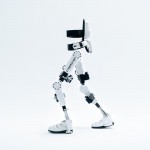
'HAL' a company in Japan has developed wearable robot for autonomous motion assistance which is controlled by the person's brain wearing the suit.
When a person moves its body, the brain sends various signals to muscles via nerves. At that time, the signals leak out on the skin surface as BES. HAL for Living Support – Lower Limb Type Model reads a wearer’s BES and reinforce the lower limb’s muscle power accordingly. Consequently Robot Suit assists the wearer to walk, stand up and sit down by ...
More