
Most drugs work by changing a conversation between proteins. A hormone binds a receptor, the receptor grabs a partner, and a signal travels through the cell. Yet the standard way to search for new medicines mostly asks a narrower question: does this molecule stick to a target? On November 5, 2026, the Wyss Institute at Harvard announced a platform that asks the better question directly: does this molecule change how two proteins interact?
The platform is called FIND, short for Functional Intera...
More
Science
Wearable robot for autonomous motion assistance
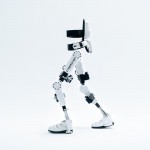
'HAL' a company in Japan has developed wearable robot for autonomous motion assistance which is controlled by the person's brain wearing the suit.
When a person moves its body, the brain sends various signals to muscles via nerves. At that time, the signals leak out on the skin surface as BES. HAL for Living Support – Lower Limb Type Model reads a wearer’s BES and reinforce the lower limb’s muscle power accordingly. Consequently Robot Suit assists the wearer to walk, stand up and sit down by ...
More