
Most drugs work by changing a conversation between proteins. A hormone binds a receptor, the receptor grabs a partner, and a signal travels through the cell. Yet the standard way to search for new medicines mostly asks a narrower question: does this molecule stick to a target? On November 5, 2026, the Wyss Institute at Harvard announced a platform that asks the better question directly: does this molecule change how two proteins interact?
The platform is called FIND, short for Functional Intera...
More
Wyss Institute
Updated Earthquake Detection System Provides Data in Minutes

NASA and Scripps Institute of Oceanography have developed an earthquake detection system that provides more accurate data about an earthquake within minutes.
When an earthquake strikes, the most valuable information (that is needed immediately) includes its location, depth, and magnitude. The quality of the information and how fast it can be obtained affects the number of lives that can be potentially saved.
Currently, seismic sensors on the ground are used to measure how much the eart...
More
Wearable robot for autonomous motion assistance
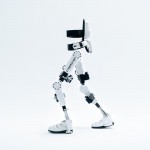
'HAL' a company in Japan has developed wearable robot for autonomous motion assistance which is controlled by the person's brain wearing the suit.
When a person moves its body, the brain sends various signals to muscles via nerves. At that time, the signals leak out on the skin surface as BES. HAL for Living Support – Lower Limb Type Model reads a wearer’s BES and reinforce the lower limb’s muscle power accordingly. Consequently Robot Suit assists the wearer to walk, stand up and sit down by ...
More