
Electronics that talk to living tissue face an awkward bargain. To exchange signals, they have to let ions, and the water those ions travel in, move through their materials. That same water can swell and slowly wreck the device. Penn Engineering researchers say they have found a way around the bargain, and the result is striking: a transistor that is not just more durable but roughly 67 times faster.
The work, led by Assistant Professor Yuanwen Jiang and published in Nature Materials, was anno...
More
Nature Materials
Tail Lights Rider System for keeping horses safe at night.

Riding horses in low light poses some obvious dangers, particularly in areas where they're forced to share the road with drivers who could become easily distracted. Sadly, for Tail Lights creator Sami Gros, it took a near-tragedy to inspire a solution. "I was out riding my two horses with my best friend, and a car hit my friend and my horse. My friend was OK, but my horse suffered injuries that has made him unridable to this day," Gros said. "I searched the internet for a product that would allo...
More
Paralyzed man walks again after cell transplant
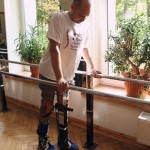
The world's first cell transplant enables paralyzed man to walk.
A ground-breaking cell transplant, the world's first, was carried out by surgeons in Poland in collaboration with scientists in London on Darek Fidyka who was paralyzed from the chest down after a brutal knife attack in 2010 left with an 8mm gap in his spinal column. He showed no sign of recovery despite many months of intensive physiotherapy.
Darek's injuries were so severe that no level of therapy could give him feeling bac...
More