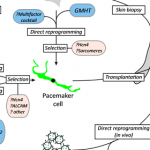
Cedars-Sinai Heart Institute have developed a minimally invasive gene transplant procedure that changes unspecialized heart cells into “biological pacemaker” cells that keep the heart steadily beating

Generally speaking, a biological pacemaker is one or more types of cellular components that, when "implanted or injected into certain regions of the heart," produce specific electrical stimuli that mimic that of the body's natural pacemaker cells. It's indicated for issues such as heart block, slow heart rate, and asynchronous heart ventricle contractions. In healthy individuals, the sinoatrial node (SAN) is responsible for initiating excitation >100 000 times per day. As with all cardiac ...
More

University of Toronto Dalla Lana School of Public Health Research Suggests, Being Close to Family Extends Life

The old expression “blood is thicker than water” holds true for longevity, according to a new study. Older adults who report being close to family members are more than twice as likely to be alive five years later than those who are close to friends. The study looked at social relationships among 3,000 people between the ages of 57 and 85. They were asked to list five of their closest companions and how close they felt to them. Excluding spouses, people listed an average of 2.91 confidantes wh...
More

Human consciousness: from fetal to neonatal life

The beginning of human personhood is the moment when a human is first recognized as a person. There are differences of opinion as to the precise time when human personhood begins and the nature of that status. The issue arises in a number of fields including science, religion, philosophy, and law, and is most acute in debates relating to abortion, stem cell research, reproductive rights, and fetal rights. The fetus may be aware of the body, for example by perceiving pain. It reacts to touch, ...
More

National Science Foundation research shows babies begin to acquire knowledge in the womb

A Dutch study found that by 30 weeks of age a fetus can remember a sound for 10 minutes. By week 34, a fetus may be able to remember. During rapid-eye-movement sleep, when we dream, the brain is thought to be processing stored memory. The memory of a newborn infant is dominated by its fetal experience, and the infant is likely to dream about its life in the womb. Research with lucid (or conscious) dreaming has shown that dream images are supported by the corresponding body actions, using thos...
More

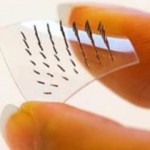
Scientists at the KTH Royal Institute of Technology in Stockholm, Sweden have developed a new flexible microneedle patch instead of injections

It’s only a matter of time before drugs are administered via patches with painless microneedles instead of unpleasant injections. But designers need to balance the need for flexible, comfortable-to-wear material with effective microneedle penetration of the skin. Researchers from KTH Royal Institute of Technology in Stockholm say they may have cracked the problem. In a study published recently in PLOS ONE, the research team from KTH reports a successful test of its microneed...
More

Nova Southeastern University’s College of Osteopathic Medicine create avatars in a virtual clinic to help diagnostic procedures

Medical students and researchers at Nova Southeastern University are stepping into the virtual world to better serve patients. Using Second Life®, students at Nova Southeastern University’s College of Osteopathic Medicine create avatars that fly into a virtual clinic where students can practice communication skills and diagnostic procedures on virtual world patients. The program allows students to practice in a relaxed environment where they are not afraid to make mistakes. Researchers at NSU...
More

FDA has approved ‘VisuMax Femtosecond’ Laser for the small incision lenticule extraction (SMILE) procedure to reduce or eliminate nearsightedness

U.S. Food and Drug Administration approved the VisuMax Femtosecond Laser for the small incision lenticule extraction (SMILE) procedure to reduce or eliminate nearsightedness in certain patients 22 years of age or older. “This approval expands the surgical treatment options available to patients for correcting nearsightedness,” said Malvina Eydelman, M.D., director of Ophthalmic and Ear, Nose and Throat Devices, in FDA’s Center for Devices and Radiological Health. Nearsightedness, or myopia...
More

NIST’s research team has come up with a way to build safe, nontoxic gold wires onto flexible thin plastic film for wearable electronic devices that monitor our health

In science, sometimes the best discoveries come when you’re exploring something else entirely. That’s the case with recent findings from the National Institute of Standards and Technology (NIST), where a research team has come up with a way to build safe, nontoxic gold wires onto flexible, thin plastic film. Their demonstration potentially clears the path for a host of wearable electronic devices that monitor our health. The finding might overcome a basic issue confronting medical engineers: ...
More

Scientists at Trinity College Dublin have uncovered a marvel molecule that blocks a key driver of inflammatory diseases

Scientists at Trinity College Dublin have uncovered a marvel molecule that blocks a key driver of inflammatory diseases. The finding could meet a major unmet clinical need by inspiring new non-invasive treatments for arthritis, multiple sclerosis and Muckle-Wells syndrome, among a myriad of other inflammatory diseases. The molecule ‘blocks’ a key biological driver of inflammatory diseases. Marvel Molecule Could Lead to Treatments for Inflammatory Diseases and it could inspire non-invasive tre...
More

Universities of Liverpool and Bristol – Stem cell ‘living bandage’ for knee injuries

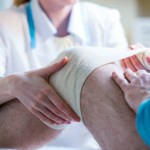
A ‘living bandage’ made from stem cells, which could revolutionise the treatment and prognosis of a common sporting knee injury, has been trialled in humans for the first time by scientists at the Universities of Liverpool and Bristol. Meniscal tears are suffered by over one million people a year in the US and Europe alone and are particularly common in contact sports like football and rugby. 90% or more of tears occur in the white zone of meniscus which lacks a blood supply, making them diff...
More

U.S. Food and Drug Administration today approved Maci (autologous cultured chondrocytes on porcine collagen membrane) for the repair of symptomatic, full-thickness cartilage defects of the knee in adult patients

The U.S. Food and Drug Administration today approved Maci (autologous cultured chondrocytes on porcine collagen membrane) for the repair of symptomatic, full-thickness cartilage defects of the knee in adult patients. Maci is the first FDA-approved product that applies the process of tissue engineering to grow cells on scaffolds using healthy cartilage tissue from the patient’s own knee. Knee problems are common, and occur in people of all ages. Cartilage defects in the knee can result from an i...
More

Berkeley-Stanford team creates a system that can help us see Electrical Signaling in heart and nerve Cells

Scientists have enlisted the exotic properties of graphene, a one-atom-thick layer of carbon, to function like the film of an incredibly sensitive camera system in visually mapping tiny electric fields in a liquid. Researchers hope the new method will allow more extensive and precise imaging of the electrical signaling networks in our hearts and brains. The ability to visually depict the strength and motion of very faint electrical fields could also aid in the development of so-called lab-on-...
More

IBM Multi-Purpose Elder Care Robot Assistant (IBM MERA)

IBM (NYSE: IBM) Research today announced the creation of the prototype IBM Multi-Purpose Eldercare Robot Assistant (IBM MERA) done in collaboration with Rice University. IBM MERA is a first of a kind Watson-enabled application designed to help assist the elderly and their caregivers. IBM Research also has plans to work with Sole Cooperativa, an independent healthcare provider in Italy, to instrument senior housing with sensors to monitor day-to-day activities of its residents.   Accor...
More

Key Findings Of Trinity College Dublin Study On Ageing

The Irish Longitudinal Study on Ageing (TILDA) is a large-scale, nationally representative study of people aged 50 and over in Ireland. It is the most ambitious study of ageing ever carried out in Ireland and represents a step-change in terms of data, knowledge and understanding of ageing with which to inform policy and novel research. TILDA is designed to maximise comparability with other well-established international longitudinal studies. More than 8,000 people aged 50 and over accepted th...
More

Diabetes patients can now draw blood without discomfort using ‘Genteel Lancing ‘ device which uses a combination of depth control, vibration & vacuum.

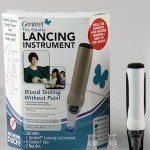
Testing blood glucose levels 5-10 times daily is a daily requirement for those living with Type 1 Diabetes. There is no way around it. With Genteel Lancing Instrument, you can test painlessly anywhere on your body, giving your fingertips a break! By using a combination of depth control, vibration, vacuum, people with diabetes, can now get test blood without fear or the pain of the dreaded finger-stick. Genteel® Lancing Device allows diabetics to draw the perfect drop of test blood without ...
More

Key Findings Of National Eye Institute (NEI) and the Department of Defense (DoD) Limited 2009 LASIK ‘Quality Of Life’ Study

In October 2009,  the National Eye Institute (NEI), and the Department of Defense (DoD) launched the LASIK Quality of Life Collaboration Project (LQOLCP) to help better understand the potential risk of severe problems that can result from LASIK. The project aimed to develop a tool to determine the percent of patients who develop difficulties performing their usual activities following LASIK, and to identify predictors for those patients. At the time FDA developed our project, there was a limi...
More

SISSA RESEARCH STUDY SUGGEST THAT FOOD KNOWLEDGE IS RESILIENT EVEN IN ALZHEIMER’S, IT IS A COGNITIVE CATEGORY THAT “RESISTS”

A SISSA research study published in a special issue of the journal Brain and Cognition, completely dedicated to the cognitive neuroscience of food, analyzes the lexical-semantic deficits of the food category in patients suffering from neurodegenerative diseases like Alzheimer's. The study shows that knowledge about food is preserved more than other categories of stimuli, even in the case of severe syndromes. Further, perception of caloric intake affects a person’s ability to remember the na...
More

H&T Presspart, Cohero Health launch connected metered-dose inhaler

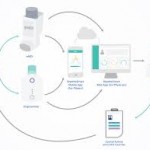
H&T Presspart and Cohero Health said today that the companies have launched a connected metered-dose inhaler designed to improve adherence and optimize care for patients with asthma and COPD. It is the 1st connected inhaler integrated with Cohero Health’s BreatheSmart comprehensive respiratory disease management platform. The 2 companies developed the metered-dose inhaler over the course of a multi-year agreement. Improving patient adherence is vital, the companies said, as less than half...
More

Max Planck’s reserach discribes, how eyes form pictures at a cellular level by arranging neurons into distinct layers

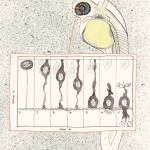
How cells set the stage for the visual world Researchers reveal the crucial first step that forms the different layers of the retina The retina consists of different layers of neurons. Emerging neurons have to migrate to find the right position in the appropriate layer. However, how these migration events are executed and orchestrated is poorly understood. Researchers at the Max Planck Institute of Molecular Cell Biology and Genetics (MPI-CBG) in Dresden now studied how the first layer of neur...
More

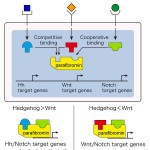
Researchers at the University of Tokyo found that a protein called parafibromin acts like a computer logic board within the cell by integrating and converting multiple disparate signals from the outside into appropriate responses.

Newly discovered protein converts multiple signal inputs into appropriate cellular outputs Study finds molecule that functions as cellular “logic board” Researchers at the University of Tokyo found that a protein called parafibromin acts like a computer logic board within the cell by integrating and converting multiple disparate signals from the outside into appropriate responses. This finding paves the way for the development of innovative therapeutics and preventive measures against cancer...
More

Imperial College London and the Norwegian University of Science and Technology Research suggest handful of nut consumption each day linked to reduced risk for wide range of diseases

A large analysis of current research shows that people who eat at least 20g of nuts a day have a lower risk of heart disease, cancer and other diseases. The analysis of all current studies on nut consumption and disease risk has revealed that 20g a day - equivalent to a handful - can cut people's risk of coronary heart disease by nearly 30 percent, their risk of cancer by 15 percent, and their risk of premature death by 22 percent. An average of at least 20g of nut consumption was also ass...
More

TSRI scientists discover sub-region in the brain that works to form contextual fear memory

While the romantic poets' idea of memories being akin to spirits may have poetic merit, the scientists' perspective is that memories are concrete, physical entities that can be visualized within various regions of the brain. Sathyanarayanan V. Puthanveettil is an associate professor on the Florida campus of The Scripps Research Institute. (Photo by James McEntee.) Scientists from the Florida campus of The Scripps Research Institute (TSRI) have now for the first time identified a sub-region...
More

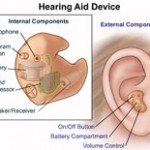
How Ear Works And How Hearing Aid Help

Having trouble hearing? Over 35 million children and adults in the United States have some degree of hearing loss. Hearing loss can have a negative effect on communication, relationships, school/work performance, and emotional well-being. However, hearing loss doesn't have to restrict your daily activities. Properly fitted hearing aids and aural rehabilitation (techniques used to identify and diagnose hearing loss, and implement therapies for patients who are hard of hearing, including using amp...
More

MIT research on neural control of bionic prostheses will allow users to dynamically adapt their gait to changing terrains.

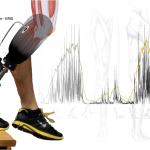
Proportional EMG Control of Ankle Plantar Flexion in a Powered Transtibial Prosthesis The human calf muscle generates 80% of the mechanical work to walk throughout stance-phase, powered plantar flexion. Powered plantar flexion is not only important for walking energetics, but also to minimize the impact on the leading leg at heel-strike. For unilateral transtibial amputees, it has recently been shown that knee load on the leading, intact limb decreases as powered plantar flexion in the traili...
More

X-ray technique at Berkeley Lab provides high-res views of the structure and movement of genetic material in cell nuclei

Scientists have mapped the reorganization of genetic material that takes place when a stem cell matures into a nerve cell. Detailed 3-D visualizations show an unexpected connectivity in the genetic material in a cell’s nucleus, and provide a new understanding of a cell’s evolving architecture. These unique 3-D reconstructions of mouse olfactory cells, which govern the sense of smell, were obtained using X-ray imaging tools at the Department of Energy’s Lawrence Berkeley National Laboratory (B...
More

Ultra-low noise and ultra-low power consumption AMR sensor provides exceptional stability for demanding industrial and drone applications

MEMSIC, a leading solutions provider combining proprietary MEMS technology with advanced mixed-signal processing and systems solutions, announced the availability of the MMC5883MA 3 Axis Magnetic Sensor. The newest member of MEMSIC’s Anisotropic Magneto Resistive (AMR) based Magnetic Sensor family, it provides the industry’s highest accuracy, lowest noise and lowest power consumption, all combined in an industry standard small LGA package and addresses the ever-increasing demands of industrial a...
More

IBM’s Dr. Tanveer Syeda-Mahmood has developed Watson modules for doctors aimed at improving the accuracy of diagnoses for stroke, mammography, radiology and cancer, previously un-diagnosed by human inspection.

Watson has identified cases of heat disease previously undiagnosed by human inspection of ultra-sonic imaging, clinical tests and case notes, according to IBM at the Conference on Medical Image Computer Assisted Intervention (MICCAI). As a result, IBM is offering five new Watson modules to doctors aimed at improving the accuracy of diagnoses for stroke, mammography, radiology and cancer. IBM Watson is a cognitive system (computer) enabling a new partnership between people and computers. It tu...
More

Northwest University Research – Perils of Too Much Relaxation in Assisted Living

You wake up and someone makes you breakfast. You attend a lecture, eat lunch and enjoy a book club meeting, then eat dinner with friends, and finish the night with a movie before heading to bed. While this lifestyle sounds convenient and relaxing, it may be what is killing older adults in assisted living communities. The Good and the Bad of Assisted Living More than 735,000 older adults nationwide live in assisted living communities. These communities promote a hassle-free and accessible liv...
More

Max Planck Research Suggests Individual lifespans are becoming more similar

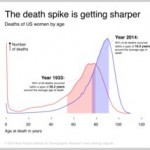
Scientists discover a novel regularity for vastly different human societies and epochs On average, as lives get longer, the difference in the age at which people die becomes smaller. By analyzing data from 44 countries, researchers have now proven that life expectancy and the variation of individual lifespans are tightly bound together by a mathematical relationship. If life expectancy decreases in times of crisis, then, according to the same mathematical logic, the distribution of the leng...
More

Research on correlation of Money & Happiness

In contrast to decades of research reporting surprisingly weak relationships between consumption and happiness, recent findings suggest that money can indeed increase happiness if it is spent the “right way” (e.g., on experiences or on other people). Drawing on the concept of psychological fit, we extend this research by arguing that individual differences play a central role in determining the “right” type of spending to increase well-being. In a field study using more than 76,000 bank-trans...
More