
Organization for Human Brain Mapping (OHBM) is having its annual meeting on June 25 – 29 2017

The Organization for Human Brain Mapping (OHBM) is the primary international organization dedicated to using neuroimaging to discover the organization of the human brain. OHBM is having its annual meeting on June 25 - 29 2017 Key few topic that will be covered include : Network effects of subthalamic nucleus deep brain stimulation on the prefrontal cortex Structural Imaging Evaluation of Subcallosal Cingulate DBS for Treatment-Resistant Depression Structural network architecture predi...
More
Pohang University of Science and Technology Research Suggest ‘Decorin’ can be the new Glue-Like Substance that could Be The Key to Healing Wounds Without Scars

Skin scarring after deep dermal injuries is a major clinical problem due to the current therapies limited to established scars with poor understanding of healing mechanisms. From investigation of aberrations within the extracellular matrix involved in pathophysiologic scarring, it was revealed that one of the main factors responsible for impaired healing is abnormal collagen reorganization. Here, inspired by the fundamental roles of decorin, a collagen-targeting proteoglycan, in collagen remodel...
More

University of Tokyo research findings will now allow development of more effective mucosal vaccines, immunizing agents, that can be administered orally or through the nose rather then current injectable type of vaccines.

A research group at the University of Tokyo has identified in a study with mice a protein directly linked to the M cells' function to capture antigens around intestinal and other mucous membrane surfaces. Manipulating the protein, allograft inflammatory factor 1 (Aif1), holds promise of contributing to the development of more effective mucosal vaccines—immunizing agents, administered orally or through the nose, that enter the body via the mucous membrane—as an alternative to the conventional inj...
More

Presspart and Cohero Health have developed eMDI (embedded and connected metered dose inhaler) enabling real-time monitoring of medication use and symptom flare-ups

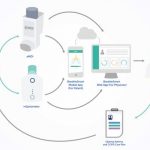
H&T Presspart and Cohero Health have developed intuitive, fully-embedded and connected metered dose inhaler (eMDI) aimed at improving adherence and enabling continually optimized care of patients with asthma and COPD. It is the only eMDI integrated seamlessly with BreatheSmart from Cohero Health, a comprehensive respiratory disease management platform that uniquely enables tracking of both controller and rescue medications, along with clinically accurate lung function measurement, in real-ti...
More

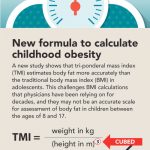
University of Alabama research have developed more accurate way to determine adolescent obesity

The body mass index calculations that physicians have been relying on for decades may not be accurate for assessing body fat in adolescents between the ages of 8 and 17. A new study published today in the Journal of the American Medical Association Pediatrics shows that tri-ponderal mass index estimates body fat more accurately than the traditional BMI in adolescents. These new findings are timely as diagnosing, treating and tracking the prevalence of children and adolescents with obesity ...
More

UNSW Sydney research suggest bad moods are good for you, the surprising benefits of sadness

Homo sapiens is a very moody species. Even though sadness and bad moods have always been part of the human experience, we now live in an age that ignores or devalues these feelings. The Conversation In our culture, normal human emotions like temporary sadness are often treated as disorders. Manipulative advertising, marketing and self-help industries claim happiness should be ours for the asking. Yet bad moods remain an essential part of the normal range of moods we regularly experience. D...
More

MAX PLANCK INSTITUTE OF MOLECULAR CELL BIOLOGY AND GENETICS research found a gene for brain size is only found in humans

A gene for brain size – only found in humans   This picture shows a cerebral cortex of an embryonic mouse. The cell nuclei are marked in blue and the deep-layer neurons in red. The human-specific gene ARHGAP11B was selectively expressed in the right half of the brain, which is visible by the folding of the neocortical surface. © MPI f. Molecular Cell Biology and Genetics Following the traces of evolution: Max Planck Researchers find a key to the reproduction of brain stem cells Abo...
More

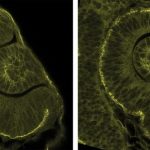
Max Planck Institute of Molecular Cell Biology and Genetics research suggest, for successful organ formation, it is very important that cells generate unique shapes and architecture from which these organs develop.

For successful organ formation, it is very important that cells generate unique shapes and architecture from which these organs develop. Also during the development of the vertebrate eye, cells need to actively migrate to the correct locations to generate the right tissue shape. The lab of Caren Norden at the Max Planck Institute of Molecular Cell Biology and Genetics (MPI-CBG) showed that such cell movements are crucial already at early developmental stages. If cells do not reach the right plac...
More

University of Delaware found that kids who are bullied in fifth grade often suffer from depression and begin using alcohol and other substances

When it comes to understanding bullying, "we make a lot of assumptions that aren't based on data," says UD psychologist Julie Hubbard, whose scholarship aims to build a stronger empirical foundation that could lead to new and more successful evidence-based programs for bullying. Although school-based bullying prevention programs already exist, findings suggest they are not particularly effective. Thus, Hubbard, an associate professor of psychology, believes that more basic research is needed ...
More

SISSA research has narrowed down the root cause of weight gain after implant

It was already known that people affected by Parkinson’s disease, when subjected to deep brain stimulation, gained weight, but it was less clear why that was so. Thanks to new research by Trieste’s SISSA, it has been realized that the weight gain after implant has a multifactorial origin. The study, published on the scientific journal Cortex, monitored for the first time a group of patients before and after the intervention, assessing cognitive, psychological and behavioural aspects. The results...
More

University of Örebro, Sweden research suggests, a brisk walk instead of sitting down – just ten minutes a day makes a difference

It is not the amount of time spent sitting still that matters. Instead it is the extent of physical activity that is essential in reducing the risk of elderly women developing cardiovascular disease, as shown in a new Örebro study published in PLOS ONE. "We have studied women over 65 as they are among the least active groups of the population, at the same time as they run a high risk of developing cardiovascular disease," says Fawzi Kadi, Professor at Örebro University. A brisk walk instead ...
More

UNIVERSITY OF TEXAS HEALTH SCIENCE CENTER AT SAN ANTONIO researchers increased the types of pancreatic cells that secrete insulin and were able to successfully cure diabetes in mice without side effects

Potential cure for Type 1 diabetes looms on the horizon in San Antonio, and the novel approach would also allow Type 2 diabetics to stop insulin shots. The discovery, made at The University of Texas Health Science Center, now called UT Health San Antonio, increases the types of pancreatic cells that secrete insulin. UT Health San Antonio researchers have a goal to reach human clinical trials in three years, but to do so they must first test the strategy in large-animal studies, which will ...
More

Washington University’s Office of Technology Management Research on mice and patients suggests biomarker could predict vision loss

Glaucoma, a leading cause of blindness worldwide, most often is diagnosed during a routine eye exam. Over time, elevated pressure inside the eye damages the optic nerve, leading to vision loss. Unfortunately, there’s no way to accurately predict which patients might lose vision most rapidly. Now, studying mice, rats and fluid removed from the eyes of patients with glaucoma, researchers at Washington University School of Medicine in St. Louis have identified a marker of damage to cells in the ...
More

University of California research suggest early childhood trauma could be influencing how the microbes in our gut interact with our brains as we grow, demonstrating a two-way street between the development of our nervous system and the microscopic residents of our digestive system.

Irritable bowel syndrome (IBS) is characterized by abdominal pain and altered bowel habits. Visceral hypersensitivity is believed to be a key underlying mechanism that causes pain. There is evidence that interactions within the brain and gut axis (BGA) that involves both, the afferent-ascending and the efferent-descending pathways as well as the somatosensory cortex, insula, amygdala, anterior cingulate cortex and hippocampus are deranged in IBS showing both the activation and inactivation. ...
More

German scientists are working toward a way of spotting tumors using an endoscopic approach that doesn’t involve actually having to take sample to diagnose cancer

In an important step toward endoscopic diagnosis of cancer, researchers have developed a handheld fiber optic probe that can be used to perform multiple nonlinear imaging techniques without the need for tissue staining. The new multimodal imaging probe uses an ultrafast laser to create nonlinear optical effects in tissue that can reveal cancer and other diseases.   Today, cancer is typically diagnosed by removing a bit of tissue with a biopsy and then sending that tissue to a speci...
More

AirSonea – a revolutionary, asthma monitoring device that will sync with smart phones to enable anyone, anywhere at any time to conveniently monitor their wheezing symptoms and better manage the condition.

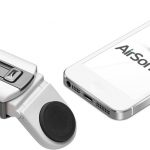
AirSonea - a revolutionary, asthma monitoring device that will sync with smart phones to enable anyone, anywhere at any time to conveniently monitor their wheezing symptoms and better manage the condition. AirSonea, the world’s first digital device for monitoring wheeze, takes the stress out of asthma management. AirSonea turns your smartphone into a portable asthma monitor. Teamed with the AsthmaSense App it can detect and measure wheeze while factoring in your personal environmental trigger...
More

FDA is testing ‘Organs-on-Chips’ Technology that will simulate human organ systems in miniature on micro-engineered chips.

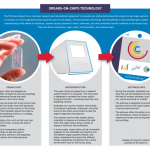
Researchers in laboratories at FDA’s Center for Food Safety and Applied Nutrition will be testing revolutionary new technology that creates human organ systems in miniature on micro-engineered chips. Beginning with a liver-chip, FDA scientists will be evaluating the effectiveness of this technology to better understand the effects of medicines, disease-causing bacteria in foods, chemicals, and other potentially harmful materials on the human body. There are many things you might envision putt...
More

University of Texas Medical Branch research suggest nicotine affects the way the brain processes pain due to its effects on neurotransmitters, receptor sites, and the sympathetic nervous system

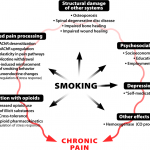
University of Texas Medical Branch research suggest nicotine affects the way the brain processes pain due to its effects on neurotransmitters, receptor sites, and the sympathetic nervous system Clearly smoking is a tough habit to break and perhaps these scare tactics might work for some. However, routine and habit, psychological stress, nicotine dependence and addiction all make quitting smoking a tough lift. However, there is now one more reason to quit smoking: pain. A recent arti...
More

Citizen science is the involvement of the public in scientific research – whether community-driven research or global investigations. The Citizen Science Association unites expertise from educators, scientists, data managers, and others to power citizen science.

Citizen science is the involvement of the public in scientific research – whether community-driven research or global investigations. The Citizen Science Association unites expertise from educators, scientists, data managers, and others to power citizen science What is Citizen Science? The Oxford English Dictionary recently defined citizen science as: “scientific work undertaken by members of the general public, often in collaboration with or under the direction of professional scientists and ...
More

Cleveland Clinic research suggest what’s in your gut can play a role with risk for having a heart attack or stroke

When most people think of their risk for having a heart attack or stroke, factors like cholesterol and blood pressure come to mind. But a new study by researchers at Cleveland Clinic shows that what’s in your gut can play a role as well.   The research, led by Stanley Hazen, MD, PhD, Section Head of Preventive Cardiology, shows that a compound that occurs in your gut after eating meat or high-fat dairy is a risk factor that can occur even if you have low cholesterol and a healthy bloo...
More

University of Exeter suggest rotten egg smell can help fight strokes, heart attacks and dementia

Rotten egg gas holds key to healthcare therapies It may smell of flatulence and have a reputation for being highly toxic, but when used in the right tiny dosage, hydrogen sulfide is now being being found to offer potential health benefits in a range of issues, from diabetes to stroke, heart attacks and dementia. A new compound (AP39), designed and made at the University of Exeter, could hold the key to future therapies, by targeting delivery of very small amounts of the substance to th...
More

University of Exeter Dementia research insights

Dementia can happen to anyone and there's currently no cure. It can strip you of your memory, your relationships and your connection to the world you love, leaving you feeling isolated and alone. https://youtu.be/RT907zjpZUM 1. Your lifestyle could increase your risk of developing dementia There are many different types of dementia; the most common is Alzheimer’s disease. But what many people don't realise is that in about one third of cases lifestyle plays a part in whether or not so...
More

The U.S. Department of Energy Joint Genome Institute has discovered Giant viruses appear to have evolved from smaller viruses (not from cells) based on presence of nearly complete set of translation-related genes.

Giant viruses appear to have evolved from smaller viruses (not from cells) based on presence of nearly complete set of translation-related genes. Viruses have a ubiquitous presence in the world. Their population is estimated to be 1031, 10 times greater than the nonillion (1030) of microbes on the planet—a figure that surpasses the number of stars in the Milky Way. Giant viruses are characterized by disproportionately large genomes and virions that house the viruses’ genetic material. T...
More

University Of Seoul researchers have developed gene editing technique that will be helpful in combating genetic mutation that causes diseases such as cystic fibrosis, sickle cell anemia, and color blindness.

Gene-Editing Breakthrough Professor Kim Jin-Soo and training researcher Kim Daesik, both of the Department of Chemistry, were part of a research team at the Center for Genomic Engineering, within the Institute for Basic Science (IBS), that proved that a newly developed gene editing technique will be helpful in combatting genetic mutation that causes diseases such as cystic fibrosis, sickle cell anemia, and color blindness. The field of biology has been buzzing with the latest developments of...
More

Music moves brain to pay attention according to Stanford University

Music moves brain to pay attention, Stanford study finds Using brain images of people listening to short symphonies by an obscure 18th-century composer, a research team from the Stanford University School of Medicine has gained valuable insight into how the brain sorts out the chaotic world around it. The research team showed that music engages the areas of the brain involved with paying attention, making predictions and updating the event in memory. Peak brain activity occurred ...
More

Scientists at Stanford University and University of California, Berkeley have now developed a wearable sensor that stays on the skin, stimulates it and measuring the chloride concentration while the person can move around freely.

Scientists at Stanford University and University of California, Berkeley have now developed a wearable sensor that stays on the skin, stimulates it and measuring the chloride concentration while the person can move around freely. A wearable sensor developed by Stanford researchers can diagnose diseases by measuring molecular constituents of sweat, such as chloride ions and glucose. A wearable device that extracts sweat and analyzes its constituents to monitor health and d...
More

UNSW Australia researchers have found a way to identify bipolar disorder by reviewing Smartphone usage

UNSW Head of Psychiatry Philip Mitchell has been involved in developing a smartphone application that will monitor technology use for the first signs of a manic episode. The early signs of an episode of mania can be hard to detect, but people with bipolar disorder may soon get help from a smart and constant companion – their mobile phones. Mental health organisation SANE Australia will soon trial a smartphone application that will monitor a person’s technology use for the f...
More

University of Washington research have developed a method to identify novel marker for developmental instability by looking at the crooked bite that may indicate early life stress

Research has repeatedly confirmed that the first 1,000 days after conception strongly influence a person’s life expectancy and susceptibility to chronic diseases.  The primary marker used to identify early life stress is low birth weight, which can, for instance, indicate poor nutrition of the mother during pregnancy. But low birth weight is a marker only until birth, about 280 days – far short of a measurement useful for the first thousand days. New research from University of Washington ...
More

University of Utah researchers have developed a way to curb chronic pain by modulating genes that reduce tissue- and cell-damaging inflammation.

For millions of sufferers, there is nothing more debilitating than chronic back or joint pain. It can feel like a lifetime of misery. But researchers led by University of Utah bioengineering assistant professor Robby Bowles have discovered a way to curb chronic pain by modulating genes that reduce tissue- and cell-damaging inflammation. “This has applications for many inflammatory-driven diseases,” Bowles says. “It could be applied for arthritis or to therapeutic cells that are being deliv...
More

University of Utah research has discovered that damage to collagen, can occur much earlier at a molecular level from too much physical stress, can be a good early warning system for diseases such as arthritis, tissue damage to ligament, tendon or cartilage

By the time someone realizes they damaged a ligament, tendon or cartilage from too much exercise or other types of physical activity, it’s too late. The tissue is stretched and torn and the person is writhing in pain. But a team of researchers led by University of Utah bioengineering professors Jeffrey Weiss and Michael Yu has discovered that damage to collagen, the main building block of all human tissue, can occur much earlier at a molecular level from too much physical stress, alerting doc...
More