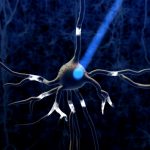
National Institute Of Health Study on Optogenetics – biological technique which involves the use of light to control cells can also control brain

Optogenetics is a biological technique which involves the use of light to control cells in living tissue, typically neurons, that have been genetically modified to express light-sensitive ion channels. It is a neuromodulation method employed in neuroscience that uses a combination of techniques from optics and genetics to control and monitor the activities of individual neurons in living tissue—even within It is a neuromodulation method employed in neuroscience that uses a combination of tech...
More
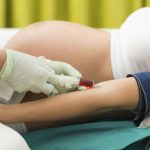
‘ Na-Nose’- A Nanoscale Artificial Nose to Detect Specific Medical Conditions

Respiratory infections are a leading cause of mortality and morbidity worldwide. Respiratory pathogenic bacteria, such as Streptococcus pneumoniae and Haemophilus influenza, are the main causes for chronic respiratory conditions, such as Chronic Obstructive Pulmonary Disease (COPD). Advanced stages of these conditions lead to poor quality of life, limited flexibility in practicing daily physical activity, and an increased risk of death. Altogether, these disease conditions lead to considerable h...
More

UCLA neuroscience research suggests, people who had the strongest responses in the areas of the brain associated with perceiving pain and emotion and imitating others were also the most generous.

Your brain might be hard-wired for altruism It’s an age-old quandary: Are we born “noble savages” whose best intentions are corrupted by civilization, as the 18th century Swiss philosopher Jean-Jacques Rousseau contended? Or are we fundamentally selfish brutes who need civilization to rein in our base impulses, as the 17th century English philosopher Thomas Hobbes argued? After exploring the areas of the brain that fuel our empathetic impulses — and temporarily disabling other regions that o...
More

University Of Melbourne research team has developed method to accurately identify a term baby who is at risk of stillbirth

We don’t know the full causes of stillbirth, but in about half of cases it is caused by the placenta not working properly. The placenta feeds and oxygenates the baby so when it isn’t working well babies become growth restricted. Fetuses that are growth restricted are at 3-4 times increased risk of stillbirth. So, finding a test that accurately flags babies that are growth restricted and intervening early may be the key to reducing stillbirths. But it is surprisingly hard to identify such grow...
More

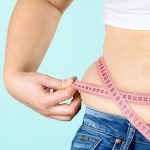
National Institute Of Health research suggest, gut microbiota may play a role in the development of obesity

Gut microbes from lean people helped prevent mice from becoming obese—but only if the animals ate a healthy diet. This research could point the way to new treatments for obesity. The human gut harbors a complex community of microbes that affect many aspects of our health. Evidence, mostly from studies of rodents, suggests that the gut microbiota may play a role in the development of obesity. In earlier research, a team led by Dr. Jeffrey Gordon at the Washington University School of Medici...
More
Posted in Uncategorized Tagged

Berkeley Lab research on mice suggest thirdhand smoke led to persistent changes in blood cell counts associated with the immune system

The sticky residue left behind by tobacco smoke can do worse damage than stinking up furniture and discoloring walls. Exposure to thirdhand smoke leads to biological effects on weight and cell development that could be damaging to one’s health, according to new research led by scientists at the Department of Energy’s Lawrence Berkeley National Laboratory (Berkeley Lab). Researchers Pin Wang (left) and Antoine Snijders investigate blood cells collected from mice exposed to thirdhand smoke....
More

University of Tokyo research on ALS suggest, damage caused by the protein-cutting enzyme calpain to the critical pathway shuttling essential molecules between the cell’s nucleus and cytoplasm leads to the death of nerve cells.

University of Tokyo research group and their collaborators have shed light on one of the mechanisms responsible for the onset of sporadic ALS—a non-genetic form of the neurodegenerative disorder also known as Lou Gehrig’s disease—by demonstrating in an experiment with mice that damage caused by the protein-cutting enzyme calpain to the critical pathway shuttling essential molecules between the cell’s nucleus and cytoplasm leads to the death of nerve cells. The current outcome holds promise of ad...
More

National Institute Of Health research suggest, diet can affect certain autoimmune diseases via gut microbes

In autoinflammatory diseases, the innate immune system, for unknown reasons, becomes activated and triggers inflammation. This part of the immune system is the body’s rapid first line of defense against infection. The short-term heat, swelling, and redness of inflammation are a normal part of the body’s protective response to injury or infection. But prolonged inflammation can seriously damage the body. Recent research suggests that diet can affect certain autoimmune diseases. A team led by D...
More

Doctors Treat Deadly Cancerous Disorders with Gene-Guided, Targeted Therapy

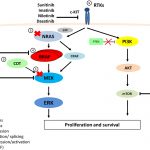
Genomic testing of biopsies from patients with deadly, treatment-resistant cancerous blood syndromes called histiocytoses allowed doctors to identify genes fueling the ailments and use targeted molecular drugs to successfully treat them. Researchers from the Cincinnati Children's Cancer and Blood Diseases Institute report their data in Journal of Clinical Investigation Insight (JCI Insight). They recommend the regular use of comprehensive genomic profiling at diagnosis to positively impact cl...
More

NASA’s technology transfer for robotic surgery to assist surgeons in non-invasive, endoscopic procedures.

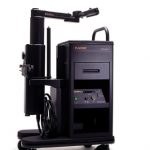
Operating rooms are stepping into the 21st century thanks to a robotic arm that can assist surgeons in non-invasive, endoscopic procedures. Computer Motion, Inc., in Santa Barbara, California, originally performed research under a NASA Small Business Innovation Research (SBIR) contract from the Jet Propulsion Laboratory to develop AESOP,® (Automated Endoscopic System for Optimal Positioning). NASA hopes to make use of the technology powering the robotic arm of AESOP to service satellites and ...
More

Multiple research studies suggest cocoa solids are one of the richest sources of flavanol antioxidants and carry health benefits, protecting against everything from heart disease to stroke to dementia.

Cocoa solids are a mixture of many substances remaining after cocoa butter is extracted from cacao beans. When sold as an end product, it may also be called cocoa powder or cocoa. In contrast, the fatty component of chocolate is cocoa butter. Cocoa butter is 50% to 57% of the weight of cocoa beans and gives chocolate its characteristic melting properties. Cocoa liquor or cocoa mass is a paste of roasted cocoa beans with cocoa butter and solids in their natural proportions. Chocolate requires the...
More

UC Davis Cancer Center research suggests cancer affects different people differently

Researchers and clinicians in UC Davis Comprehensive Cancer Center’s Population Sciences and Health Disparities Program are dedicated to understanding why Cancer affects different people differently,  and are working in different ways to eliminate disparities and improve outcomes for everyone. At UC Davis Comprehensive Cancer Center, researchers are working to understand the biological mechanisms that may be at work in certain cancers that disproportionately affect different populations. They...
More

University of Melbourne has developed matchstick-sized device called a ‘stentrode’ that will allow paralyzed patients to walk with the power of thought by controlling the exoskeleton

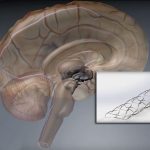
A group of paralysed patients will soon undergo a revolutionary procedure that could allow them to walk with the power of thought.The key to returning mobility is a tiny, matchstick-sized device called a stentrode. It will be implanted into a blood vessel next to the motor cortex, the brain’s control centre – bypassing the need for complex brain surgery. From there it will pick up brain signals and allow patients to move a robotic exoskeleton attached to their limbs simply by thinking about i...
More

Study Conducted by professor Kirsi Pietiläinen of University of Helsinki Finland suggests, mitochondrial dysfunction likely results in excess weight that is difficult to lose

Professor Kirsi Pietiläinen has located the impact of obesity in the mitochondria of fat tissue. Mitochondrial dysfunction likely results in excess weight that is difficult to lose. Kirsi Pietiläinen, a recently appointed professor at the Faculty of Medicine, has studied obesity since the early 90s. Professor Jaakko Kaprio’s extensive twin study data is central to her research. After studying the genetics and epidemiology of obesity as well as conducting extensive surveys, she is now study...
More

Vrije Universiteit Amsterdam research suggests happiness and depression might be partially genetic

For the first time in history, researchers have isolated the parts of the human genome that could explain the differences in how humans experience happiness. These are the findings of a large-scale international study in over 298,000 people, conducted by VU Amsterdam professors Meike Bartels (Genetics and Wellbeing) and Philipp Koellinger (Genoeconomics). The researchers found three genetic variants for happiness, two variants that can account for differences in symptoms of depression, and eleve...
More

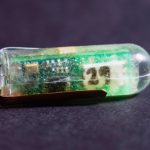
MIT researchers have developed ingestible electronic devices that can harness stomach acid to power it and could monitor physiological conditions or deliver drugs

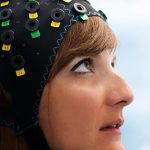
Researchers at MIT and Brigham and Women’s Hospital have designed and demonstrated a small voltaic cell that is sustained by the acidic fluids in the stomach. The system can generate enough power to run small sensors or drug delivery devices that can reside in the gastrointestinal tract for extended periods of time. This type of power could offer a safer and lower-cost alternative to the traditional batteries now used to power such devices, the researchers say. “We need to come up with ways to...
More

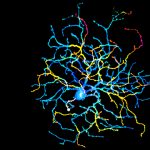
Northwestern research suggest too much time indoors may trigger myopia

Northwestern Medicine scientists have discovered a cell in the retina that may cause myopia when it dysfunctions. The dysfunction may be linked to the amount of time a child spends indoors and away from natural light. Near-sightedness, also known as short-sightedness and myopia, is a condition of the eye where light focuses in front of, instead of on, the retina. This causes distant objects to be blurry while close objects appear normal. Other symptoms may include headaches and eye strain.  S...
More

KTH Royal Institute of Technology Stockholm, Sweden research shows that in principle any protein raw material could be used to make the artificial silk.

KTH Royal Institute of Technology research shows that in principle any protein raw material could be used to make the artificial silk. Silk from milk? New method binds proteins into threads By all appearances, cows have little in common with spiders. Yet despite the two species’ obvious differences, new research shows that ordinary milk can be used to spin artificial silk – a breakthrough that could open new doors for alternative plastics and regenerative medicine. Researchers from Sweden...
More

People with heart disease have a lower risk of heart attack and strokes if they eat a Mediterranean-style diet

Mediterranean dietary pattern has been associated with lower cardiovascular (CV) mortality. People with heart disease have a lower risk of heart attack and strokes if they eat a Mediterranean-style diet. After recruiting more than 15,000 people with heart disease from 39 countries, researchers scored their diets for Mediterranean elements such as eating plenty of whole grains, fruits, vegetables, legumes, fish, some alcohol, and some meat. They also scored diets for Western diet elements, suc...
More

Wyss Center for Bio and Neuroengineering in Geneva Switzerland has developed a brain-computer interface device that can decipher the thoughts of people who are unable to communicate

A brain-computer interface that can decipher the thoughts of people who are unable to communicate could revolutionize the lives of those living with complete locked-in syndrome according to a new paper published in PLOS Biology. Counter to expectations, the participants in the study reported being “happy” despite their condition. In the trial, people with complete locked-in syndrome, who were incapable of even moving their eyes to communicate, were able to respond “yes” or “no” via though...
More

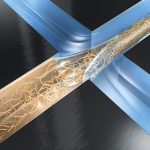
Engineers At Caltech and ETH Zurich have Created Artificial Skin That “Feels” Temperature Changes

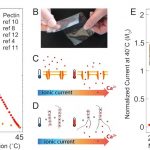
A team of engineers and scientists at Caltech and ETH Zurich have developed an artificial skin capable of detecting temperature changes using a mechanism similar to the one used by the organ that allows pit vipers to sense their prey. The material could be grafted onto prosthetic limbs to restore temperature sensing in amputees. It could also be applied to first-aid bandages to alert health professionals of a temperature increase—a sign of infection—in wounds. A paper about the new materia...
More

Citizen science is the involvement of the public in scientific research – whether community-driven research or global investigations

Citizen science is the involvement of the public in scientific research – whether community-driven research or global investigations. The Citizen Science Association unites expertise from educators, scientists, data managers, and others to power citizen science. Join us, and help speed innovation by sharing insights across disciplines. https://youtu.be/UVuEsuk9Dgc   Whether through grassroots action or technology-mediated crowdsourcing, there has been a rapid increase in public par...
More

Keio University Japan and Washington University are researching anti ageing drug ‘nicotinamide mono nucleotide’ (NMN)

Much of human health hinges on how well the body manufactures and uses energy. For reasons that remain unclear, cells’ ability to produce energy declines with age, prompting scientists to suspect that the steady loss of efficiency in the body’s energy supply chain is a key driver of the aging process. Now, scientists at Washington University School of Medicine in St. Louis have shown that supplementing healthy mice with a natural compound called NMN can compensate for this loss of energy prod...
More

Scientists at MIT have developed a new material that can temporarily protect and tighten skin, and smooth wrinkles.

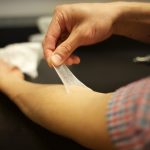
Scientists at MIT, Massachusetts General Hospital, Living Proof, and Olivo Labs have developed a new material that can temporarily protect and tighten skin, and smooth wrinkles. With further development, it could also be used to deliver drugs to help treat skin conditions such as eczema and other types of dermatitis. The material, a silicone-based polymer that could be applied on the skin as a thin, imperceptible coating, mimics the mechanical and elastic properties of healthy, youthful skin....
More

Researchers from North Carolina State University have developed a wearable, wireless sensor that can monitor a person’s skin hydration in real-time

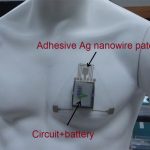
Researchers from North Carolina State University have developed a wearable, wireless sensor that can monitor a person’s skin hydration for use in applications that need to detect dehydration before it poses a health problem. The device is lightweight, flexible and stretchable and has already been incorporated into prototype devices that can be worn on the wrist or as a chest patch. The hydration sensors consist of two electrodes made of an elastic polymer composite that contains conductive ...
More

Fadel Adib and his team at ‘MIT Signal Kinetics’ research group is working to build smart environments to monitor our vital signs remotely, without instrumenting our bodies.

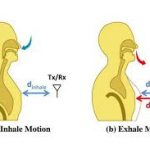
Today’s health sensors (which monitor breathing, heartbeats, steps, etc.) require their users to wear them on their bodies. In contrast, our technologies can monitor human health without requiring the user to wear any device on his/her body. To do so, MIT Signal Kinetics research group captured and analyzed wireless signals reflected off the human body; then use these reflected signals to extract breathing and heartbeats without any physical contact with the human body. Team is currently explori...
More

‘Wyss Center’ is in process of developing a bionic implant that will bypass damaged optical cells and restore lost vision by directly stimulating the optic nerve.

Most forms of blindness, including macular degeneration and retinitis pigmentosa, result from the degeneration of light sensing receptor cells at the back of the eye. The neural pathways that convey information from the eye to the brain however, often remain intact. The Wyss Center is supporting development of a bionic implant that will bypass damaged optical cells and restore lost vision by directly stimulating the optic nerve. Led by Professor Diego Ghezzi, in collaboration with Professo...
More

University of Borås Sweden has built smart textiles that work as an artificial muscle

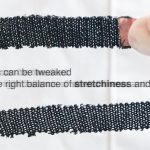
Researchers have coated normal fabric with an electroactive material, and in this way given it the ability to actuate in the same way as muscle fibres. The technology opens new opportunities to design “textile muscles” that could, for example, be incorporated into clothes, making it easier for people with disabilities to move. The study, which has been carried out by researchers at Linköping University and the University of Borås in Sweden, has been published in Science Advances. Developm...
More

Researchers at the University of Tokyo are making artificial cells behave like soap bubbles

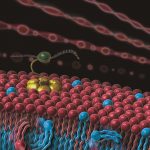
Researchers at the University of Tokyo used MEMS (Micro Electro Mechanical Systems) technology to produce spherical vesicles (asymmetric giant lipid vesicles/liposomes) surrounded by a membrane that, like the membrane of our cells, has an inner and outer layer composed of different phospholipids. In contrast to conventional methods of creating vesicles, this new method leaves little trace of organic solvents inside the vesicle and is an important contribution as a fundamental technique for devel...
More

Ohio State University research suggests, anti-inflammatory diet could reduce risk of bone loss in women

With age, people tend to lose bone mass, and postmenopausal women in particular are at a higher risk of osteoporosis and bone fracture. However, there are things we can do to prevent this. A new study suggests that a diet rich in anti-inflammatory nutrients may reduce bone loss in some women. Study also found diet linked to fewer hip fractures in younger white women Anti-inflammatory diets – which tend to be high in vegetables, fruits, fish and whole grains – could boost bone health and preven...
More