
Battery farms are a quiet backbone of the clean-energy shift. They soak up surplus solar and wind power and hand it back when the sky is dark and the air is still. Most of them rely on lithium-ion cells, the same family that powers laptops and e-bikes. A research team led by University College London has now reported a chemistry that could widen the options: a water-based battery whose iodine stores roughly twice as much charge as before.
The work was published in Nature and announced by UC...
More
UCL
Updated Earthquake Detection System Provides Data in Minutes

NASA and Scripps Institute of Oceanography have developed an earthquake detection system that provides more accurate data about an earthquake within minutes.
When an earthquake strikes, the most valuable information (that is needed immediately) includes its location, depth, and magnitude. The quality of the information and how fast it can be obtained affects the number of lives that can be potentially saved.
Currently, seismic sensors on the ground are used to measure how much the eart...
More
Mint: the automatic floor cleaner robot
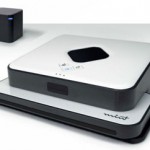
Mint, is the latest robot that uses GPS to clean your house.
Robotic vacuum cleaners are gaining popularity quickly. Roomba isn’t the only robotic cleaning device on the scene now. The latest Mint Automatic Floor Cleaner from Evolution Robotics is designed exclusively for sweeping and mopping hard surface floors.
The new Mint is easy to use. It uses disposable cleaning cloth and reusable microfiber cloth for dry sweeping and wet mopping of floors. Simply attach the cleaning cloth of choice...
More