
Battery farms are a quiet backbone of the clean-energy shift. They soak up surplus solar and wind power and hand it back when the sky is dark and the air is still. Most of them rely on lithium-ion cells, the same family that powers laptops and e-bikes. A research team led by University College London has now reported a chemistry that could widen the options: a water-based battery whose iodine stores roughly twice as much charge as before.
The work was published in Nature and announced by UC...
More
grid storage
Microbiomes could hold keys to improving life.
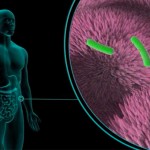
Microbial life forms including viruses, bacteria, and fungi are the most diverse and abundant organisms on earth. They have shaped our evolutionary origins for billions of years and continue to have widespread impact. The UMIC foresees the microbiomes being leveraged through genetic engineering for applications within 10 years.
“Microbes are everywhere. Therefore understanding microbiomes, whether they be the ones that live in and on our bodies or the ones in the environment, is essential to ...
More
Gene-editing study reveals pathway that could help short circuit blood disorder

CRISPR is able to circumvent the genetic mutation that causes sickle cell disease.
The latest Sickle Cell Research from Dana-Farber/Boston Children’s Cancer and Blood Disorders Center is that they have found that changes to a small stretch of DNA may circumvent the genetic defect behind sickle cell disease. They are developing gene-editing approaches to treat the disease and other hemoglobin disorders.
This stretch of DNA, called an enhancer, controls a molecular switch that determines whe...
More
Genetic Mutations Clue to Breast Cancer Relapse
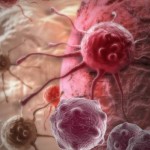
Scientists have discovered a genetic clue to why some breast cancers relapse, which could lead to better treatment.
The latest research on breast cancer was presented at the European Cancer Congress (ECC) in Vienna by Rd. Lucy Yates, leader of the team from the Wellcome Trust Sanger Institute at the University of Cambridge, Xinhua.
The research team has found genetic mutations as clues to breast cancer relapse, which could tell whether breast cancer is likely to relapse after treatment.
...
More
Building a brain from the inside out
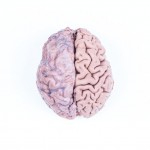
Researchers at UC San Francisco have succeeded in mapping the genetic signature of a unique group of stem cells in the human brain that seem to generate most of the neurons in our massive cerebral cortex.
The human cerebral cortex contains 16 billion neurons, wired together into arcane, layered circuits responsible for everything from our ability to walk and talk to our sense of nostalgia and drive to dream of the future.
In the course of human evolution, the cortex has expanded as much as...
More
Genetic investigation of Blood Pressure Regulation

A new study pinpoints several gene networks closely linked to the regulation of blood pressure.
Framingham Heart Study launched a major initiative to identify and study the genes underlying cardiovascular and other chronic diseases in individuals as this research could lead to new treatments and better strategies for disease prevention.
The study, which takes a close look at networks of blood pressure-related genes is published in the journal Molecular Systems Biology.
More than one bil...
More