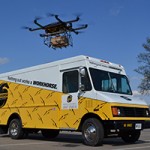
HorseFly UAV Delivery Concept By Workhorse Group

HorseFly is an eight-rotor “octocopter,” designed to be used in tandem with WorkhorseGroup's EPA-approved electric work trucks. AMP Holding Inc. announced that its AMP Trucks subsidiary has successfully designed and flown a prototype of its new HorseFly™ battery-powered unmanned aerial vehicle (UAV). Steve Burns, AMP CEO said, “HorseFly is the logical extension of our mission to help companies better manage their logistics operations. Whether a company wants to deliver its packages by truc...
More
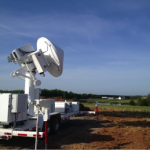
NASA’s advanced radar/radiometer system that unify precipitation measurements

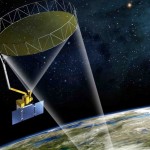
NASA Goddard Tech Transfer -  the GPM mission is the first to coordinate a network of international satellites (current and planned) to produce the next generation of data on global precipitation. The star of the mission is the GPM Core Observatory, launched in February of 2014. It carries an advanced radar/radiometer system and serves as a reference standard that will unify precipitation measurements from the constellation. To do this, technology had to be developed that could link the data fro...
More

NASA Technologies Benefit Our Lives

Space exploration has created new markets and new technologies that have spurred our economy and changed our lives in many ways. This year, NASA unveiled two new complementary interactive Web features, NASA City and NASA @ Home, available at www.nasa.gov/city. The new features highlight how space pervades our lives, invisible yet critical to so many aspects of our daily activities and well-being. Health and Medicine Light-Emitting Diodes (LEDs) Red light-emitting diodes are grow...
More

Emirates Mars Mission

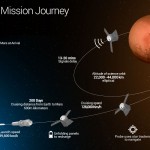
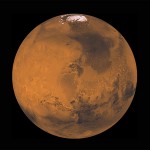
The Hope spacecraft orbiter is a planned 2020 unmanned mission to Mars by the United Arab Emirates to study the Martian atmosphere and climate. The robotic space probe is expected to be launched in the summer of 2020 and to take seven to nine months to arrive at Mars. In designing the orbiter, the Emirates Mars Mission deputy project manager and science lead, Sarah Amiri, is expected to collaborate with the University of Colorado, the University of California, Berkeley and the Arizona State Univ...
More

NASA Selects Five Mars Orbiter Concept Studies

NASA has selected five U.S. aerospace companies to conduct concept studies for a potential future Mars orbiter mission. Such a mission would continue key capabilities including telecommunications and global high-resolution imaging in support of the agency's Journey to Mars. The companies contracted for these four-month studies are: The Boeing Company in Huntington Beach, California; Lockheed Martin Space Systems in Denver; Northrop Grumman Aerospace Systems in Redondo Beach, California; Orbit...
More

NASA Research Could Save Commercial Airlines Billions in New Era of Aviation

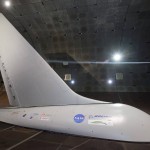
The nation’s airlines could realize more than $250 billion dollars in savings in the near future thanks to green-related technologies developed and refined by NASA’s aeronautics researchers during the past six years. These new technologies, developed under the purview of NASA’s Environmentally Responsible Aviation (ERA) project, could cut airline fuel use in half, pollution by 75 percent and noise to nearly one-eighth of today’s levels. “If these technologies start finding their way into t...
More

NASA Directly Observes Fundamental Process of Nature for 1st Time

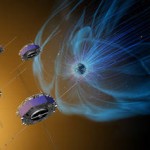
Like sending sensors up into a hurricane, NASA has flown four spacecraft through an invisible maelstrom in space, called magnetic reconnection. Magnetic reconnection is one of the prime drivers of space radiation and so it is a key factor in the quest to learn more about our space environment and protect our spacecraft and astronauts as we explore farther and farther from our home planet. Space is a better vacuum than any we can create on Earth, but it does contain some particles — and it's b...
More

NASA’s CubeSat Launch Initiative Opens Space to Educators, Nonprofits

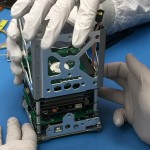
Accredited education institutions, nonprofit organizations and NASA centers can join the adventure and challenges of space while helping the agency achieve its exploration goals through the next round of the agency’s CubeSat Launch Initiative (CSLI). Applicants must submit proposals by 4:30 p.m. EST, Nov. 22. The CSLI provides CubeSat developers with a low-cost pathway to space to conduct research that advances NASA's strategic goals in the areas of science, exploration, technology developmen...
More

NASA Rover’s Sand-Dune Studies Yield Surprise

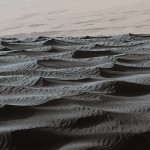
Some of the wind-sculpted sand ripples on Mars are a type not seen on Earth, and their relationship to the thin Martian atmosphere today provides new clues about the atmosphere's history. The determination that these mid-size ripples are a distinct type resulted from observations by NASA's Curiosity Mars rover. Six months ago, Curiosity made the first up-close study of active sand dunes anywhere other than Earth, at the "Bagnold Dunes" on the northwestern flank of Mars' Mount Sharp. "Earth...
More

Regenerative Fuel Cells, Energy Storage Systems Being Developed for Space Applications

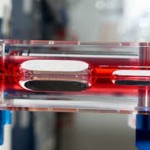
A regenerative fuel cell or reverse fuel cell (RFC) is a fuel cell run in reverse mode, which consumes electricity and chemical B to produce chemical A. By definition, the process of any fuel cell could be reversed. However, a given device is usually optimized for operating in one mode and may not be built in such a way that it can be operated backwards. Standard fuel cells operated backwards generally do not make very efficient systems unless they are purpose-built to do so as with high-pressur...
More

NASA Space Walk Images

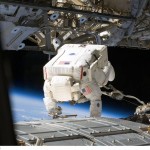
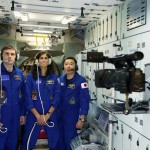
Reflection European Space Agency astronaut Christer Fuglesang is visible in the reflection of NASA astronaut Danny Olivas's helmet visor during this, the STS-128 mission's third and final spacewalk. Olivas and Fuglesang deployed the Payload Attachment System, replaced the Rate Gyro Assembly #2, installed two GPS antennae and worked to prepare for the installation of Node 3 next year. Work Is a Spacewalk During the STS-131 mission's first spacewalk, astronauts Ri...
More

NASA’s research on “Omics” of Space Travel

The human body is incredibly complex. Every part of us—from our bones to our blood cells—is subject to a host of chemical reactions and molecular interactions that, without our conscious effort, keep us alive. But what happens to these processes when we leave the planet? In Earth orbit and beyond, where gravity is counteracted by a constant state of freefall and cosmic radiation intensifies, the molecular inner-workings of the human body may change.  To find out how, NASA has entered a rea...
More

Caterpillar Inc. partnership with NASA

Caterpillar and NASA both continuously work to develop next-generation technologies. Both are also home to some of the greatest engineering minds on the planet, so joining forces in collaborative research was a logical step.  This collaboration delivers value to Caterpillar customers here on Earth and to NASA’s future space explorers. Caterpillar’s relationship with NASA began about a decade ago. In January 2004, the federal government announced a new program to develop technologies that woul...
More

NASA simulates global wind patterns

The striking image above simulating global wind patterns was produced by the Goddard Earth Observing System Model, Version 5 (GEOS-5), which is a system of integrated models that NASA runs over a supercomputer to study and predict climate and weather patterns on Earth. A high resolution version of the image can be found at NASA here. It is just one of a series of breathtaking simulations recently released from GEOS-5 modeling efforts. High-resolution global atmospheric modeling provides a...
More

NASA’s Juno Spacecraft in Orbit Around Mighty Jupiter

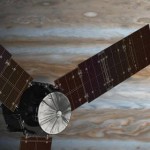
After an almost five-year journey to the solar system’s largest planet, NASA's Juno spacecraft successfully entered Jupiter’s orbit during a 35-minute engine burn. Confirmation that the burn had completed was received on Earth at 8:53 p.m. PDT (11:53 p.m. EDT) Monday, July 4. “Independence Day always is something to celebrate, but today we can add to America’s birthday another reason to cheer -- Juno is at Jupiter,” said NASA administrator Charlie Bolden. “And what is more American than a NAS...
More

NASA Light Technology Successfully Reduces Cancer Patients Painful Side Effects from Radiation and Chemotherapy

A NASA technology originally developed for plant growth experiments on space shuttle missions has successfully reduced the painful side effects resulting from chemotherapy and radiation treatment in bone marrow and stem cell transplant patients. In a two-year clinical trial, cancer patients undergoing bone marrow or stem cell transplants were given a far red/near infrared Light Emitting Diode treatment called High Emissivity Aluminiferous Luminescent Substrate, or HEALS, to treat oral mucosit...
More

NASA’s Nanotechnology-Based Biosensor Helps Detect Biohazards

NASA has developed a revolutionary nanotechnology-based biosensor that can detect trace amounts of specific bacteria, viruses and parasites. This biosensor will be used to help prevent the spread of potentially deadly biohazards in water, food and other contaminated sources. NASA's Ames Research Center at Moffett Field in California licensed the biosensor technology to Early Warning Inc., Troy, N.Y. Under a Reimbursable Space Act Agreement, NASA and Early Warning jointly will develop biosenso...
More

Nasa’s Nonvolatile Molecular Memory – miniaturized for ultra-high density, low power consumption media

Approaching the limits in miniaturization for ultra-high density, low power consumption media, this capability may enable orders of magnitude increases in on-board data storage capabilities that are compatible with space exploration system resource limitations of mass, power and volume. Benefit The increasing needs for on-board electronic memory will grow rapidly in order to keep pace with the requirements for subsystems involved in flight demonstration projects and deep space operations. Ex...
More

NASA’s Game Changing Development Industry Day

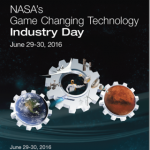
The Space Technology Mission Directorate (STMD) is hosting the Game Changing Technology Industry Day to engage the aerospace industry and identify potential areas of common interest and synergy with NASA. The objective of the meeting is to enhance industry awareness and understanding of the mid-level technology investments within the Game Changing Development portfolio. The Game Changing Technology Industry Day will focus on 11 current technologies that are potential targets for commercial an...
More

NASA’S SMAP Mission Kickstarts Global Soil Moisture Analyzing Operations

With the launch of Soil Moisture Active Passive (SMAP) mission, NASA has laid foundations for mapping global soil moisture and accurate weather predictions that can help us cope with the drastic weather irregularities. Now after completion of observatory, science operations have been commenced. The team involved in the mission is ready to compare the collected data with the ground measurements regarding discrepancies of the nature of soil. This very activity will last for more than a year and...
More

NASA’s Research To Understand How Space Travel Affects Blood Vessels

Ever rise quickly from the couch to get something from the kitchen and suddenly feel dizzy? With a low heart rate and relaxed muscles, the cardiovascular system does not immediately provide the resistance necessary to keep enough blood going to your head. Gravity wins, at least for a short time, before your heart and blood vessels can respond to the sudden change in position and correct the situation. Images above: These figures show feed arteries and first-order arterioles from control...
More

NASA’s research on impact on the immune system

Studies have shown that spending a long time in space has a negative impact on the immune system of crew members. Medical scientists are particularly concerned about disruption of the development of white blood cells  which are our first line of defense against illness. The BONEMAC investigation analyze some defense cells from mouse bone marrow, and find that their numbers increase a lot faster during space flight than on the ground.  Space flight also has an impact on coagulation, or blood c...
More

NASA – Newly Patented Technologies Available for Licensing!

Modified Surface Having Low Adhesion Properties to Mitigate Insect Residue Adhesion Langley inventors have developed a method to reduce insect adhesion on metallic substrates, polymeric materials, engineering plastics, and other surfaces. The method topographically modifies a surface using laser ablation patterning followed by chemical modification of the surface. This innovation was originally developed to enhance aircraft laminar flow by preventing insect residue buildup, but the method provi...
More

NASA’s flight deck technology for traffic, weather, and terrain information

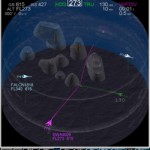
Our efforts are to serve as a first step toward the goal of integrating traffic, weather, and terrain information. Theoretically, by providing the flight crew with a display that integrates information about hazards in the airspace, they may be able to fly as safely and efficiently on a cloudy day as they would be able to fly on a clear day.Our group has generated nine recommendations pertaining to weather information in the flight deck of commercial aircraft based on past ...
More

Space cloths to help control odor

The International Space Station is a big, climate-controlled environment that houses six people at any given time. As you can probably imagine, these humans produce odors just like the rest of us. So how do NASA and other space agencies make the International Space Station a decent-smelling place to live for those stuck there for months at a time? There is no washer or dryer on board the International Space Station; no cosmic laundromat waiting to take astronauts' quarters each Saturday morni...
More

NASA’s zero gravity plane

A reduced-gravity aircraft is a type of fixed-wing aircraft that provides brief near-weightless environments for training astronauts, conducting research and making gravity-free movie shots. Currently, NASA uses a modified C-9 plane to create simulations of a weightless environment, both for training purposes and to conduct weightlessness experiments (without the enormous costs of space travel). Until recently, only a select few had the privilege of experiencing these flights. Today, a compan...
More

NASA’s High Definition Earth Viewing (HDEV) -See Earth LIVE 24×7

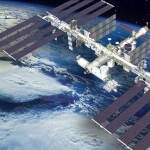
The High Definition Earth Viewing (HDEV) experiment places four commercially available HD cameras on the exterior of the space station and uses them to stream live video of Earth for viewing online. The cameras are enclosed in a temperature specific housing and are exposed to the harsh radiation of space. Analysis of the effect of space on the video quality, over the time HDEV is operational, may help engineers decide which cameras are the best types to use on future missions. High school studen...
More

NASA’s First Steps Toward Drone Traffic Management

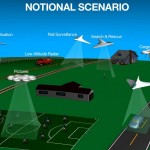
NASA recently successfully demonstrated rural operations of its unmanned aircraft systems (UAS) traffic management (UTM) concept, integrating operator platforms, vehicle performance and ground infrastructure. The next steps involve further validation through Federal Aviation Administration (FAA) test sites. “UTM is designed to enable safe low-altitude civilian UAS operations by providing pilots information needed to maintain separation from other aircraft by reserving areas for specific route...
More

NASA’s Zero Gravity Research Facility

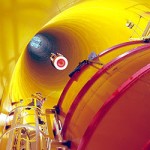
The Zero Gravity Research Facility at the NASA Glenn Research Center in Cleveland, Ohio is a unique facility designed to perform tests in a reduced gravity environment. It has successfully supported research for the United States manned spacecraft programs and numerous unmanned projects. The facility uses vertical drop tests in a vacuum chamber to investigate the behavior of components, systems, liquids, gases, and combustion in such circumstances. The Zero Gravity Research Facility is NASA’s...
More

Worlds lightest metal that is lighter than a feather

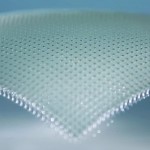
Metallic microlattice is a synthetic porous metallic material, consisting of an ultra-light metal foam. With a density as low as 0.9 kg/m3 (0.00561 lb/ft3), it is one of the lightest structural materials known to science.It was developed by a team of scientists from California-based HRL Laboratories, in collaboration with researchers at University of California, Irvine and Caltech, and was first announced in November 2011. The prototype samples were made from a nickel-phosphorus alloy.In 2012, t...
More