Space Tourism

Space tourism is space travel for recreational, leisure or business purposes. A number of startup companies have sprung up in recent years, such as Virgin Galactic and XCOR Aerospace, hoping to create a sub-orbital space tourism industry. Only through the exploration of the unknown can we continue to grow and evolve. Space is not only important for the future of transportation, commerce, and science; it’s also important for the future of imagination. We still know so little about space and ho...
More

Moon Habitat

Plans are afoot to build a manned base on the Moon. NASA's Exploration Technology Development Program is working on everything that will be needed to make the Moon a place where a crew of astronauts can live for months. Explorers from Earth will have to build their own habitat, or home. Their home must protect them like no home on Earth would ever need to do. There is no air on the Moon. And the temperature varies from 387 degrees Fahrenheit BELOW zero (-233 Celsius) at night to 253 deg...
More

Lisa Pathfinder launches to test space ‘ripples’ technology

Europe has launched the Lisa Pathfinder satellite, an exquisite space physics experiment. It will test the technologies needed to detect gravitational waves, the warping of space-time produced by cataclysmic events in the cosmos. Having such a capability would make it possible to detect the merger of monster black holes, a marker for the growth of galaxies through time. Lisa Pathfinder went into orbit on a Vega rocket from French Guiana. The satellite is being sent in the direction of the Sun, t...
More

VISTA pinpoints earliest giant galaxies

ESO’s VISTA survey telescope has spied a horde of previously hidden massive galaxies that existed when the Universe was in its infancy. By discovering and studying more of these galaxies than ever before, astronomers have, for the first time, found out exactly when such monster galaxies first appeared. Just counting the number of galaxies in a patch of sky provides a way to test astronomers’ theories of galaxy formation and evolution. However, such a simple task becomes increasingly hard as astr...
More

Link between comet, asteroid showers & mass extinctions.

Dr Ken Caldeira of Carnegie Institution and Dr Michael Rampino of New York University offer new support linking the age of these craters with recurring mass extinctions of life, including the demise of the dinosaurs. Mass extinctions occurring over the past 260 million years were likely caused by comet and asteroid showers. Specifically, they show a cyclical pattern over the studied period, with both impacts and extinction events taking place every 26 million years. This cycle has been linked...
More

Astronomers measure ‘heartbeats’ of distant stars

In many ways stars are like living beings. They’re born, they live, they die and they even have a heartbeat. Using a novel technique, astronomers have detected thousands of stellar “pulses” in the galaxy Messier 87 (M87). Their measurements offer a new way of determining a galaxy’s age. We tend to think of stars as stable and unchanging. However, late in life stars like the Sun undergo a significant transformation. They become very bright and swell up to an enormous size, swallowing any planets ...
More

Mars to lose its largest moon, but gain a ring.

Mars’ largest moon, Phobos, is slowly falling toward the planet, but rather than smash into the surface, it likely will be shredded and the pieces strewn about the planet in a ring like the rings encircling Saturn, Jupiter, Uranus and Neptune. Mars could gain a ring in 10-20 million years when its moon Phobos is torn to shreds by Mars gravity. Though inevitable, the demise of Phobos is not imminent. It will probably happen in 20 to 40 million years, leaving a ring that will persist for anywhere ...
More

Pluto Ice Volcanoes

Pluto may have two ice volcanoes that spew water ice, nitrogen, ammonia, and methane onto the dwarf planet's surface, NASA announced today. The potential volcanoes were spied near Pluto's South Pole, in images taken by NASA's New Horizons spacecraft during its July flyby. NASA scientists used the photos to measure the mountains, they are several miles high and tens of miles wide, with large holes in their summits. "On Earth that generally means one thing a volcano," said Oliver White, New Horizo...
More

Hot Jupiter ‘Companions’ could shed light on planet formation.

The discovery of two exoplanet "companions" provides insight into the hot Jupiter solar system, discovered from data collected by the K2 mission. Out of the some 300 hot Jupiters that have been spotted over the past two decades, these new objects are the first close-in planets to be discovered. Discovery of two close-in planet companions sheds new light on planet formation. For the past 20 years, astronomers peered into the night sky, puzzled about a type of planet called hot Jupiters. As they a...
More

The birth of a ‘baby planet’

Using a novel technique, scientists have observed a "baby planet" being formed nearly 450 light years away. When new planets absorb nearby gases and dust they get hot. A strange light is emitted as a result and that has allowed researchers to watch a distant exoplanet as it is being formed. The plant is circling a star dubbed LkCa 15 and was discovered by astronomers Adam Kraus and Michael Ireland using the Keck II telescope. Named LkCa 15b, and in orbit in a system with two other planets (aptly...
More

Using Holography to better understand clouds.

Scientists have just made a breakthrough in understanding how clouds interact with the surrounding air by studying clouds in unprecedented detail. Raymond Shaw, a professor of physics at Michigan Tech, looks at the smallest part of clouds, droplets. To understand groups of droplets, Shaw and the NCAR team flew airplanes through fluffy, cottonball cumulus clouds in Wyoming and Colorado. Aboard the plane, the team took detailed 3-D images with an instrument called the Holographic Detector for Clou...
More

Australian-designed suit worn on Space Station.

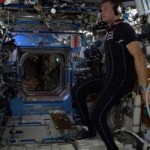
The brainchild of aerospace engineer, RMIT alumnus and senior research associate Dr James Waldie, the SkinSuit has been worn by an astronaut inside the International Space Station (ISS) for the first time. Denmark’s first astronaut, Andreas Mogensen, spent 10 days in the ISS last month and pulled on the SkinSuit to test its effectiveness in the weightless conditions. Inspired by the striking bodysuit worn by Cathy Freeman at the 2000 Sydney Olympics, Waldie and his collaborators have spent more ...
More

Oxygen found on Comet

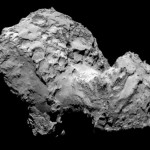
For the first time ever, molecular oxygen has been found on a comet. Comet 67P/Churyumov–Gerasimenko, currently being orbited by the European Space Agency's Rosetta spacecraft, is the subject of a study published in Nature. According to ESA researchers, the oxygen present in the comet's surrounding gasses has likely been there since the formation of the comet. "It is the most surprising discovery we have made so far, because oxygen was not among the molecules expected in a cometary coma," the Un...
More

Mars Solar Storms.

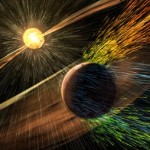
NASA’s Mars Atmosphere and Volatile Evolution (MAVEN) mission has identified the process that appears to have played a key role in the transition of the Martian climate from an early, warm and wet environment that might have supported surface life to the cold, arid planet Mars is today. Scientists studying Mars’ atmosphere say solar storms probably played a big role in transforming the Red Planet from the warm, hospitable place it was billions of years ago to the cold world it is today. The miss...
More

Milky Way

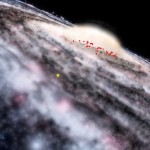
A team of astronomers, led by Istvan Dékány of the Pontificia Universidad Católica de Chile, has used data from the survey, taken between 2010 and 2014, to make a remarkable discovery, a previously unknown component of our home galaxy, the Milky Way. “The central bulge of the Milky Way is thought to consist of vast numbers of old stars. But the VISTA data has revealed something new, and very young by astronomical standards!” says Istvan Dékány, lead author of the new study. Analysing data fro...
More

Cosmic ‘Death Star’ destroys a planet

Astronomers announced that they have spotted a large, rocky object disintegrating in its death spiral around a distant white dwarf star. The discovery also confirms a long-standing theory behind the source of white dwarf “pollution” by metals. “This is something no human has seen before,” said lead author Andrew Vanderburg of the Harvard-Smithsonian Center for Astrophysics (CfA). “We’re watching a solar system get destroyed.” The evidence for this unique system came from NASA’s Kepler K2 miss...
More

Signs of acid fog found on Mars.

Mars has acid fog which eats away rocks and is caused by volcanic eruptions on the red planet, a new study suggests. A planetary scientist has pieced together a compelling story about how acidic vapors may have eaten at the rocks in a 100-acre area on Husband Hill in the Columbia Hills of Gusev Crater on Shoshanna Cole. An assistant professor at Ithaca College in New York, used a variety of data gathered by multiple instruments on the 2003 Mars Exploration Rover Spirit to tease out informatio...
More

Young stars’ flickering light reveals link with matter-eating black holes.

Astronomers have discovered a previously unknown link between the way young stars grow and the way black holes and other exotic space objects feed from their surroundings. The study, 'Accretion-induced variability links young stellar objects, white dwarfs, and black holes,' which is published in the journal Science Advances, shows how the 'flickering' in the visible brightness of young stellar objects (YSOs), very young stars in the final stages of formation is similar to the flickering seen fro...
More

Journey to Mars: Detour to the Moon is the best way to travel to the Red Planet.

As NASA gears up for a mission to Mars, planning a route to the Red Planet is important. Now, researchers have found that to save on weight and have concluded that a detour to the moon is the best route to Mars. Previous studies have suggested that lunar soil and water ice in certain craters of the moon could potentially be mined and converted to fuel. With the assumption that this tech exists at the time of a Mars mission, taking a detour to the moon to refuel actually reduces the mass of a mis...
More

NASA’S New Horizons finds blue skies and red water ice on Pluto.

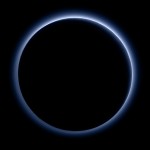
Images sent back by NASA’s New Horizons spacecraft last week reveal that Pluto has blue atmospheric hazes and water ice on its surface. Pluto’s haze layer shows its blue color in this picture taken by the New Horizons Ralph/Multispectral Visible Imaging Camera (MVIC). The high-altitude haze is thought to be similar in nature to that seen at Saturn’s moon Titan. The source of both hazes likely involves sunlight-initiated chemical reactions of nitrogen and methane, leading to relatively small, ...
More

NASA: Studying twins for a year in space

A Northwestern-led research team is one of 10 NASA-funded groups across the country studying identical twins Scott and Mark Kelly to learn how living in space for a long period of time, such as a mission to Mars affects the human body. While Scott spends a year in space, his brother, Mark, also a veteran NASA astronaut, will remain on Earth, as a ground-based control. The study will allow researchers to understand how the long-term exposure to space impacts the human brain and body and how the s...
More

NASA Confirms Evidence That Liquid Water Flows on Mars

New findings from NASA's Mars Reconnaissance Orbiter (MRO) provide the strongest evidence yet that liquid water flows intermittently on present-day Mars. NASA researchers using an imager aboard the Mars Reconnaissance Orbiter confirmed the watery flows by looking at light waves returned from seasonal dark streaks on the surface, long suspected to be associated with liquid water. They detected signatures of hydrated minerals on slopes where mysterious streaks are seen on the Red Planet. The...
More

The Giant Magellan Telescope

Imagine looking into space using this super-giant telescope. With a gigantic 39-meter aperture, the Giant Magellan Telescope is a super-giant earth-based telescope that promises to revolutionize our view and understanding of the universe. It will be constructed at the Las Campanas Observatory in Chile and is expected to take 10 years to build. The GMT has a unique design that offers several advantages. It is a segmented mirror telescope that will use seven of the world's largest mirrors...
More

S-512 Supersonic Jet – set to become the world’s fastest airliner

S-512 Supersonic Jet - set to become the world’s fastest airliner, capable of hitting a supersonic cruising speed of Mach 1.6 (1,963 km or 1,220 mph) and a maximum speed of Mach 1.8 (2,205 km/h or 1,370 mph). At least, that's what Spike Aerospace, the US-based aerospace engineering and design firm behind the concept, is claiming, and they’re ready to spend the $80 million or so it costs to make it happen. Spike Aerospace unveil the latest update to the Spike S-512 Supersonic Jet, a stunningly...
More

NASA’s space settlement plan

NASA Ames Research Center and Stanford University, discovered that we can build gigantic spaceships, big enough to live in. These free-space settlements could be wonderful places to live; about the size of a California beach town and endowed with weightless recreation, fantastic views, freedom, elbow-room in spades, and great wealth. In time, we may see millions of free-space settlements in our solar system alone. Building them, particularly the first one, is a monumental challenge. Space set...
More

Droid for the International Space Station – Personal Satellite Assistants

It looks like something straight out of a Star Wars movie. And to hear it described -- a self-propelled, floating, talking, computerized personal assistant with artificial intelligence -- you might suspect it really is a "droid" from a science fiction film. The similarity isn't a coincidence. The design was actually inspired by the small floating sphere that Luke Skywalker sparred against in the originalStar Wars! The idea may have its roots in science fiction, but this droid is quickly be...
More

Commercial Space flights available for future by Virgin Galactic

Virgin Galactic purpose is to become the spaceline for Earth; democratizing access to space for the benefit of life on Earth. It is Opening Space To The Rest Of Us. Today government space agencies don't allow ordinary citizens to become astronauts, most of our planet’s seven billion people have had no opportunity to experience space and all of its possibilities for themselves, regardless of their passion or talents and Virgin Galactic wants to change that by providing commercial flights into ...
More

Commercial spaceflight training to fly on suborbital space plane.

Do you want to fly on a suborbital space plane? What about a rocket launch all they way into orbit? A new commercial spaceflight training company wants to help you develop the right stuff for flying to space. Waypoint 2 Space — a Houston-based company aimed at helping commercial astronauts train for spaceflight — just received Federal Aviation Administration safety approval for their plan to train would-be astronauts. Officials with the company hope to start training commercial spaceflyers fo...
More

3D-printed human-sized rocket- ready to fly

British team on Friday said it was preparing to launch the world's first ever 3D printed human-sized rocket. It's highly complex shapes that simply weren't practical to do any other way  then to leverage 3d printer to build it. EXASOL AG, the provider of EXASolution the world’s most powerful engine for analytic and data warehousing is today announced as the lead sponsor of the Low Orbit Helium Assisted Navigator (LOHAN) Mission; an audacious plan to launch a 3D printed rocket-powered spacepla...
More