NASA – Citizen Scientists Discover Potential New Hunting Ground for Exoplanets

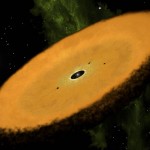
NASA-led citizen science project, eight people with no formal training in astrophysics helped discover what could be a fruitful new place to search for planets outside our solar system – a large disk of gas and dust encircling a star known as a circumstellar disk. A paper, published in The Astrophysical Journal Letters and coauthored by eight citizen scientists involved in the discovery, describes a newly identified red dwarf star, AWI0005x3s, and its warm circumstellar disk, the kind associa...
More

NASA Smart Metal Research

Shape-memory alloy (SMA, smart metal, memory metal, memory alloy, muscle wire, smart alloy) is an alloy that "remembers" its original shape and that when deformed returns to its pre-deformed shape when heated. This material is a lightweight, solid-state alternative to conventional actuators such as hydraulic, pneumatic, and motor-based systems. Shape-memory alloys have applications in robotics and automotive, aerospace and biomedical industries https://youtu.be/nK-hjDdXYyU   NASA G...
More

NASA’s Modular, Adjustable Test Plane for Any Occasion

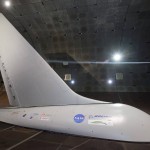
Born out of a desire for aircraft to be able to take off and land capably at airports with shorter runways to alleviate congestion at the major hubs, the circulation control wing concept has been floated by the aeronautical community as a possible solution for decades. The technology calls for increased amounts of high-pressure air, derived from either the jet engines or separate compressors, to flow over the leading and trailing edges of the wings, creating greater lift. Given extra lift, an ai...
More

Planetarium Show Brings ‘Phantom’ Matter to Life – Visualizing the Invisible

From the journey of protons racing through the world’s largest particle collider in Europe to up-close views of the Big Bang and emergent universe, and the nearly mile-deep descent to an underground experiment in South Dakota, a new planetarium show is designed to immerse audiences in the manifold search for dark matter. Michael Barnett, a physicist at the Department of Energy’s Lawrence Berkeley National Laboratory (Berkeley Lab), imagined these scenes coming to life inside planetarium domes...
More

Unprecedented Ultraviolet View of Mars Obtained

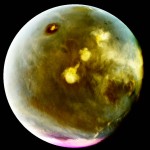
A new development in the MAVEN mission has shown an incredibly detailed ultraviolet glow from the Martian atmosphere. The pictures display dynamic behavior which was previously invisible, and shed light on how winds circulate at high altitudes. Dayside UV images display shifts in ozone amounts over various seasons and clouds which form over Martin volcanoes. According to Nick Schneider of the Laboratory of Atmospheric and Space Physics at the University of Colorado, Boulder who said in a NASA...
More
Posted in Uncategorized

Nasa’s ‘LifeWrap’ saving life on earth

NASA Ames Research Center received an unusual call for help: a local woman was still bleeding weeks after giving birth, despite every attempt to halt it — including nine surgeries. Her condition, known as postpartum hemorrhage, can result from a number of different complications during childbirth. Left untreated, it can prove fatal. Ames researchers and engineers proposed applying pressure to the woman’s entire lower body using an inflated anti-gravity suit, or G-suit — like tightly wrapping ...
More

China may beat the competition to space tourism

A Chinese government-backed company intends to fly up to 20 passengers to the edge of space, more than any other commercial space travel firm is currently planning. The China Academy of Launch Vehicle Technology has designed a winged rocket that takes off under its own power (it doesn’t need to be carried to a high altitude by another aircraft, as is the case with many of the other proposed space tourism projects). “The vehicle will take off vertically like a rocket and land on the runway aut...
More

NASA Aims to Sequence DNA in Space

NASA is conducting a lot of research in space, but interestingly enough, now they’re focusing on sequencing an integral biological molecule: DNA. Ever since the first strands of DNA were sequenced in the 1970s, researchers understood the profound significance of analyzing genetics for a wide range of medical and biological research. DNA sequencing at large can be used to identify forms of life, study organism evolution and relation, pinpoint genetic diseases in individuals and assist in crim...
More

China’s world’s largest radio telescope LIVE

Tianyan (天眼, lit. "Heavenly Eye" or "The Eye of Heaven"), is a radio telescope located in the Dawodang depression (大窝凼洼地), a natural basin in Pingtang County, Guizhou Province, southwest China. It consists of a fixed 500 m (1,600 ft) dish constructed in a natural depression in the landscape. It is the world's largest filled aperture (single dish) radio telescope, and the second largest radio telescope (after the Russian RATAN-600, which has a sparsely filled aperture). Chinese scientists are ...
More

NASA – Watch Live as NASA Astronaut, Two Crewmates Return to Earth

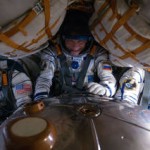
Three International Space Station crew members are scheduled to return to Earth on Tuesday, Sept. 6. NASA Television will provide coverage of their departure from the orbital outpost and return home, beginning at 9 a.m. EDT Tuesday, Sept. 6. Expedition 48 Commander Jeff Williams of NASA and Soyuz Commander Alexey Ovchinin and Flight Engineer Oleg Skripochka of the Russian space agency Roscosmos will undock their Soyuz TMA-20M spacecraft from the space station at 5:51 p.m. and land in Kazakhst...
More

NASA’s Research On NanoRacks-Slime Mold

Slime molds form when individual cells swarm together and self-assemble into a blob, essentially a giant single cell containing thousands of nuclei. These unusual cells, which have already been found on the International Space Station, respond to external forces and stimuli by moving and changing their shapes. NanoRacks-Slime Mold Organization (NanoRacks-Slime Mold) treats slime molds with a series of stimuli while in microgravity, monitoring their responses and comparing them to slime molds on ...
More

Boeing’s ScanEagle is an autonomous unmanned aerial vehicle (UAV)

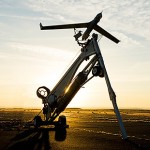
ScanEagle is an autonomous unmanned aerial vehicle (UAV), part of ScanEagle® Unmanned Aircraft Systems, developed and built by Insitu Inc., a wholly owned subsidiary of The Boeing Company. The UAV is based on Insitu’s SeaScan miniature robotic aircraft developed for the commercial fishing industry. ScanEagle carries an electro-optic or a dual imager in a gyro-stabilized turret. The camera has full pan, tilt and zoom capabilities and allows the operator to track both stationary and moving targ...
More

NASA’s Next Mars Rover Progresses Toward 2020 Launch

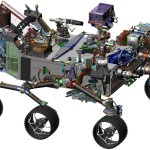
After an extensive review process and passing a major development milestone, NASA is ready to proceed with final design and construction of its next Mars rover, currently targeted to launch in the summer of 2020 and arrive on the Red Planet in February 2021. The Mars 2020 rover will investigate a region of Mars where the ancient environment may have been favorable for microbial life, probing the Martian rocks for evidence of past life. Throughout its investigation, it will collect samples of ...
More

NASA’s Research On Special Ingredients of Earth

With its blue skies, puffy white clouds, warm beaches and abundant life, planet Earth is a pretty special place.  A quick survey of the solar system reveals … nothing else like it. But how special is Earth, really? One way to find out is to look for other worlds like ours elsewhere in the galaxy.  Astronomers using NASA’s Kepler space telescope and other observatories have been doing just that.  In recent years they have been finding other planets increasingly similar to Earth—but still no...
More

NASA – New insights into the role of clouds in Arctic climate change

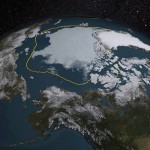
Patrick Taylor, an atmospheric scientist at NASA's Langley Research Center in Hampton, Virginia, says that one of the main factors for the Arctic's rapid warming is how clouds interact with frozen seawater, known as sea ice. These interactions influence the Arctic’s albedo feedback, which is a term scientists use to describe changes in the amount of solar energy absorbed by the Earth due to changes in the Earth's albedo caused by increased greenhouse gases. The Earth's albedo is basically ...
More

NASA Prepares to Launch First U.S. Asteroid Sample Return Mission

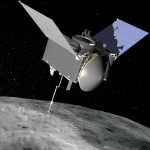
NASA is preparing to launch its first mission to return a sample of an asteroid to Earth. The mission will help scientists investigate how planets formed and how life began, as well as improve our understanding of asteroids that could impact Earth. The Origins, Spectral Interpretation, Resource Identification, Security-Regolith Explorer (OSIRIS-REx) spacecraft will travel to the near-Earth asteroid Bennu and bring a sample back to Earth for intensive study. Launch is scheduled for 7:05 p.m. E...
More

Black Hole Understanding & Research

Everyone knows the score with black holes: even if light strays too close, the immense gravity will drag it inside, never to be seen again. They are thought to be created when large stars finally spend all their fuel and collapse. It might come as a surprise, therefore, to find that physicists in the UK have now managed to create an “artificial” black hole in the lab. Originally, theorists studying black holes focused almost exclusively on applying Einstein’s theory of general relativity, whi...
More

HorseFly UAV Delivery Concept By Workhorse Group

HorseFly is an eight-rotor “octocopter,” designed to be used in tandem with WorkhorseGroup's EPA-approved electric work trucks. AMP Holding Inc. announced that its AMP Trucks subsidiary has successfully designed and flown a prototype of its new HorseFly™ battery-powered unmanned aerial vehicle (UAV). Steve Burns, AMP CEO said, “HorseFly is the logical extension of our mission to help companies better manage their logistics operations. Whether a company wants to deliver its packages by truc...
More

NASA’s advanced radar/radiometer system that unify precipitation measurements

NASA Goddard Tech Transfer -  the GPM mission is the first to coordinate a network of international satellites (current and planned) to produce the next generation of data on global precipitation. The star of the mission is the GPM Core Observatory, launched in February of 2014. It carries an advanced radar/radiometer system and serves as a reference standard that will unify precipitation measurements from the constellation. To do this, technology had to be developed that could link the data fro...
More

NASA Technologies Benefit Our Lives

Space exploration has created new markets and new technologies that have spurred our economy and changed our lives in many ways. This year, NASA unveiled two new complementary interactive Web features, NASA City and NASA @ Home, available at www.nasa.gov/city. The new features highlight how space pervades our lives, invisible yet critical to so many aspects of our daily activities and well-being. Health and Medicine Light-Emitting Diodes (LEDs) Red light-emitting diodes are grow...
More

Emirates Mars Mission

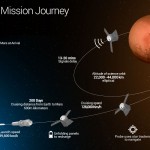
The Hope spacecraft orbiter is a planned 2020 unmanned mission to Mars by the United Arab Emirates to study the Martian atmosphere and climate. The robotic space probe is expected to be launched in the summer of 2020 and to take seven to nine months to arrive at Mars. In designing the orbiter, the Emirates Mars Mission deputy project manager and science lead, Sarah Amiri, is expected to collaborate with the University of Colorado, the University of California, Berkeley and the Arizona State Univ...
More

NASA Selects Five Mars Orbiter Concept Studies

NASA has selected five U.S. aerospace companies to conduct concept studies for a potential future Mars orbiter mission. Such a mission would continue key capabilities including telecommunications and global high-resolution imaging in support of the agency's Journey to Mars. The companies contracted for these four-month studies are: The Boeing Company in Huntington Beach, California; Lockheed Martin Space Systems in Denver; Northrop Grumman Aerospace Systems in Redondo Beach, California; Orbit...
More

NASA Research Could Save Commercial Airlines Billions in New Era of Aviation

The nation’s airlines could realize more than $250 billion dollars in savings in the near future thanks to green-related technologies developed and refined by NASA’s aeronautics researchers during the past six years. These new technologies, developed under the purview of NASA’s Environmentally Responsible Aviation (ERA) project, could cut airline fuel use in half, pollution by 75 percent and noise to nearly one-eighth of today’s levels. “If these technologies start finding their way into t...
More

NASA Directly Observes Fundamental Process of Nature for 1st Time

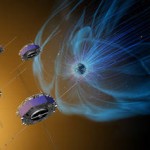
Like sending sensors up into a hurricane, NASA has flown four spacecraft through an invisible maelstrom in space, called magnetic reconnection. Magnetic reconnection is one of the prime drivers of space radiation and so it is a key factor in the quest to learn more about our space environment and protect our spacecraft and astronauts as we explore farther and farther from our home planet. Space is a better vacuum than any we can create on Earth, but it does contain some particles — and it's b...
More

NASA’s CubeSat Launch Initiative Opens Space to Educators, Nonprofits

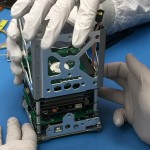
Accredited education institutions, nonprofit organizations and NASA centers can join the adventure and challenges of space while helping the agency achieve its exploration goals through the next round of the agency’s CubeSat Launch Initiative (CSLI). Applicants must submit proposals by 4:30 p.m. EST, Nov. 22. The CSLI provides CubeSat developers with a low-cost pathway to space to conduct research that advances NASA's strategic goals in the areas of science, exploration, technology developmen...
More
Posted in Uncategorized Tagged

NASA Rover’s Sand-Dune Studies Yield Surprise

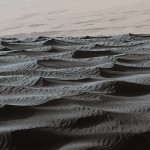
Some of the wind-sculpted sand ripples on Mars are a type not seen on Earth, and their relationship to the thin Martian atmosphere today provides new clues about the atmosphere's history. The determination that these mid-size ripples are a distinct type resulted from observations by NASA's Curiosity Mars rover. Six months ago, Curiosity made the first up-close study of active sand dunes anywhere other than Earth, at the "Bagnold Dunes" on the northwestern flank of Mars' Mount Sharp. "Earth...
More

Regenerative Fuel Cells, Energy Storage Systems Being Developed for Space Applications

A regenerative fuel cell or reverse fuel cell (RFC) is a fuel cell run in reverse mode, which consumes electricity and chemical B to produce chemical A. By definition, the process of any fuel cell could be reversed. However, a given device is usually optimized for operating in one mode and may not be built in such a way that it can be operated backwards. Standard fuel cells operated backwards generally do not make very efficient systems unless they are purpose-built to do so as with high-pressur...
More

NASA Space Walk Images

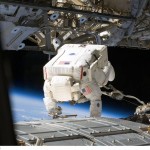
Reflection European Space Agency astronaut Christer Fuglesang is visible in the reflection of NASA astronaut Danny Olivas's helmet visor during this, the STS-128 mission's third and final spacewalk. Olivas and Fuglesang deployed the Payload Attachment System, replaced the Rate Gyro Assembly #2, installed two GPS antennae and worked to prepare for the installation of Node 3 next year. Work Is a Spacewalk During the STS-131 mission's first spacewalk, astronauts Ri...
More

NASA’s research on “Omics” of Space Travel

The human body is incredibly complex. Every part of us—from our bones to our blood cells—is subject to a host of chemical reactions and molecular interactions that, without our conscious effort, keep us alive. But what happens to these processes when we leave the planet? In Earth orbit and beyond, where gravity is counteracted by a constant state of freefall and cosmic radiation intensifies, the molecular inner-workings of the human body may change.  To find out how, NASA has entered a rea...
More

Caterpillar Inc. partnership with NASA

Caterpillar and NASA both continuously work to develop next-generation technologies. Both are also home to some of the greatest engineering minds on the planet, so joining forces in collaborative research was a logical step.  This collaboration delivers value to Caterpillar customers here on Earth and to NASA’s future space explorers. Caterpillar’s relationship with NASA began about a decade ago. In January 2004, the federal government announced a new program to develop technologies that woul...
More