UCSB researchers create nanoparticles to act like blood platelets

Researchers at the University of California, Santa Barbara have created nanoparticles that resemble blood platelets that can be used to speed up the healing process and create clots faster to decrease blood loss from an injury. They have turned to the human body’s own mechanisms for inspiration in dealing with the necessary and complicated process of coagulation. By creating nanoparticles that mimic the shape, flexibility and surface biology of the body’s own platelets, they are able to accelera...
More
How a moth slows its brain to see in the dark

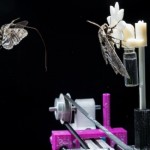
Hawkmoths are big, agile insects that hover in place expertly as they feed on nectar at dawn, dusk, and in the evenings. So, not only is it dark out, but the flowers are moving targets thanks to the breeze. Now, with the help of a robotic flower, researchers reveal how hawkmoths forage in the darkness: Their twilight or night vision is exquisitely attuned to flowers swaying in the wind. The findings, suggest that hawkmoth sight and flight evolved to perfectly match the movements of their only so...
More

Journey to Mars: Detour to the Moon is the best way to travel to the Red Planet.

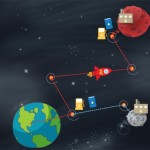
As NASA gears up for a mission to Mars, planning a route to the Red Planet is important. Now, researchers have found that to save on weight and have concluded that a detour to the moon is the best route to Mars. Previous studies have suggested that lunar soil and water ice in certain craters of the moon could potentially be mined and converted to fuel. With the assumption that this tech exists at the time of a Mars mission, taking a detour to the moon to refuel actually reduces the mass of a mis...
More

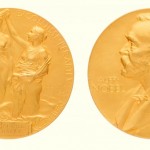
Neutrinos scoop the 2015 Nobel Prize in Physics

Neutrinos have the smallest mass of any known particle, and are created in several ways, including during radioactive decay, directly in the Sun’s core, and when cosmic rays from the Sun hit the Earth’s atmosphere. Thousands of billions of neutrinos are streaming through our bodies each second. The prize has been awarded to two physicists who discovered a strange property of neutrinos, which Imperial scientists are still unravelling today. Today’s physics laureates, Professor Arthur B. McDona...
More

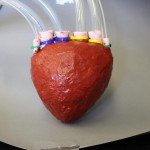
Artificial Foam Heart Created

Cornell University researchers have developed a new lightweight and stretchable material with the consistency of memory foam that has potential for use in prosthetic body parts, artificial organs and soft robotics. The foam is unique because it can be formed and has connected pores that allow fluids to be pumped through it. The foam starts as a liquid, so researchers can pour it into a 3D printed mould in order to form the heart, adding appropriate valves to the finished structure. This means...
More

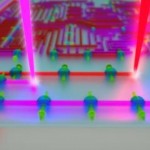
Scientists paint quantum electronics with beams of light.

A team of scientists from the University of Chicago and Penn State University have accidentally discovered a new way of using light to draw and erase quantum-mechanical circuits in a unique class of materials called topological insulators. Researchers may be able to "paint" quantum electronics with beams of light. The electrons in topological insulators have unique quantum properties that many scientists believe will be useful for developing spin-based electronics and quantum computers. Howev...
More

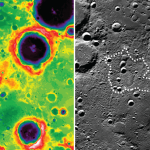
Mound near lunar South Pole formed by unique volcanic process.

Mafic Mound, a distinctive and enigmatic feature near the Moon’s South Pole, is a volcanic structure unlike any other found on the surface of the Earth’s only natural satellite, says a team of planetary geologists at Brown University. It stands about 2,600 feet tall and 47 miles across and lies in the middle of a giant impact crater known as the South Pole-Aitken Basin. “If the scenarios that we lay out for its formation are correct, it could represent a totally new volcanic process that’s ne...
More

NASA’S New Horizons finds blue skies and red water ice on Pluto.

Images sent back by NASA’s New Horizons spacecraft last week reveal that Pluto has blue atmospheric hazes and water ice on its surface. Pluto’s haze layer shows its blue color in this picture taken by the New Horizons Ralph/Multispectral Visible Imaging Camera (MVIC). The high-altitude haze is thought to be similar in nature to that seen at Saturn’s moon Titan. The source of both hazes likely involves sunlight-initiated chemical reactions of nitrogen and methane, leading to relatively small, ...
More

Tesla Autopilot Mode – Model S Software Version 7.0

Tesla has launched a software update for its vehicles enabling the cars to have an "autopilot" mode. The latest software update, 7.0 allows Model S to use its unique combination of cameras, radar, ultrasonic sensors and data to automatically steer down the highway, change lanes, and adjust speed in response to traffic. Once you’ve arrived at your destination, Model S scans for a parking space and parallel parks on your command. Today’s update increases the driver’s confidence behind the wheel...
More
Scientists produce clearest-ever images of enzyme that plays key roles in aging, cancer.

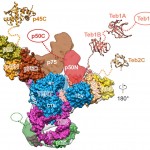
An enzyme called telomerase plays a significant role in aging and most cancers, but until recently many aspects of the enzyme’s structure could not be clearly seen. Scientists from UCLA and UC Berkeley have produced images of telomerase in much higher resolution than ever before, giving them major new insights about the enzyme. Their findings, could ultimately lead to new directions for treating cancer and preventing premature aging. “Many details we could only guess at before, we can now see...
More

Brain cells can be activated by a prosthetic hand.

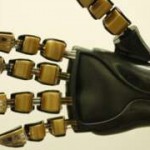
Researchers from Stanford University have improved artificial hands by attaching some flexible sensors on the fingertips, which can generate some electrical signals that can communicate with our brain directly instead of via a processor or a computer to translate back the signals to our brain. Engineers have built a flexible sensor that detects touch and, just like skin, produces electrical pulses that get faster when the pressure increases. They have also used those pulses to drive neuronal ...

More

Predictive technique could help determine breast cancer therapies

Researchers at the Georgia Institute of Technology have developed a predictive model that can provide doctors with an "invasiveness index" for cancer based on blood samples from individual patients, according to a new study. The test is based on chemical expression by specific cells in the body that help cancer move from the breast to other parts of the body. We want women to have more information to make a personal decision beyond the averages calculated for an entire population," said Manu ...
More

COMPASS method points researchers to protein structures.

University of Illinois researchers developed a new approach, dubbed COMPASS that points directly to a protein’s likely structure using a combination of advanced molecular spectroscopy techniques, predictive protein-folding algorithms and image recognition software. Led by U. of I. chemistry professor Chad Rienstra, the team published its results in the journal Structure. “We’ve taken a process that would take months and brought it down to hours,” said Joseph Courtney, an Illinois graduate studen...
More

Malaria protein may hold key for cancer cure.

Danish scientists who were working on ways to fight malaria in pregnant women have accidentally discovered that the malaria protein they were using in their vaccine, when armed with a toxin, could kill cancer cells. The test was conducted on mice, and showed that the malaria protein first attached itself to the carbohydrate of the cancer cell, which later was killed off by the toxin. They hope to be able to begin tests on humans in the next four years. For decades, scientists have been search...
More

Skin Cells Converted into Placenta-Generating Cells

Researchers at the Hebrew University of Jerusalem successfully converted skin cells into placenta-generating cells using the reprogramming method. The intent is to help women who have recurrent miscarriage and placental dysfunction diseases give birth to healthy babies, although researchers said more work will need to be done before that is possible. The placenta is the least understood human organ, but arguably one of the most important ones. It influences not only the health of a woman and ...
More

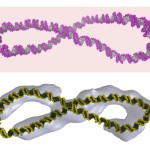
Supercoiled DNA is far more dynamic than the “Watson-Crick” double helix

Researchers have imaged in unprecedented detail the three-dimensional structure of supercoiled DNA, revealing that its shape is much more dynamic than the well-known double helix. As reported online today in the journal Nature Communications, the simulations also show the dynamic nature of DNA, which constantly wiggles and morphs into different shapes, a far cry from the commonly held idea of a rigid and static double helix. Improving our understanding of what DNA looks like when it is in the...
More

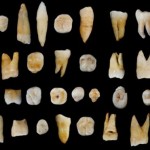
Fossil teeth place humans in Asia “20,000 years early.”

The discovery of 47 human teeth from a cave in southern China has rewritten the narrative of our ancestors' spread out of Africa. Scientists excavating an area in Daoxian say the fossils belong to modern humans and date to at least 80,000 years ago. The date is 20,000 years earlier than had been previously thought, and fills a gap our knowledge on the spread of modern humans around the world. It suggests that modern humans reached southern China from Africa long before they had arrived in northe...
More

How the Brain Controls Sleep

MIT neuroscientists have discovered a brain circuit that can trigger small regions of the brain to fall asleep or become less alert, while the rest of the brain remains awake. This circuit originates in a brain structure known as the thalamic reticular nucleus (TRN), which relays signals to the thalamus and then the brain’s cortex, inducing pockets of the slow, oscillating brain waves characteristic of deep sleep. Slow oscillations also occur during coma and general anesthesia, and are associate...
More

Novel theoretical approach to reduce antibiotic resistance.

Moffitt Cancer Center researchers have developed novel theoretical approach to reduce antibiotic resistance. The increasing rate of antibiotic resistance and slowing discovery of novel antibiotic treatments presents a growing threat to public health. It is estimated that each year in the United States 2 million people become infected with bacteria that are resistant to one or more types of antibiotics, and at least 23,000 people will die because of these infections. This problem is being exacerb...
More

Study reveals how relaxation could cut health care costs

Relaxation-response techniques, such as meditation, yoga, and prayer, could reduce the need for health care services by 43 percent, according to a study at Harvard-affiliated Massachusetts General Hospital (MGH) that looked at participants in a relaxation-response-focused training program. Previous studies have shown that eliciting the relaxation response, a physiologic state of deep rest not only relieves stress and anxiety, but also affects physiologic factors such as blood pressure, heart rat...
More

GM pig organs could soon be transplanted into humans

Pig organs could soon be transplanted into patients after Harvard University scientists discovered a way to genetically modify pig DNA so it is more compatible with humans. Scientists have spent decades trying to engineer pig tissue so that it would not be rejected by the human body, but the immune system has always prevented success. A major hurdle in transplanting pig organs into humans has been overcome by the scientists. All pig DNA carries the porcine endogenous retrovirus which infects ...
More

Antiviral compound fully protects monkeys from Ebola

Rhesus monkeys were completely protected from the deadly Ebola virus when treated three days after infection with a compound that blocks the virus's ability to replicate. These encouraging preclinical results suggest the compound, known as GS-5734, should be further developed as a potential treatment, according to research findings to be presented tomorrow at the IDWeek conference. Travis Warren, Ph.D., a principal investigator at the U.S. Army Medical Research Institute of Infectious Disease...
More

Molecular “kiss of death” wins Noble Prize in Chemistry

Three researchers who unraveled the mechanism behind a molecular kiss of death, a tag that marks proteins for destruction, have been awarded this year's Nobel Prize in Chemistry. Irwin Rose of the University of California, together with Aaron Ciechanover and Avram Hershko from the Israel Institute of Technology in Haifa, transformed cell biology during the early 1980s through their studies of how proteins are broken down inside cells. Their work sparked new ideas about how cells regulate themsel...
More

Drones Could Plant 1 Billion Trees a Year

A UK-based startup called BioCarbon Engineering with CEO Lauren Fletcher and his team have a plan for using fixed-wing and multiple-rotor drones to plant 1 billion trees per year. The startup run by a former NASA engineer, is on a mission to fight industrial-scale deforestation, which robs our planet of 26 billion trees each year. The process begins by deploying fixed wing drones to assess areas in need of replanting and create 3-D maps. The drones conduct aerial surveys and produce detailed ...
More

Bloodhound: World’s fastest racing car.

The supersonic car built to smash the current land speed record has been unveiled in London. Its top speed is more than 1,000mph an hour which is faster than a speeding bullet, and it is powered by Rolls-Royce jet engines and a rocket. The Bloodhound is part of a £40m project spearheaded by Richard Noble, a man who held the record between 1983-1997 at 633.4mph, to break the land speed record. Noble's record was beaten by RAF fighter pilot Andy Green in 1997, who hit more than 763mph. Now work...
More

Scientists explain earthworms’ ability to counteract plant toxins

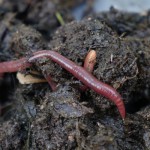
Earthworms have chemical compounds that help them overcome toxic plant defenses to digest difficult leaf litter. Researchers have identified unique chemical compounds in the digestive tracts of earthworm species which counteract the defensive toxins produced by plants, allowing earthworms to consume them safely. Many plants produce defensive chemicals called polyphenols. By binding gut enzymes, polyphenols inhibit the digestion of plant matter. Dead plants retain these chemicals even as th...
More

The Dash – completely wireless stereo earphones

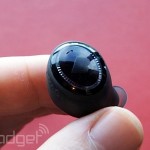
A revolutionary innovation, The Dash consists of a pair of discrete and completely wireless stereo earphones where each earphone is its own, tiny, proprietary computer. Everything about the Dash is focused on delivering freedom of movement, incredible sound and comfort. Music is a part of everyone’s life. It brings joy, excitement and motivation. However it is not always a pleasure listening to music with headphones. Cables tangle and pull at the headphones and ultimately break. In addi...
More

The UPP cartridge: New Portable Charger

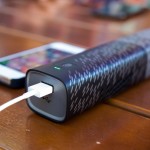
UPP cartridge has a life of 9 years so it is always ready in an emergency. Imagine you have an emergency and your phone is not charged. If you want the ultimate in reliable back up power for use in an emergency or as an everyday extra power source you need an Upp. Upp is a Fuel Cell, not a battery so it does not need any charging from the mains, allowing you to be away from the power grid for longer than conventional battery packs. This is a hydrogen fuel cell charger that can provide u...
More

Soft robot to swim through Europa’s oceans

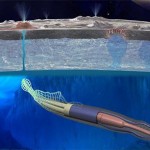
A soft, swimming robot for exploring Jupiter’s moon Europa. A Cornell engineering team has received a nine-month, $100,000 starter grant from NASA to develop a soft, swimming robot suitable for exploring the harsh conditions of other worlds, notably Jupiter’s moon Europa. An amphibious robot that can swim through the oceans of distant moons and planets could be the next iteration of self-sustaining, robotic space exploration. The Cornell team developing this otherworldly robot is led by Ma...
More

Underwater kite-turbine scheme

A £25m tidal energy project which works through moving "kites" underwater is being launched on Anglesey. Swedish firm Minesto wants to harness power under the sea off the coast of Holyhead. It will set up its UK offices there and hopes to become a manufacturing centre, creating more jobs there. The so-called Deep Green technology works on the principle that underwater "kites" can reach speeds 10 times faster than the current. This works in the same way a kite flies faster than the wind, and t...
More