
China Zorrilla: World’s Largest Battery-Electric Ferry Sets Sail

China Zorrilla: World's Largest Battery-Electric Ferry Sets Sail
The port of Buenos Aires, home terminal of ferry operator Buquebus, whose China Zorrilla now sails to Uruguay on battery power. Photo: Roberto Fiadone, via Wikimedia Commons, CC BY-SA 4.0. Electric ferries are not new; small ones have crossed Norwegian fjords for years. What changed this month is scale. China Zorrilla, a 130-meter catamaran built by Incat Tasmania for operator Buquebus, has entered commercial service between Buenos Aires, Argentina, and Colonia, Uruguay. It is the largest ba...
More


Peptide drugs with longer lifespan open new doors for treating diseases.

A research led by scientists from the University of the Pacific holds new possibilities for the treatment of cancer and other diseases using peptide drugs. The researchers concocted a technique to considerably enhance the lifespan of peptides such that they could be used more efficiently. Peptides are small chains of amino acids, the building blocks of proteins. Treating diseases like cancer by using peptides is thought to be effective because they can be more potent, and safer to use than large...
More

Predictive technique could help determine breast cancer therapies

Researchers at the Georgia Institute of Technology have developed a predictive model that can provide doctors with an "invasiveness index" for cancer based on blood samples from individual patients, according to a new study. The test is based on chemical expression by specific cells in the body that help cancer move from the breast to other parts of the body. We want women to have more information to make a personal decision beyond the averages calculated for an entire population," said Manu ...
More

Novel theoretical approach to reduce antibiotic resistance.

Moffitt Cancer Center researchers have developed novel theoretical approach to reduce antibiotic resistance. The increasing rate of antibiotic resistance and slowing discovery of novel antibiotic treatments presents a growing threat to public health. It is estimated that each year in the United States 2 million people become infected with bacteria that are resistant to one or more types of antibiotics, and at least 23,000 people will die because of these infections. This problem is being exacerb...
More

Fovista® Treatment for wet Age-Related Macular Degeneration (AMD).

Fovista is a promising new treatment for wet AMD is currently in Phase 3 clinical trials. It is designed to target platelet derived growth factor (PDGF) in combination with anti-VEGF drugs to disrupt the formation of abnormal new blood vessels in wet AMD. Patients with wet AMD are helped by drugs that block the growth and leakage of abnormal blood vessels. Currently, the most frequently used drugs that are injected into the eye are Eylea®, Lucentis®, or Avastin®. On average, patients who rece...
More

Genetic Mutations Clue to Breast Cancer Relapse

Scientists have discovered a genetic clue to why some breast cancers relapse, which could lead to better treatment. The latest research on breast cancer was presented at the European Cancer Congress (ECC) in Vienna by Rd. Lucy Yates, leader of the team from the Wellcome Trust Sanger Institute at the University of Cambridge, Xinhua. The research team has found genetic mutations as clues to breast cancer relapse, which could tell whether breast cancer is likely to relapse after treatment. ...
More

Tenease – A New treatment for Tennis Elbow

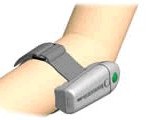
A new medical device called Tenease  has been developed by Ranjan Vhadra, a leading orthopedic surgeon for the treatment for tennis elbow.  The disease itself is a chronic condition caused by damage to the fibres of the elbow which lead to weakness and pain. As this is a common condition, it may affect most adults at some stage in their lives. Vibration therapy has proven to be the most effective method for treating tennis elbow and can also help reduce pain by more than 40 percent; however, ...
More

Freespira a new, non-pharmaceutical treatment for panic disorder

A novel non-drug treatment, the Freespira Breathing System, can train individuals with panic disorder to adjust their breathing, reducing the number of panic attack occurrences substantially—all at home. Individuals with panic disorder have a different breathing pattern than others, even during times when they are not having a panic attack. Scientists have proved this difference through research that has shown varying respiration rates and exhaled CO2 levels between those with panic disorder ...
More