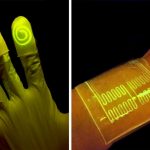
Engineers and biologists at MIT have developed Living sensors bandages that light up when in contact with certain chemicals

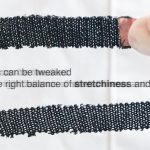
Engineers and biologists at MIT have teamed up to design a new “living material” — a tough, stretchy, biocompatible sheet of hydrogel injected with live cells that are genetically programmed to light up in the presence of certain chemicals. In a paper published this week in the Proceedings of the National Academy of Sciences, the researchers demonstrate the new material’s potential for sensing chemicals, both in the environment and in the human body. The team fabricated various wearable sensor...
More
UCLA neuroscience research suggests, people who had the strongest responses in the areas of the brain associated with perceiving pain and emotion and imitating others were also the most generous.

Your brain might be hard-wired for altruism It’s an age-old quandary: Are we born “noble savages” whose best intentions are corrupted by civilization, as the 18th century Swiss philosopher Jean-Jacques Rousseau contended? Or are we fundamentally selfish brutes who need civilization to rein in our base impulses, as the 17th century English philosopher Thomas Hobbes argued? After exploring the areas of the brain that fuel our empathetic impulses — and temporarily disabling other regions that o...
More

University Of Melbourne research team has developed method to accurately identify a term baby who is at risk of stillbirth

We don’t know the full causes of stillbirth, but in about half of cases it is caused by the placenta not working properly. The placenta feeds and oxygenates the baby so when it isn’t working well babies become growth restricted. Fetuses that are growth restricted are at 3-4 times increased risk of stillbirth. So, finding a test that accurately flags babies that are growth restricted and intervening early may be the key to reducing stillbirths. But it is surprisingly hard to identify such grow...
More

Doctors Treat Deadly Cancerous Disorders with Gene-Guided, Targeted Therapy

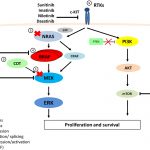
Genomic testing of biopsies from patients with deadly, treatment-resistant cancerous blood syndromes called histiocytoses allowed doctors to identify genes fueling the ailments and use targeted molecular drugs to successfully treat them. Researchers from the Cincinnati Children's Cancer and Blood Diseases Institute report their data in Journal of Clinical Investigation Insight (JCI Insight). They recommend the regular use of comprehensive genomic profiling at diagnosis to positively impact cl...
More

University of Rochester researchers have developed microbial fuel cell (MFC) with electrode made from paper, and will enable certain bacteria to produce electricity from waste

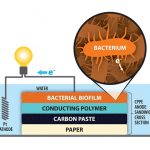
A microbial fuel cell (MFC), or biological fuel cell, is a bio-electrochemical system that drives an electric current by using bacteria and mimicking bacterial interactions found in nature. MFCs can be grouped into two general categories: mediated and unmediated. The first MFCs, demonstrated in the early 20th century, used a mediator: a chemical that transfers electrons from the bacteria in the cell to the anode. Unmediated MFCs emerged in the 1970s; in this type of MFC the bacteria typically...
More

Stanford engineers create a low-cost battery made with urea

Stanford University researchers created an aluminum-ion battery that uses an electrolyte material made of urea, the main component of urine (after water). A battery made with urea, commonly found in fertilizers and mammal urine, could provide a low-cost way of storing energy produced through solar power or other forms of renewable energy for consumption during off hours. A battery developed in Stanford Professor Hongjie Dai’s lab could provide low-cost storage for solar energy. (Image credit...
More

Multiple research studies suggest cocoa solids are one of the richest sources of flavanol antioxidants and carry health benefits, protecting against everything from heart disease to stroke to dementia.

Cocoa solids are a mixture of many substances remaining after cocoa butter is extracted from cacao beans. When sold as an end product, it may also be called cocoa powder or cocoa. In contrast, the fatty component of chocolate is cocoa butter. Cocoa butter is 50% to 57% of the weight of cocoa beans and gives chocolate its characteristic melting properties. Cocoa liquor or cocoa mass is a paste of roasted cocoa beans with cocoa butter and solids in their natural proportions. Chocolate requires the...
More

Study Conducted by professor Kirsi Pietiläinen of University of Helsinki Finland suggests, mitochondrial dysfunction likely results in excess weight that is difficult to lose

Professor Kirsi Pietiläinen has located the impact of obesity in the mitochondria of fat tissue. Mitochondrial dysfunction likely results in excess weight that is difficult to lose. Kirsi Pietiläinen, a recently appointed professor at the Faculty of Medicine, has studied obesity since the early 90s. Professor Jaakko Kaprio’s extensive twin study data is central to her research. After studying the genetics and epidemiology of obesity as well as conducting extensive surveys, she is now study...
More

Vrije Universiteit Amsterdam research suggests happiness and depression might be partially genetic

For the first time in history, researchers have isolated the parts of the human genome that could explain the differences in how humans experience happiness. These are the findings of a large-scale international study in over 298,000 people, conducted by VU Amsterdam professors Meike Bartels (Genetics and Wellbeing) and Philipp Koellinger (Genoeconomics). The researchers found three genetic variants for happiness, two variants that can account for differences in symptoms of depression, and eleve...
More

MIT researchers have developed ingestible electronic devices that can harness stomach acid to power it and could monitor physiological conditions or deliver drugs

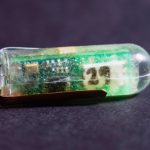
Researchers at MIT and Brigham and Women’s Hospital have designed and demonstrated a small voltaic cell that is sustained by the acidic fluids in the stomach. The system can generate enough power to run small sensors or drug delivery devices that can reside in the gastrointestinal tract for extended periods of time. This type of power could offer a safer and lower-cost alternative to the traditional batteries now used to power such devices, the researchers say. “We need to come up with ways to...
More

Harvard scientists create ‘Metallic Hydrogen’ which could be a super conductor of the future

Metallic hydrogen is a kind of degenerate matter, a phase of hydrogen in which it behaves like an electrical conductor. This phase was predicted in 1935 on theoretical grounds by Eugene Wigner and Hillard Bell Huntington. At high pressure and temperatures, metallic hydrogen might exist as a liquid rather than a solid, and researchers think it is present in large amounts in the gravitationally compressed interiors of Jupiter, Saturn, and in some extrasolar planets Atomic metallic hydrogen, ...
More

Wyss Center for Bio and Neuroengineering in Geneva Switzerland has developed a brain-computer interface device that can decipher the thoughts of people who are unable to communicate

A brain-computer interface that can decipher the thoughts of people who are unable to communicate could revolutionize the lives of those living with complete locked-in syndrome according to a new paper published in PLOS Biology. Counter to expectations, the participants in the study reported being “happy” despite their condition. In the trial, people with complete locked-in syndrome, who were incapable of even moving their eyes to communicate, were able to respond “yes” or “no” via though...
More

Citizen science is the involvement of the public in scientific research – whether community-driven research or global investigations

Citizen science is the involvement of the public in scientific research – whether community-driven research or global investigations. The Citizen Science Association unites expertise from educators, scientists, data managers, and others to power citizen science. Join us, and help speed innovation by sharing insights across disciplines. https://youtu.be/UVuEsuk9Dgc   Whether through grassroots action or technology-mediated crowdsourcing, there has been a rapid increase in public par...
More

UC San Diego Jacobs school of engineering has created nanoparticle-based device that can absorb infrared light upto 98%

Transparent window coatings that keep buildings and cars cool on sunny days. Devices that could more than triple solar cell efficiency. Thin, lightweight shields that block thermal detection. These are potential applications for a thin, flexible, light-absorbing material developed by engineers at the University of California San Diego. The material, called a near-perfect broadband absorber, absorbs more than 87 percent of near-infrared light (1,200 to 2,200 nanometer wavelengths), with 98 per...
More

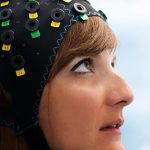
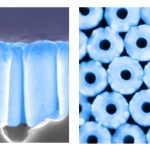
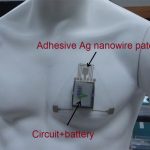
Researchers from North Carolina State University have developed a wearable, wireless sensor that can monitor a person’s skin hydration in real-time

Researchers from North Carolina State University have developed a wearable, wireless sensor that can monitor a person’s skin hydration for use in applications that need to detect dehydration before it poses a health problem. The device is lightweight, flexible and stretchable and has already been incorporated into prototype devices that can be worn on the wrist or as a chest patch. The hydration sensors consist of two electrodes made of an elastic polymer composite that contains conductive ...
More

University of Borås Sweden has built smart textiles that work as an artificial muscle

Researchers have coated normal fabric with an electroactive material, and in this way given it the ability to actuate in the same way as muscle fibres. The technology opens new opportunities to design “textile muscles” that could, for example, be incorporated into clothes, making it easier for people with disabilities to move. The study, which has been carried out by researchers at Linköping University and the University of Borås in Sweden, has been published in Science Advances. Developm...
More

Yale-led research on how cancer cells spread has found that a melanoma cell and a white blood cell can fuse to form a hybrid with the ability to metastasize.

In a second human case, a Yale-led research team has found that a melanoma cell and a white blood cell can fuse to form a hybrid with the ability to metastasize. The finding provides further insight into how melanoma and other cancers spread from solid tumors with implications for future treatment. The study was published on Jan. 27 in the journal PLOS ONE. Cancer turns deadly when malignant cells spread from a primary tumor to other organs and tissues. Building on a theory first proposed ...
More

Medication Mix-Up Is A Big Challange

A 69-year-old man with chronic kidney disease and essential hypertension was admitted to the hospital with chest pain, headache, and accelerated hypertension. Of note, he had missed taking several days of his regular medications. Upon admission, his blood pressure was 218/126 mm Hg with a heart rate of 90 beats per minute. Physical examination revealed a patient in mild discomfort, but no distress, presence of an S4 (indicating reduced ventricular wall compliance), and otherwise normal cardiopul...
More

Research suggest diversity in the workplace is more likely to have financial returns above their national industry medians

Diversity in the workplace helps firms be more productive, according to a study co-authored by an MIT researcher — but it may also reduce satisfaction among employees. “Having a more diverse set of employees means you have a more diverse set of skills,” says Sara Ellison, an MIT economist, which “could result in an office that functions better.” At the same time, individual employees may prefer less diverse settings. The study, analyzing a large white-collar U.S. firm, examined how much “s...
More

Graphene may be the new “miracle material” of the 21st century

Superconductivity is a phenomenon of exactly zero electrical resistance and expulsion of magnetic flux fields occurring in certain materials when cooled below a characteristic critical temperature. Electrical resistance in metals arises because electrons propagating through the solid are scattered due to deviations from perfect translational symmetry. These are produced either by impurities (giving rise to a temperature independent contribution to the resistance) or the phonons - lattice vibr...
More

University of Tokyo research findings will help thermal conduction and insulators. Study suggest trajectory of an electron passing through a magnetic field is bent.

A research group at the University of Tokyo and their collaborators have observed a phenomenon similar to the Hall effect—found only in electricity-conducting metal—in a spin liquid state, which, as an insulator, does not carry electricity. This groundbreaking discovery presents a new research method for studying spin liquid states, which are shrouded in mystery. A trajectory of an electron passing through a magnetic field is bent by what is known as the Lorentz force—the force exerted on the...
More

KTH ROYAL INSTITUTE OF TECHNOLOGY Sweden has a online course on spaceflight returns with certification for participants

Online course on spaceflight returns with certification for participants Learn about human space travel from an experienced ESA astronaut who flew on Space Shuttle Discovery to conduct research on the International Space Station. Christer Fuglesang participates in a spacewalk outside the International Space Station in 2006. The history-making ESA astronaut/KTH adjunct professor leads a massive online course (MOOC) in human spaceflight in which students can get certification from ed...
More

IBM’s Watson supercomputer will soon be the new smart doctor on the block

IBM's Watson correctly diagnosed a patient after doctors failed. It turns out the world’s smartest supercomputer is a pretty good doctor, too. Five years after dominating geniuses in its debut on Jeopardy!, IBM’s Watson is still putting human intelligence to shame. The artificial intelligence machine correctly diagnosed a 60-year-old woman’s rare form of leukemia within 10 minutes — a medical mystery that doctors had missed for months at the University of Tokyo. After treatment for a wo...
More

Aladdin Shadyab Researcher at University of California Suggests, Too Much Sitting Ages You Faster

Researchers at University of California San Diego School of Medicine report that elderly women who sit for more than 10 hours a day with low physical activity have cells that are biologically older by eight years compared to women who are less sedentary. The study, publishing online January 18 in the American Journal of Epidemiology, found elderly women with less than 40 minutes of moderate-to-vigorous physical activity per day and who remain sedentary for more than 10 hours per day have shor...
More

Harvard University and Boston Children’s Hospital researchers have developed a customizable soft robot that fits around a heart and helps it beat

Harvard University and Boston Children’s Hospital researchers have developed a customizable soft robot that fits around a heart and helps it beat, potentially opening new treatment options for people suffering from heart failure. The soft robotic sleeve twists and compresses in synch with a beating heart, augmenting cardiovascular functions weakened by heart failure. Unlike currently available devices that assist heart function, Harvard’s soft robotic sleeve does not directly contact blood. T...
More

Trinity College Dublin – CRANN researchers develop new method of splitting water into hydrogen and oxygen

Researchers at CRANN, Ireland’s leading Science Foundation Ireland funded nanoscience institute based at Trinity College Dublin (TCD), have developed a new method of splitting water into hydrogen and oxygen. The discovery will have significant impact in the worldwide race to cheaply and efficiently produce hydrogen gas, hailed as the clean energy source of the future. Professor Mike Lyons, a Principal Investigator at CRANN and TCD’s School of Chemistry and his team have developed new inexpens...
More

Hadi Ghasemi researcher at University of Houston has developed ‘smart material’ that repel ice

Researchers have discovered a 'smart' material that can be applied to any surface to repel ice and outperforms all others currently in use. Icy conditions can be deadly, whether you are flying into bad weather or too close to power transmission lines during a storm, researchers said. Researchers have discovered a 'smart' material that can be applied to any surface to repel ice and outperforms all others currently in use. Icy conditions can be deadly, whether you are flying into bad ...
More

Mustafa Chopan and Benjamin Littenberg of Larner College of Medicine Research Suggest, Spicy food may lead to longer life.

Eating spicy food may lead to a longer life, according to a new US study. Researchers at the Larner College of Medicine at the University of Vermony found that consumption of hot red chilli peppers is associated with a 13 per cent reduction in total mortality - primarily in deaths due to heart disease or stroke - in a large prospective study published in medical journal PLoS ONE. Only one other study - conducted in China and published in 2015 - has previously examined chilli pepper consump...
More

Scientists at the Imperial College London Have Developed Urine Test Method That Can Reveal How Healthy Your Meals Are.

Scientists at the Imperial College London Department of Medicine, in conjunction with Newcastle University and Aberystwyth University, in the United Kingdom have developed a urine test that can tell how healthy your diet. A urine test that can reveal how healthy your meals are has been developed by UK scientists. They think it could be used to improve nutritional advice They think it could be used to improve nutritional advice or in weight loss because people are notoriously bad at recordi...
More

MIT Media Lab and Berklee’s Institute have started Open Music Initiative (OMI) to dramatically simplify the way music creators and rights owners are identified and compensated using blockchain-inspired open and interoperable digital rights management platform.

Berklee’s Institute for Creative Entrepreneurship (BerkleeICE) announced today a groundbreaking initiative called the Open Music Initiative (OMI) to dramatically simplify the way music creators and rights owners are identified and compensated—a thorny issue that has challenged the music industry and stifled creator incomes and industry revenues since the dawn of the digital era. The effort will combine BerkleeICE’s expertise in the music industry with the MIT Media Lab’s expertise in decentraliz...
More