University of Maryland have used modified wood as a unique architecture for the negative electrode of a lithium metal battery, seeking to prevent some of the key factors that lead to battery failur

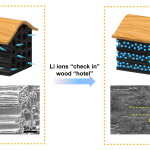
Inspired by the structure of wood, engineers at the University of Maryland have used modified wood as a unique architecture for the negative electrode of a lithium metal battery, seeking to prevent some of the key factors that lead to battery failure. Lithium ion shuttling in rechargeable batteries provides energy to power phones, laptops, and even light bulbs. When the battery is charged, the lithium metal expands; and when it is discharged, the lithium metal deflates. This rapid c...
More


KTH Royal Institute Of Technology Researchers Tests Show How Trucks Can Reuse Engine Heat For Power

A 195-year-old discovery is behind a new system that will save vehicles hundreds of litres of fuel and reduce their carbon emissions by as much as 2 to 3 tonnes per year. Working with automotive manufacturer Scania, researchers from KTH Royal Institute of Technology have been testing semi trucks equipped with a system that converts exhaust heat into power — through a process called thermoelectric generation (TEG). The voltage produced by the system can power the truck and reduce...
More
Posted in Uncategorized Tagged

North Carolina State University have developed a technique that uses light to get two-dimensional (2-D) plastic sheets to curve into three-dimensional (3-D) structures, such as spheres, tubes or bowls.

Researchers at North Carolina State University have developed a technique that uses light to get two-dimensional (2-D) plastic sheets to curve into three-dimensional (3-D) structures, such as spheres, tubes or bowls. The advance builds on earlier work by the same research team, which focused on self-folding 3-D structures. The key advance here is that rather than having the plastic fold along sharp lines – into polygonal shapes such as cubes or pyramids – the plastics bend and curve. Res...
More

Lockheed Martin’s Robert Afzal and team have developed laser weapon systems, taking the page from star wars and making it real

Science reality has caught up with science fiction. Lockheed Martin is showing that laser weapon systems can turn up the heat and stop land, air or sea targets in their path. And, they can be compact enough and power efficient enough for tactical platforms on the move, providing nearly unlimited “bullets” with speed-of-light response. Lockheed Martin is moving at light speed to position these capable systems for success on the battlefield. They have developed innovative fiber lasers, sophisti...
More

Researchers at North Carolina State University have created a “nano-accordion” material that conducts electricity and is transparent, flexible, and stretchable

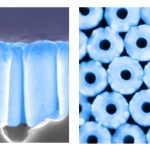
Researchers from North Carolina State University have created stretchable, transparent conductors that work because of the structures’ “nano-accordion” design. The conductors could be used in a wide variety of applications, such as flexible electronics, stretchable displays or wearable sensors. Multifunctional nano-accordion structures exhibiting a unique combination of conductivity, stretchability, and transparency are fabricated through a combination of nanolithography and atomic layer depo...
More

NASA high-temp materials for spacecraft may help save firefighters

NASA research into flexible, high-temperature space materials may some day improve personal fire shelter systems and help wildland firefighters better survive dangerous wildfires. NASA's Langley Research Center in Hampton, Virginia, is working with the U.S. Department of Agriculture's Forest Service to see if flexible thermal protection system technology being developed for space entry vehicles could also work to protect firefighters caught in a raging forest fire. The material the NASA re...
More

University of Texas professor John Goodenough who invented Lithium-Ion Battery has now developed new solid state battery technology for fast-charging, noncombustible batteries

A team of engineers led by 94-year-old John Goodenough, professor in the Cockrell School of Engineering at The University of Texas at Austin and co-inventor of the lithium-ion battery, has developed the first all-solid-state battery cells that could lead to safer, faster-charging, longer-lasting rechargeable batteries for handheld mobile devices, electric cars and stationary energy storage. Goodenough’s latest breakthrough, completed with Cockrell School senior research fellow Maria H...
More

Lawrence Livermore National Laboratory Scientific team has developed a nano-sized hydrogen storage system to increase efficiency

Lawrence Livermore scientists have collaborated with an interdisciplinary team of researchers, including colleagues from Sandia National Laboratories(link is external), to develop an efficient hydrogen storage system that could be a boon for hydrogen-powered vehicles. Hydrogen is an excellent energy carrier, but the development of lightweight solid-state materials for compact, low-pressure storage is a huge challenge. Complex metal hydrides are a promising class of hydrogen storage materia...
More

Scientists From Columbia University have developed light bulb thinner than paper

Imagine a light bulb made from something thinner than paper, but stronger than any other material known to man. Seems impossible — except it isn't. A group of scientists from Columbia University, Seoul National University and the Korea Research Institute of Standards and Science announced that they successfully developed a light bulb made out of graphene — material that's only as thick as an atom, but strong as a diamond. Indeed, graphene is considered the world's strongest material. While th...
More

Stanford and Oxford University researchers have created novel flexible solar cells from crystalline perovskite that could outperform existing silicon cells and allow it to be printed

A perovskite solar cell is a type of solar cell which includes a perovskite structured compound, most commonly a hybrid organic-inorganic lead or tin halide-based material, as the light-harvesting active layer. Perovskite materials such as methylammonium lead halides are cheap to produce and simple to manufacture. Perovskite solar cells have shown potential both in the rapid efficiency improvement (from 2.2% in 2006 to the latest record 20.1% in 2014) and in cheap material and manufacturing c...
More

MIT researchers discover astonishing behavior of water confined in carbon nanotubes making water freeze solid at boiling temperatures

It’s a well-known fact that water, at sea level, starts to boil at a temperature of 212 degrees Fahrenheit, or 100 degrees Celsius. And scientists have long observed that when water is confined in very small spaces, its boiling and freezing points can change a bit, usually dropping by around 10 C or so. But now, a team at MIT has found a completely unexpected set of changes: Inside the tiniest of spaces — in carbon nanotubes whose inner dimensions are not much bigger than a few water molecule...
More

Disney Research created a method to wirelessly transmit power through a room. (quasistatic cavity resonance (QSCR))

Disney Research created a method to wirelessly transmit power through a room, allowing electronic devices to charge quickly via connected Wi-Fi hotspots, removing the need for electrical cords and charging cradles. Wireless power delivery has the potential to seamlessly power our electrical devices as easily as data is transmitted through the air. However, existing solutions are limited to near contact distances and do not provide the geometric freedom to enable automatic and un-aided chargin...
More

University of Rochester researchers have developed microbial fuel cell (MFC) with electrode made from paper, and will enable certain bacteria to produce electricity from waste

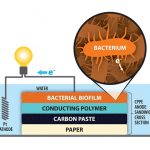
A microbial fuel cell (MFC), or biological fuel cell, is a bio-electrochemical system that drives an electric current by using bacteria and mimicking bacterial interactions found in nature. MFCs can be grouped into two general categories: mediated and unmediated. The first MFCs, demonstrated in the early 20th century, used a mediator: a chemical that transfers electrons from the bacteria in the cell to the anode. Unmediated MFCs emerged in the 1970s; in this type of MFC the bacteria typically...
More

Stanford engineers create a low-cost battery made with urea

Stanford University researchers created an aluminum-ion battery that uses an electrolyte material made of urea, the main component of urine (after water). A battery made with urea, commonly found in fertilizers and mammal urine, could provide a low-cost way of storing energy produced through solar power or other forms of renewable energy for consumption during off hours. A battery developed in Stanford Professor Hongjie Dai’s lab could provide low-cost storage for solar energy. (Image credit...
More

NASA has developed micro batteries (2-3 millimeters) that will be able to power microsatellites, including CubeSats.

Sometimes good things come in very small packages. Just ask Dr. Luke Roberson, senior principal investigator for Flight Research within the Exploration Research and Technology Directorate at NASA's Kennedy Space Center in Florida. Dr. Roberson is collaborating on research of a new solid-state battery prototype with Dr. Ryan Karkkainen, a composite material expert at the University of Miami. The chemistry and structure for the battery was developed by Xiangyang Zhou, Ph.D., associate professor...
More

Harvard scientists create ‘Metallic Hydrogen’ which could be a super conductor of the future

Metallic hydrogen is a kind of degenerate matter, a phase of hydrogen in which it behaves like an electrical conductor. This phase was predicted in 1935 on theoretical grounds by Eugene Wigner and Hillard Bell Huntington. At high pressure and temperatures, metallic hydrogen might exist as a liquid rather than a solid, and researchers think it is present in large amounts in the gravitationally compressed interiors of Jupiter, Saturn, and in some extrasolar planets Atomic metallic hydrogen, ...
More

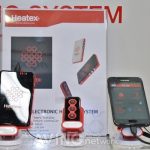
HEATEX technology FROM Kolon Glotech Inc. is a heat-generating textile for clothing that uses a conductive polymer to create heat.

HEATEX technology FROM Kolon Glotech Inc. is a heat-generating textile for clothing that uses a conductive polymer to create heat. 'Heatex' is a cutting edge self-heating textile that can generate heat up to 200 degree with a conductivity high molecule laminating technology, this product can used as a sports wear, medical and industry usage as well as clothes with electron circuit composition through computer simulation.   Heatex' is a cutting edge self-heating textile that can...
More

UC San Diego Jacobs school of engineering has created nanoparticle-based device that can absorb infrared light upto 98%

Transparent window coatings that keep buildings and cars cool on sunny days. Devices that could more than triple solar cell efficiency. Thin, lightweight shields that block thermal detection. These are potential applications for a thin, flexible, light-absorbing material developed by engineers at the University of California San Diego. The material, called a near-perfect broadband absorber, absorbs more than 87 percent of near-infrared light (1,200 to 2,200 nanometer wavelengths), with 98 per...
More

Estream is a personal hydroelectric generator for charging your gadgets.

Estream is a personal hydroelectric generator for charging your gadgets. The Estream portable generator is powered by, arguably, the most reliable natural resource on the planet: running water. Small, compact, and easy to use, this device is like carrying a portable hydroelectric plant in your backpack. Estream is a portable power turbine, which uses the stream of flowing rivers to generate energy. It is the successor of Enomad, a technology that first made its appearance earlier this ...
More

LED Solar Power Bricks

  Ideal for outdoor areas, these solar powered bricks are perfect for entryways, carports, ... Working from a solar power source, these lights are easy to install, and once ... Light Source: LED; Material: Glass; Maximum Wattage. The solar powered LED light have 7 colors that change as needed. It supports auto ON at night, and auto OFF in the morning. It's powered by the Green Energy and install easily without any wires. It has long life span and is Waterproof making it ideal for use ...
More

Amazon’s ‘Echo’ Virtual Assistant Has Many New ‘Skills’ to Voice Control All Walks Of Your Daily Life

Amazon's 'Echo' is a hands-free Virtual Assistant with speaker that you control with your voice. Echo connects to the Alexa Voice Service to play music, provide information, news, sports... Amazon Echo (known in-development as Doppler or Project D and shortened and referred to as Echo) is a smart speaker developed by Amazon.com. The device consists of a 9.25-inch (23.5 cm) tall cylinder speaker with a seven-piece microphone array. The device connects to the voice-controlled intelligent person...
More

Graphene may be the new “miracle material” of the 21st century

Superconductivity is a phenomenon of exactly zero electrical resistance and expulsion of magnetic flux fields occurring in certain materials when cooled below a characteristic critical temperature. Electrical resistance in metals arises because electrons propagating through the solid are scattered due to deviations from perfect translational symmetry. These are produced either by impurities (giving rise to a temperature independent contribution to the resistance) or the phonons - lattice vibr...
More

University of Tokyo research findings will help thermal conduction and insulators. Study suggest trajectory of an electron passing through a magnetic field is bent.

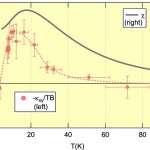
A research group at the University of Tokyo and their collaborators have observed a phenomenon similar to the Hall effect—found only in electricity-conducting metal—in a spin liquid state, which, as an insulator, does not carry electricity. This groundbreaking discovery presents a new research method for studying spin liquid states, which are shrouded in mystery. A trajectory of an electron passing through a magnetic field is bent by what is known as the Lorentz force—the force exerted on the...
More

Hadi Ghasemi researcher at University of Houston has developed ‘smart material’ that repel ice

Researchers have discovered a 'smart' material that can be applied to any surface to repel ice and outperforms all others currently in use. Icy conditions can be deadly, whether you are flying into bad weather or too close to power transmission lines during a storm, researchers said. Researchers have discovered a 'smart' material that can be applied to any surface to repel ice and outperforms all others currently in use. Icy conditions can be deadly, whether you are flying into bad ...
More

FosPower EnergyPad is the slimmest Qi-enabled wireless inductive charger for smartphones.

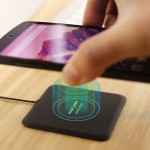
FosPower EnergyPad is the slimmest Qi-enabled wireless inductive charger for smartphones. Wireless chargers are now available for your smartphone and other devices. Many of the latest smartphones come with support for Qi wireless charging. FosPower EnergyPad is one of the slimmest Qi-enabled wireless inductive charging pad available. With only 2.3mm thin, it makes charging less of a distraction, but more of a work of art. Wireless charging means you won’t have to plug your phone into your ...
More

Berkeley Lab Scientists Brew Jet Fuel in Lab

Researchers at the U.S. Department of Energy’s Lawrence Berkeley National Laboratory (Berkeley Lab) have engineered a strain of bacteria that enables a “one-pot” method for producing advanced biofuels from a slurry of pre-treated plant material. The Escherichia coli (E. coli) is able to tolerate the liquid salt used to break apart plant biomass into sugary polymers. Because the salt solvent, known as ionic liquids, interferes with later stages in biofuels production, it needs to be removed be...
More

Department of Energy’s National Accelerator Laboratory Computer Simulations Show How Light Pulses Can Create Channels that Conduct Electricity with No Resistance in Atomically Thin Semiconductors

Theoretical physicists at the Department of Energy’s SLAC National Accelerator Laboratory used computer simulations to show how special light pulses could create robust channels where electricity flows without resistance in an atomically thin semiconductor. If this approach is confirmed by experiments, it could open the door to a new way of creating and controlling this desirable property in a wider range of materials than is possible today. Over the past decade, understanding how to creat...
More

Michigan State University scientists have engineered microalgae’s biofuel

Michigan State University scientists have engineered “molecular Velcro” into cyanobacteria, boosting this microalgae’s biofuel viability as well as its potential for other research. The findings, featured in the current issue of ACS Synthetic Biology, show how MSU researchers have designed a surface display system to attach cyanobacteria, also known as blue-green algae, to yeast and other surfaces. The proof-of-concept may improve the efficiency of harvesting algae as well as open avenues to ...
More

Human body generates enough energy to charge iphone.

Electricity is found throughout the human body. The flow of charged ions causes your heart to beat and your muscles to contract. But nowhere in the body is electrical activity better documented than the brain, which contains roughly a hundred billion electrically conductive, biological wires. Electricity is found throughout the human body. The flow of charged ions causes your heart to beat and your muscles to contract. But nowhere in the body is electrical activity better documented than the ...
More
Posted in Uncategorized Tagged

Human body literally glows, emitting a visible light in extremely small quantities

The human body literally glows, emitting a visible light in extremely small quantities at levels that rise and fall with the day. Past research has shown that the body emits visible light, 1,000 times less intense than the levels which can be seen with the naked eye. In fact, virtually all living creatures emit very weak light. To learn more about this faint visible light, scientists in Japan employed extraordinarily sensitive cameras capable of detecting single photons. Five healthy male ...
More