

ASU Builds Nanoscale DNA Structures From a Minimal Cube Kit

Translucent glowing blue cubes self-assembling into a large fractal lattice
AI-generated illustration Imagine designing a handful of tiny building blocks, dropping them in a container, shaking, and watching them assemble themselves into an intricate shape. Researchers at Arizona State University have done that with DNA, at a scale almost unimaginably small. Associate Professor Petr Sulc's team describes the approach in research published November 25, 2026 in Science Robotics, as reported in an ASU News story. Sulc sums it up this way: "It's like playing Minecraf...
More
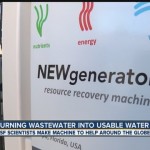
USF team’s invention turns waste into clean water, energy and fertilizers.

The NEWgenerator converts waste into nutrient fertilizers, renewable energy, and clean water, providing a modular and self-sustaining machine that operates completely off-grid (no water, power or sewer system required). Dr. Daniel Yeh and the creators of the NEWgenerator, will see their device head to India later this month. This invention that got its start in a University of South Florida lab could be a game-changer for developing countries “It’s a resource recovery machine,” said Dr. Danie...
More

Aspirin’s disease-fighting abilities

A new study provides key insights into aspirin's disease-fighting abilities. A recent study led by researchers at the Boyce Thompson Institute (BTI) shows that salicylic acid, an active metabolite of aspirin, blocks HMGB1, an inflammatory protein associated with a wide variety of diseases. Aspirin is one of the oldest and most commonly used medicines, but many of its beneficial health effects have been hard for scientists and physicians to explain. Researchers have identified a key targ...
More