Organs grown by scientists

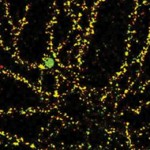
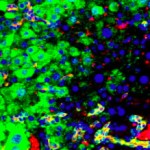
Little livers Transplanted hepatic progenitor cells can self-renew (yellow) and differentiate into hepatocytes (green) to repair the damaged liver (Image: Wei-Yu Lu, MRC Centre for Regenerative Medicine, The University of Edinburgh’) The MRC Centre for Regenerative Medicine researchers used liver stem cells, called hepatic progenitor cells, to regrow damaged livers in mice. After extracting the stem cells from healthy adult mice and maturing them in the lab, the researchers transplante...
More
Posted in Uncategorized

University of California -Sticker That Measures Glucose

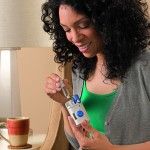
Nanoengineers at the University of California, San Diego have tested a temporary tattoo that both extracts and measures the level of glucose in the fluid in between skin cells. This first-ever example of the flexible, easy-to-wear device could be a promising step forward in noninvasive glucose testing for patients with diabetes. The sensor was developed and tested by graduate student Amay Bandodkar and colleagues in Professor Joseph Wang’s laboratory at the NanoEngineering Department and the ...
More
Posted in Uncategorized

Wearable device that can be used to monitor patient conditions around the clock

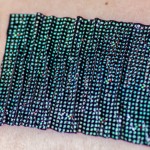
Scientists at Northwestern University and University of Illinois have collaborated on creating a wearable device that can be used to monitor patient conditions around the clock. The thin, flexible patch moves with the person’s skin, and so should be unobtrusive to wear. The patch requires no electricity; a matrix of 60 by 60 liquid crystals provides 3,600 points of measurement. A new wearable medical device can quickly alert a person if they are having cardiovascular trouble or if it’s simply...
More
Posted in Uncategorized

Smart Dose – first wearable patch medicine injector

West Pharmaceutical Services is developing a solution to this problem: the SmartDose. According to the company, this is the first wearable patch injector that has been tested on human subjects. The device includes a concealed needle that is activated once the patch is applied to the patient’s skin. Visual and audible feedback provides indicators about the device’s status, whether it is operating correctly, or when it needs to be removed or refilled. The device works with a disposable plastic car...
More
Posted in Uncategorized

Wearable Artificial Kidney (WAK)

The U.S Food and Drug Administration has granted Expedited Access Pathway status to the Wearable Artificial Kidney (WAK) after the device performed successfully in its first U.S. clinical trial, at UW Medical Center in Seattle. Despite technical issues that halted the trial early, the FDA signaled its support for keeping research and development of the device fast-tracked as its components are redesigned. More than 600,000 Americans have end-stage kidney disease, whose annual mortality rate is...
More
Posted in Uncategorized

Innovative medical services online

Medikey™, a health data aggregator that empowers consumers and employers to take greater control over healthcare costs, today launched a partnership with Teladoc (NYSE:TDOC) and eDocAmerica to offer underinsured and uninsured consumers unprecedented access to quality, affordable medical care online or by telephone. A benefit once available only through employers and health plans, consumers can now access directly from Medikey™ this type of convenient, non-emergency care from board-certified phys...
More
Posted in Uncategorized

Lung cancer screening app using NASA’s sensor technology for early detection

The U.S. National Aeronautics and Space Administration (NASA) has entered into an exclusive license agreement with an mHealth company to commercialize mobile healthcare products derived from NASA's patented technology. The agreement with NASA, annnounced by Vantage Health, licenses the use of multiple patents relating to inventions in the fields of nanotechnology, chemical sensing, carbon nanotubes, medical diagnoses, environmental sensing and cell phone applications. "Nanobeak and Vantage He...
More
Posted in Uncategorized

Foot Drop Management, Post Stroke

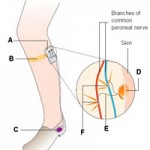
Foot Drop Management, Post Stroke The STIMuSTEP system is a highly recommended treatment that helps correct dropped foot in chronic stroke patients. Since the product was entered into the market in 2004, many patients worldwide (mainly within Europe) are benefiting from it. The use of FES to treat Foot Drop is N.I.C.E (National Institute for Health and Clinical Excellence) recognised, following the Interventional Proce...
More
Posted in Uncategorized

Smart medical devices for patients

Smart medical devices for patients   Cue IoT Advantage: self-diagnosis Benefit: Enables preventive care Cue’s multi-use wand and corresponding cartridge increase the ways that patients can track their own health. With this smart medical device, patients can take their health into their own hands—testing their nasal fluids, saliva and blood. Quell IoT Advantage: pain relief Benefit: Improves quality of care Quell Relief is worn below the knee like any brace—but its embedded sens...
More
Posted in Uncategorized

Device allows paralyzed man to swipe credit card, perform other movements.

NeuroLife, was invented at Battelle, which teamed with physicians and neuroscientists from The Ohio State University Wexner Medical Center to develop the research approach and perform the clinical study. Ohio State doctors identified the study participant and implanted a tiny computer chip into his brain. Device allows paralyzed man to swipe credit card, perform other movements. That pioneering participant, Ian Burkhart, is a 24-year-old quadriplegic from Dublin, Ohio, and the first person...
More
Posted in Uncategorized

Electronic sensors that monitor temperature and pressure within the skull

Researchers have developed a new class of small, thin electronic sensors that monitor temperature and pressure within the skull – crucial health parameters after a brain injury or surgery – then melt away when no longer needed. This eliminates the need for additional surgery to remove the monitors and reduces the risk of infection and haemorrhage. Similar sensors can be adapted for postoperative monitoring in other body systems as well, the researchers say. Led by John A. Rogers, a professor ...
More
Posted in Uncategorized

New light-activated nanoparticles kill over 90% of antibiotic-resistant bacteria

Nanoparticle treatment developed by researchers at the University of Colorado Boulder could provide an effective means of fighting antibiotic-resistant bacteria including Salmonella, E. Coli, and Staphylococcus, based on results in a laboratory environment. In testing with a lab-grown culture, the nanoparticles killed 92 percent of drug-resistant bacterial cells while leaving the other cells intact. The treatment consists of light-activated therapeutic nanoparticles called "'quantum dots". Th...
More
Posted in Uncategorized

University of Washington has developed a new handheld, pen-sized microscope

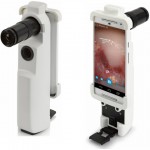
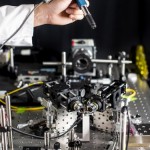
Handheld, miniature microscope being developed by University of Washington mechanical engineers could allow surgeons to “see” at a cellular level in the operating room and determine where to stop cutting. The new technology, developed in collaboration with Memorial Sloan Kettering Cancer Center, Stanford University and the Barrow Neurological Institute, is outlined in a paper published in January in the journal Biomedical Optics Express. The handheld microscope, roughly the size of a pen, ...
More
Posted in Uncategorized

‘Sensmi’ tracks and analyzes your daily stress levels

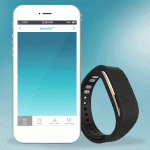
'Sensmi' is the world's most accurate smart wristband that tracks and analyzes your daily stress levels and sleep patterns. It helps you pursue life with less stress and more mindfulness. With sensmi, you can easily find out when, where, who, and what triggers the most stress in life and work, and practice stress-relieving exercises to calm down and increase focus, based on sensmi's suggestions. sensmi also accurately tracks and records lab quality sleep data (light to deep) to evaluate ch...
More
Posted in Uncategorized

New drug-delivery capsule may replace injections

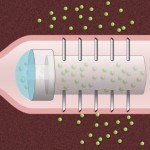
Pill coated with tiny needles can deliver drugs directly into the lining of the digestive tract. Given a choice, most patients would prefer to take a drug orally instead of getting an injection. Unfortunately, many drugs, especially those made from large proteins, cannot be given as a pill because they get broken down in the stomach before they can be absorbed. To help overcome that obstacle, researchers at MIT and Massachusetts General Hospital (MGH) have devised a novel drug capsule coat...
More
Posted in Uncategorized

‘e-skin'(electronic skin) – University of Tokyo

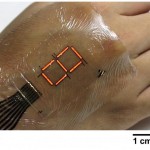
University of Tokyo researchers have developed an ultrathin, ultraflexible, protective layer and demonstrated its use by creating an air-stable, organic light-emitting diode (OLED) display. This technology will enable creation of electronic skin (e-skin) displays of blood oxygen level, e-skin heart rate sensors for athletes and many other applications. Integrating electronic devices with the human body to enhance or restore body function for biomedical applications is the goal of researchers ...
More
Posted in Uncategorized

NASA’s space health care technology evolved into around-the-clock, remote patient monitoring for all.

In July 1969, just days after Neil Armstrong become the first man to walk on the Moon during the Apollo 11 mission , NASA’s Manned Spacecraft Center (now Johnson Space Center ) honored Spacelabs Medical with a certificate of appreciation for its “outstanding” contributions to the Apollo Program—contributions which proved vital to successfully achieving the Nation’s goal of landing men on the Moon and returning them safely to Earth. Product Outcome After pioneering medical telemetry in the ...
More
Posted in Uncategorized

NU Scientists Advance Efforts in the Early Detection of Alzheimer’s

One minute. The Alzheimer’s Association estimates that in just that small period of time, almost every minute, a person in the United States will develop one of the top-10 killers in America: Alzheimer’s. 2015 was the first year in which Alzheimer scientists were able to see some real, substantial success in clinical trials. Bill Klein, in neurobiology and neurology at Northwestern, and his team have turned their focus away from what was once considered the cause of Alzheimer’s, plaques an...
More
Posted in Uncategorized

Activity Trackers Learn The Difference Between Fake and Real Activity

Researchers from Northwestern Medicine and Rehabilitation Institute of Chicago (RIC) have made smartphone activity trackers smarter than ever; they have trained trackers to have the ability to detect the difference between fake and real activity. Insurance companies and health care providers base rewards to individuals who stay active and healthy on the results from wearable activity trackers, among them smartphones. They also rely on these devices to monitor a patient’s activity and determin...
More
Posted in Uncategorized

Flo: The Non-Contact “Social Thermometer”

    Need to check your child’s temperature? Want to track it over time? Flo, a small Bluetooth enabled non-contact thermometer, gives users accurate readings, allows them to track health and family pictures over time, and share them on social media. Flo is relatively easy to use. Point the thermometer within 1 cm of a child’s forehead, push a button, and then you’ll be able to determine whether your child has a fever. The thermometer by itself doesn’t show the exact temper...
More
Posted in Uncategorized

Biomechatronics – Enhancing human physical capability.

Biomechatronics is an applied interdisciplinary science that aims to integrate mechanical elements, electronics and parts of biological organisms. Biomechatronics includes the aspects of biology, mechanics, and electronics. It also encompasses the fields of robotics and neuroscience. MiT's research in Enhancing human physical capability: We know from early Roman mosaics that physical rehabilitation and amplification technologies have been used during much of recorded history. Although the ...
More
Posted in Uncategorized

Tamper-Resistant Pill Dispenser

The Johns Hopkins students’ tamper-resistant pill dispenser prototype features a fingerprint scanner, at left, which verifies the patient’s identity and then releases, at right, the correct dosage only within the prescribed time frame. You can whack it with a hammer, attack it with a drill, or even stab it with a screwdriver. Try as you might, you won’t be able to tamper with a high-tech pill dispenser. The U.S. Centers for Disease Control and Prevention have estimated that drug overdoses kill m...
More
Posted in Uncategorized

EyeGuide Focus Detects Concussions in 10 Seconds

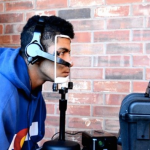
EyeGuide Focus, a 10-second concussion detection tool, measures neurocognitive impairment quickly and reliably, following established research protocols to return quantifiable results, aiding athletic trainers and other healthcare providers in making informed decisions on concussions. It detects concussions in 10 seconds by recording and interpreting athletes' eye movements. Focus can be administered immediately after a possible concussion. Just as important, it can be used to monitor recovery, ...
More
Posted in Uncategorized

Genetically Engineered Mosquitoes can no longer spread Malaria

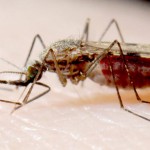
US scientists have bred a genetically modified mosquito that is incapable of spreading malaria to humans, according to reports. A gene editing technique called Crispr was used to alter the genetic makeup of the insect, making it resistant to Plasmodium falciparum, one of the parasites that causes malaria in humans. Crucially, the GM mosquitoes passed on their anti-malarial DNA strain to 99.5% of their offspring, raising the prospect of the altered species being released in the wild one day to co...
More
Posted in Uncategorized

New Colonoscopy Study

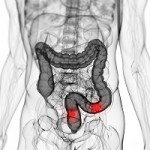
According to a study published in the journal Clinical Gastroenterology and Hepatology, a team of researchers led by Bas Oldenburg, MD, PhD, University Medical Center Utrecht, analyzed data on 1,273 IBD patients (34% Crohn’s disease, 63% ulcerative colitis, and 3% unclassified) who had experienced a total of 4,327 surveillance colonoscopies between January 1, 2000 and January 1, 2014. Surveillance is recommended for patients with long-term inflammatory bowel disease because they have an incre...
More
Posted in Uncategorized

Mild Traumatic Brain Injury

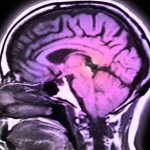
Traumatic brain injury (TBI) is the chief cause of death and disability among children and adults from 1 to 44 years of age in the United States, leading to more than two million emergency department visits annually. A brain protein is thought to be the source of long-term cognitive impairments in those who have had seemingly mild, concussion-type head injuries, and a blood test may one day be available to predict such damage. Researchers from the Perelman School of Medicine at the University of...
More
Posted in Uncategorized

New clues to easing side effects from Parkinson’s Drug.

In an international study, Northwestern Medicine scientists and colleagues have identified a novel strategy for reducing the side effects of uncontrolled movement caused by the drug levodopa, commonly used to treat the stiffness, tremors and poor muscle control of Parkinson’s disease. These unwanted movements caused by levodopa significantly diminish the quality of life for Parkinson’s disease patients. A team lead by D. James Surmeier, PhD, chair and Nathan Smith Davis Professor of Physiology f...
More
Posted in Uncategorized

Simple test identifies lung cancer patients with best chemotherapy response.

A new study shows that a certain type of protein can be used to determine if a lung cancer patient will respond positively to chemotherapy. While prognosis for the most common form, adenocarcinoma, has remained poor, new research has shown a link between the absence of a specific protein and improved patient outcomes. Scientists at Lawson Health Research Institute have found that patients who undergo chemotherapy and surgery experience significantly improved survival rates when their tumor is la...
More
Posted in Uncategorized

Biomedical imaging at one-thousandth the cost.

MIT researchers have developed a biomedical imaging system that could ultimately replace a $100,000 piece of a lab equipment with components that cost just hundreds of dollars. The system uses a technique called fluorescence lifetime imaging, which has applications in DNA sequencing and cancer diagnosis, among other things. So the new work could have implications for both biological research and clinical practice. “The theme of our work is to take the electronic and optical precision of this big...
More
Posted in Uncategorized

Electric fields remove nanoparticles from blood with ease.

Engineers at the University of California, San Diego developed a new technology that uses an oscillating electric field to easily and quickly isolate drug-delivery nanoparticles from blood. The technology could serve as a general tool to separate and recover nanoparticles from other complex fluids for medical, environmental, and industrial applications. Nanoparticles, which are generally one thousand times smaller than the width of a human hair, are difficult to separate from plasma, the liquid ...
More
Posted in Uncategorized