
MIT’s Superconducting Sandwich Stores a Bit and Steers Signals

Frost-covered circuit board with a small layered chip whose middle layer glows blue, connected by fine gold wires
AI-generated illustration Computers are hungry. Data centers, supercomputers and AI clusters keep asking for more power, more capacity and more speed, and a big part of the challenge is simply feeding processors with data fast enough. This week, researchers at the MIT Plasma Science and Fusion Center (PSFC) described a tiny device that tackles one corner of that problem: a layered "sandwich" that can remember a bit of information and also steer electrical signals, in a form meant for sup...
More
The surprising trick jellyfish and lampreys use to swim.

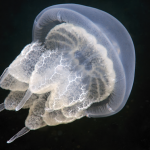
Jellyfish and lampreys have among the most energy-efficient swimming motions of any animal. From a long time, researchers have assumed that in order to move forward, fly or swim, humans and animals exert pressure on surface, air or water around them. But a new study published in the journal Nature Communications has revealed that two sea animals do not follow the general theory. Jellyfish and lampreys pull their way through the water, as per the study. A Stanford led team shows how these anci...
More

RoboBee : The tiny flying submarine

A Harvard University lab has developed the first insect-size robots capable of flight and swimming. Researchers at the Harvard Paulson School have demonstrated a flying, swimming, insectlike robot, easing the way to create future aerial-aquatic robotic vehicles. Coming from the Harvard Microrobotics Lab, this discovery can only mean one thing, swimming RoboBees. The biggest challenge involved the conflicting design requirements. Aerial vehicles require large airfoils such as wings or sails to...
More

Soft robot to swim through Europa’s oceans

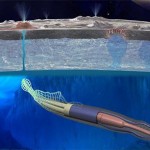
A soft, swimming robot for exploring Jupiter’s moon Europa. A Cornell engineering team has received a nine-month, $100,000 starter grant from NASA to develop a soft, swimming robot suitable for exploring the harsh conditions of other worlds, notably Jupiter’s moon Europa. An amphibious robot that can swim through the oceans of distant moons and planets could be the next iteration of self-sustaining, robotic space exploration. The Cornell team developing this otherworldly robot is led by Ma...
More