Beatbot AquaSense 3 Pool Robot Checks Its Own Cleaning Work

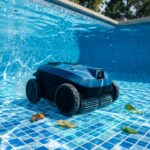
Cordless robotic pool cleaner with a camera lens moving across a tiled pool floor beside fallen leaves
AI-generated illustration Most robotic pool cleaners do one thing well: crawl around and suck up what they meet. Beatbot wants its newest model to also notice what it missed. On November 18, 2026, the company unveiled the AquaSense 3 and the Sora Neo R at Piscine Global Europe in Lyon and the Pool Spa Patio Expo in New Orleans. Details below come from Beatbot's press release. AquaSense 3: map, see, decide, check Beatbot calls the AquaSense 3 the world's first in-pool "Sense-to-Act" cl...
More
Blood Pressure Study

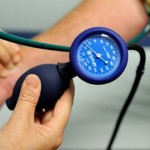
A new study finds that at least 16.8 million Americans could potentially benefit from lowering their systolic blood pressure (SBP) to 120 mmHg, much lower than current guidelines of 140 or 150 mmHg. The scientists calculated the potential impact of preliminary results from the Systolic Blood Pressure Intervention Trial (SPRINT) that will be presented in full at the American Heart Association meeting and published online in the New England Journal of Medicine. The initial analysis of SPRINT, r...
More

GM pig organs could soon be transplanted into humans

Pig organs could soon be transplanted into patients after Harvard University scientists discovered a way to genetically modify pig DNA so it is more compatible with humans. Scientists have spent decades trying to engineer pig tissue so that it would not be rejected by the human body, but the immune system has always prevented success. A major hurdle in transplanting pig organs into humans has been overcome by the scientists. All pig DNA carries the porcine endogenous retrovirus which infects ...
More

Lowering Beta-blocker dose may boost survival after heart attack

A new study suggests that low dose beta-blockers may be as effective as high dose after a heart attack. Surprisingly, heart attack patients live as long or even longer on one-fourth the suggested dose. In a surprising new finding, heart attack patients treated with a substantially lower dosage of beta-blockers than used in earlier clinical trials, survived at the same rate, or even better, than patients on the higher doses used in those trials. In fact, patients who received one-fourth of ...
More