Beatbot AquaSense 3 Pool Robot Checks Its Own Cleaning Work

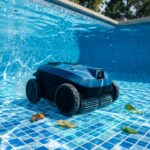
Cordless robotic pool cleaner with a camera lens moving across a tiled pool floor beside fallen leaves
AI-generated illustration Most robotic pool cleaners do one thing well: crawl around and suck up what they meet. Beatbot wants its newest model to also notice what it missed. On November 18, 2026, the company unveiled the AquaSense 3 and the Sora Neo R at Piscine Global Europe in Lyon and the Pool Spa Patio Expo in New Orleans. Details below come from Beatbot's press release. AquaSense 3: map, see, decide, check Beatbot calls the AquaSense 3 the world's first in-pool "Sense-to-Act" cl...
More
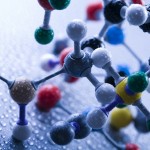
Peptide drugs with longer lifespan open new doors for treating diseases.

A research led by scientists from the University of the Pacific holds new possibilities for the treatment of cancer and other diseases using peptide drugs. The researchers concocted a technique to considerably enhance the lifespan of peptides such that they could be used more efficiently. Peptides are small chains of amino acids, the building blocks of proteins. Treating diseases like cancer by using peptides is thought to be effective because they can be more potent, and safer to use than large...
More

Lifetime of atoms extended using a mirror

Researchers at Chalmers University of Technology have succeeded in an experiment where they get an artificial atom to survive ten times longer than normal by positioning the atom in front of a mirror. The findings were recently published in the journal Nature Physics. The artificial atom consists of a superconducting circuit on a silicon chip. The interaction between the atom and its mirror image modifies the vacuum fluctuations seen by the atom and thus its lifetime. The microwaves that mediate...
More

Lowering Beta-blocker dose may boost survival after heart attack

A new study suggests that low dose beta-blockers may be as effective as high dose after a heart attack. Surprisingly, heart attack patients live as long or even longer on one-fourth the suggested dose. In a surprising new finding, heart attack patients treated with a substantially lower dosage of beta-blockers than used in earlier clinical trials, survived at the same rate, or even better, than patients on the higher doses used in those trials. In fact, patients who received one-fourth of ...
More