Zoomlion Debuts an AI Excavator That Builds Walls, Aligns Pipe

Orange excavator with faint glowing sensor lines lifting a brick in its grab attachment beside a growing brick wall
AI-generated illustration Excavators are built to move earth, not to lay a neat course of bricks. Yet a machine shown in Shanghai this week did something close to that. On November 24, 2026, Zoomlion launched what it calls the industry's first AI excavation robot powered by embodied intelligence at bauma CHINA 2026, and announced the launch on November 26. Live demonstrations included automated loading and other assisted construction work. How the excavator sees and acts At the center...
More
Robbyant Open-Sources LingBot-Map 2.0 and LingBot-Navi

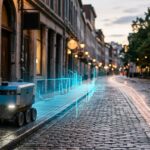
Small wheeled delivery robot on a cobblestone street with a glowing 3D map trailing behind it and a route ahead
AI-generated illustration A robot that wanders a city for several kilometers builds up small mistakes, and by the end its map no longer matches the street. Then, once the job is done, it forgets everything and starts from scratch next time. On November 27, 2026, Robbyant, the embodied AI company within Ant Group, announced the open-source release of two models aimed at exactly those two problems: LingBot-Map 2.0 and LingBot-Navi. Fixing the map from the inside LingBot-Map 2.0 is a str...
More

Human Data for Frontier AI and Recording Videos for Physical AI Training: Inside Mercor

Professionals at laptops send glowing threads of feedback into a luminous neural-network sphere while, on the right, a person wearing a small head camera wipes a cafe counter near a white robot arm
AI-generated illustration: experts feeding knowledge into AI models, and a worker recording hands-on tasks so robots can learn them Two years ago, Mercor was a recruiting startup that used AI interviews to match engineers with tech companies. Today it describes itself as “organizing human intelligence to power the AI economy,” and investors value it at US$20 billion. The pitch is simple: the more capable AI gets, the more it needs real experts to teach and test it. Now that s...
More

Recording Videos for Physical AI Training: Inside Objectways

A person wearing a head-mounted camera folds laundry in a home-style studio while a white faceless humanoid robot stands near the kitchen counter
AI-generated illustration: recording household tasks on camera so robots can learn them Large language models learned to write by reading the internet. Robots have no such library. To learn how to fold a shirt, screw on a bottle cap or stack plates without smashing them, they need to watch people do it, thousands of times, from angles that match a robot’s own eyes and hands. That has created a new kind of work: recording videos for physical AI training. One of the companies doing i...
More

XPENG Unveils IRON Humanoid and a Shared AI Stack for Cars

Silver humanoid robot standing beside a modern electric sedan in a bright showroom
AI-generated illustration Carmakers keep saying their cars are robots on wheels. XPENG is now trying to make the reverse true too: at its eighth AI Day on November 25, 2026, the company showed a humanoid robot, IRON, built on the same AI and hardware foundation as its vehicles. The details come from XPENG's press release. Three systems, one loop The centerpiece is the Turing Physical AI Architecture, also called VLA 3.0. XPENG says it links three systems working at different speeds. S...
More

SenseTime Robot Model Learns in Simulation, Works on Real Arms

Two white robotic arms stacking colorful blocks in a lab beside a glowing holographic digital twin of an arm
AI-generated illustration Teaching a robot arm to do something useful usually means collecting hours of demonstrations on that exact robot. SenseTime is testing a different route. On November 25, 2026, the company released the full version of SenseNova-RoboRSI-27B, an embodied AI model that learned its manipulation skills in simulation and then ran on two real robotic arms with the same weights and no real-robot training data, according to SenseTime's announcement. The results are early ...
More

WHOI’s Deep Venture AUV Is Built for Full-Ocean-Depth Science

Orange autonomous underwater vehicle with a spotlight above a dark deep seafloor beside a pale chimera fish
AI-generated illustration The deepest parts of the ocean are still among the least observed places on Earth, partly because reaching them has meant big ships, specialized crews and one-purpose machines. On November 20, 2026, the Woods Hole Oceanographic Institution (WHOI) announced a different approach: Deep Venture, a compact autonomous underwater vehicle (AUV) built with NASA's Jet Propulsion Laboratory (JPL) that is rated for full ocean depth. What Deep Venture isAccording to WHOI'...
More

XPENG WorldGPT: One Model for Cars, Robots and Drones

A car, boat, drone, robot arm and humanoid robot connected by glowing threads to a luminous sphere containing a brain
AI-generated illustration Most machines that think for themselves are trained as loners. A self-driving car learns from road footage, a robot arm learns from grasping trials, and a drone learns from flight logs, each with its own data and its own model. XPENG argues that this is wasteful, because a car judging the gap to the vehicle ahead and an arm judging the distance to a cup are solving versions of the same problem. On November 24, 2026, the company unveiled WorldGPT, a single model ...
More

Terabase Construct Adds an AI Agent to Solar Construction Sites

Aerial view of a solar farm under construction with a drone and a glowing digital-twin grid
AI-generated illustration A single 300 MW solar site can sprawl across 1,500 to 2,500 acres, roughly two to three times the size of Central Park. Keeping a build that large on schedule is hard, and progress is often still stitched together from daily reports and spreadsheets. On November 16, 2026, Terabase Energy announced a next-generation release of its Construct software that tries to change this, calling it the first AI construction execution system for utility-scale solar. The detai...
More

Beatbot AquaSense 3 Pool Robot Checks Its Own Cleaning Work

Cordless robotic pool cleaner with a camera lens moving across a tiled pool floor beside fallen leaves
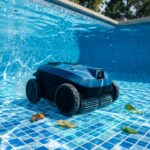
AI-generated illustration Most robotic pool cleaners do one thing well: crawl around and suck up what they meet. Beatbot wants its newest model to also notice what it missed. On November 18, 2026, the company unveiled the AquaSense 3 and the Sora Neo R at Piscine Global Europe in Lyon and the Pool Spa Patio Expo in New Orleans. Details below come from Beatbot's press release. AquaSense 3: map, see, decide, check Beatbot calls the AquaSense 3 the world's first in-pool "Sense-to-Act" cl...
More

X Square Robot’s WALL-OSS-1.0 Teaches Robots New Tasks Zero-Shot

Two-armed robot sorting cardboard parcels on a conveyor with glowing network lines overhead
AI-generated illustration What if a robot could walk into an unfamiliar room, hear a new instruction and simply get to work, with no task-specific training first? That is the question X Square Robot says it is moving toward with WALL-OSS-1.0, a robot foundation model it unveiled on November 23, 2026. According to the company's press release, the model reached a 55.1% zero-shot success rate across 312 unique real-robot tasks chosen freely by evaluators. A different way to train a robot...
More

Spot and Atlas Head Deeper Into GlobalFoundries Chip Fabs

A yellow quadruped inspection robot walking down a bright semiconductor fab corridor with a humanoid silhouette in the distance
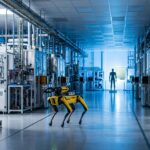
AI-generated illustration Semiconductor fabs are some of the cleanest, most tightly controlled workplaces on earth, and also some of the hardest to inspect. On November 17, 2026, Boston Dynamics and GlobalFoundries (GF) announced that they are widening a robotics partnership that has already run for more than four years. Spot, the yellow quadruped, will spread across GF's manufacturing network, and GF will become the first semiconductor maker to test the Atlas humanoid. What was annou...
More

NVIDIA Omniverse and Cosmos: The Engine Behind Physical AI

A robot arm on a factory floor merging into a glowing wireframe digital twin with simulated sensor data and lidar point clouds
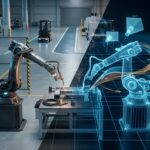
AI-generated illustration Teaching a robot to pick up a part, or a car to handle a child running into the road, used to mean one of two things: collect mountains of real-world footage, or build a simulator and hope it looked real enough. NVIDIA is betting that the answer is now both at once. Its Omniverse libraries build physically accurate virtual worlds, and its Cosmos world foundation models learn how those worlds behave, fill them with endless variations and help machines decide what...
More

OMRON LD-150 and LD-300: Heavier AMRs for Tight Aisles

Compact autonomous mobile robot carrying stacked crates down a narrow warehouse aisle past a glowing floor charging pad
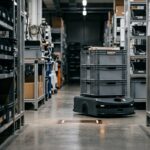
AI-generated illustration Factory floors rarely have room to spare, yet the loads that move across them keep getting heavier. On November 19, 2026, OMRON Robotics opened orders for two new autonomous mobile robots, the LD-150 and LD-300, that try to square that circle: more payload, same or smaller footprint, and a charging routine that barely interrupts the shift. What OMRON announced According to OMRON Robotics' announcement, the LD-150 and LD-300 are the next generation of its flag...
More

SiMa.ai Palette 3.0 Targets 3.5x Faster Edge AI for Robots

Glowing AI chip module on a workbench sending light streams to a small drone and a wheeled robot arm
AI-generated illustration Robots and drones increasingly want to run language and vision models on board, but the chips inside them have strict limits on power and memory. On November 17, 2026, edge AI company SiMa.ai announced Palette 3.0, a software release it says squeezes more out of a single low-power chip, with speculative decoding that lifts generation speed by up to 3.5x. Everything below is drawn from SiMa.ai's own press release, so the performance claims are the company's and h...
More

MIT’s Flapping Microrobot Now Flies With Its Own Sensors

Tiny winged robot with a miniature circuit board hovering next to a sunflower
AI-generated illustration For a decade, MIT's tiny flying robots have been remarkably athletic, with bumblebee-like speed, agility and durability. They had one big limitation: they were tethered to a laboratory motion-capture system because they could not carry the electronics needed to know where they were. According to MIT News, that has changed. A new version carries its own sensors and computer and still flies precisely. Why weight was the obstacle The robot is roughly the size an...
More

Gemini 4 Hydrogen Gives Robot Arms a Faster, Cheaper Brain

Robot arm sorting snack packages from a conveyor beside a laptop showing a simulation
AI-generated illustration Building a robot application has long meant stitching together drivers, calibration scripts, simulators and perception code before a single useful task runs. On November 17, 2026, Google's Gemini Robotics team described a way to compress that work: a fast general model, Gemini 4 Hydrogen, paired with a new Robotics plugin for Google Antigravity. The company says a developer can go from a robot in a box to a working application in an afternoon. A faster model ...
More

KAIST Battery Electrode Turns Curved Drone Legs Into Storage

A quadcopter drone on a lab bench with one curved carbon-fiber leg cut away to show a glowing woven battery layer
AI-generated illustration Most drones and robots carry their energy the way a hiker carries a water bottle: as a separate load strapped onto a frame that does its own job. A new electrode from KAIST points to a different idea, where a landing leg or a robot limb is also part of the battery. The catch has always been shape, because real frames are curved and hollow. On November 18, 2026, KAIST announced an electrode built to work in exactly those places. What KAIST built According to K...
More

Gemini Robotics 2.5: Faster Learning and a 96% Factory Pilot

Gemini Robotics 2.5: Faster Learning and a 96% Factory Pilot editorial illustration
AI-generated illustration Teaching a robot to tie a bow on a gift box sounds like a party trick. Teaching it to do that, pipette a liquid, and then sort metal brackets on a car assembly line without falling apart is something else. On November 10, 2026, Google DeepMind introduced Gemini Robotics 2.5, which it calls its most capable vision-language-action (VLA) model to date, and put numbers on that ambition. According to DeepMind's announcement, the model widens the range of skills a rob...
More

Enabot’s EBO Robots: Rolling Companions Grow AI Brains

Small round white home robot on wheels rolling across a sunlit living room as a cat watches
AI-generated illustration Most home cameras stare at one corner of one room. Enabot's bet is that the camera should be able to drive itself to the kitchen, find the dog, and ask grandma whether she is all right. Over seven years the Shenzhen company has turned that idea into a family of rolling, softball-to-grapefruit-sized robots called EBO, and in 2026 it pushed the line firmly into AI territory: a flagship that claims long-term memory, a cheaper refresh of its bestseller, and, this mo...
More

ASUS Gallop: A Humanoid Learning a Real Factory Job

White humanoid robot placing a component on a circuit board on a factory line
AI-generated illustration Humanoid robot videos are everywhere, and most show a machine doing something impressive once. ASUS is trying to answer a plainer question: can a humanoid do one specific factory job, every shift, to the same quality bar as a person? On November 13, 2026, Dr. Albert Chang of ASUS laid out how the company's first humanoid, Gallop, is being built to do exactly that, according to the ASUS Pressroom blog. A real station, not a staged demo Gallop's first job is at an...
More

2getthere: 27 Years of Driverless Transit, Next Stop Mumbai

Long before robotaxis became a headline, a small fleet of driverless shuttles was already carrying office workers between a Rotterdam metro station and a business park. That system, built by Utrecht-based 2getthere, opened to the public in 1999 and is still running. In October 2026 its third-generation vehicles welcomed their one millionth passenger, and the company that built them now has a new owner, a new headquarters and its largest project yet: a 390-vehicle pod network planned for Mum...
More

Runway Opens Praxis-1, a 27B Video-Trained Robot Brain

Robots have long been held back by a data problem: teaching a machine to handle a mug or a cutting board usually means collecting thousands of hours of costly, hand-guided demonstrations. Runway, better known for video generation, is betting that ordinary video can do much of that teaching. On November 11, 2026, the company released the weights of its Praxis-1 robotics model to everyone. What Runway released According to Runway's announcement, Praxis-1 is a world action model, meaning it pr...
More

HKUST’s Bionic Eye Packs 367,500 Pixels on a Curved Retina

Most cameras look at the world through a flat sensor, which is not how eyes work. Biological retinas are curved, and that curve lets a simple lens cover a wide view with little distortion. Researchers at the Hong Kong University of Science and Technology (HKUST) have now built a bionic eye that follows that design, with nearly 400,000 light-sensing pixels on a hemispherical surface. The team's results, published in Nature Materials and announced by HKUST on November 13, 2026, combine full-c...
More

NTT’s Physical AI Lets Robots Predict Failures Before They Move

Most robots learn from mistakes the expensive way: they act, something falls, and the system tries again. On November 11, 2026, NTT announced a different approach. Its new physical AI technology lets a robot imagine what will happen for several possible moves, then pick the one least likely to end in a collapsed stack or a dropped item. According to NTT's press release, the system raised the success rate of a shelf-loading task from 73.1% to 92.3%. The first target is a messy real-world job...
More

Berkeley’s Agentic Robotics Lets AI Agents Write Robot Code

For years, teaching a robot a new job meant one of two slow paths: hand-write the control software, or collect mountains of demonstrations. A UC Berkeley roboticist now says a third path is opening, one where teams of AI agents write the robot's program, rehearse it in simulation and fix it when it fails. Ken Goldberg, a professor of engineering at Berkeley, and Spencer Huang, director of robotics engineering at NVIDIA, call the approach agentic robotics. Berkeley News described it on Novem...
More

MIT’s FLEX Lets Robots Read Between the Lines of Commands

Tell a robot "don't spill on the laptop" and it will dodge the laptop. Ask a person the same thing and they quietly understand that phones, tablets and anything with a battery are also off limits. On November 9, 2026, MIT News described a system that tries to close that gap: FLEX, a pipeline from MIT and New York University researchers that lets robots read meaning beyond the literal words of a correction. The work is slated for presentation at the Conference on Robot Learning this month. I...
More

MIT’s UQ-DAAAM Helps Robots Fix Their Own Wrong Memories

Picture a robot sent to fetch a wall-mounted defibrillator. If its stored memory wrongly lists that object as a fire extinguisher, it may never find the device. That example opens an MIT News report, published November 5, 2026, on a new system that lets a robot notice when its own memory might be wrong and repair it. The system is called UQ-DAAAM, short for Uncertainty Quantification for Describe Anything, Anywhere, at Any Moment. It was developed by researchers at MIT, led by associate pro...
More

Unique 3D Pen that Draws In The Air

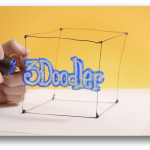
3Doodler is the world’s first 3D printing pen. The pen, created by science inventors Max Bogue and Peter Dilworth is called the 3Doodler, and allows the user to draw in the air. It does not require any software but simply needs to be plugged into an electrical outlet for use. This pen has been fed into with colorful plastic thread. The thread is then extruded as heated plastic that cools and solidifies instantly as it exits the tip. This allows solid 3D structures to be drawn on any surfac...
More