Sand.ai Launches MAGI-2, a 480B Video Model With Native Audio

A glowing network-lattice film strip unspooling into a bright widescreen frame of a misty mountain lake
AI-generated illustration Most AI video tools still feel like a short clip generator with sound bolted on afterward. On November 24, 2026, Sand.ai put a much larger bet on the opposite approach: one model that produces picture and audio together. Its new flagship, MAGI-2, has 480 billion total parameters and can render up to 30 seconds of 1080p video at 25 frames per second, according to the company's launch post. What Sand.ai announced MAGI-2 follows a research release in August 2026...
More

Google Adds Wallet and Drive to Personal Intelligence in AI Mode

3D illustration of a search bar linked to a wallet, a document folder and a chat bubble
AI-generated illustration Search that knows your spending and your files Google is giving AI Mode in Search more of your personal context. In a November 23, 2026 blog post, Robby Stein, VP of Product for Google Search, said people can now opt in to connect Google Wallet to Personal Intelligence in AI Mode, with Google Drive and the Gemini app following in the coming weeks. Those apps join Gmail, Calendar and Photos, which were already part of Personal Intelligence. The goal, in Google's ...
More

Amazon Textract Insights Adds Confidence Scores to Document AI

Tall stack of scanned papers sending beams of light into glowing digital cards with confidence gauges on a modern office desk
AI-generated illustration A mortgage application rarely arrives as one tidy form. It is more often a single scan that stacks a W-2, payslips, bank statements and a page of handwritten notes in no fixed order. Turning that pile into data a system can trust has been a persistent headache. On November 20, 2026, Amazon Web Services announced general availability of Amazon Textract Insights, a feature that aims to fix the "can I trust this value?" problem, not just the extraction problem. The...
More

NVIDIA Omniverse and Cosmos: The Engine Behind Physical AI

A robot arm on a factory floor merging into a glowing wireframe digital twin with simulated sensor data and lidar point clouds
AI-generated illustration Teaching a robot to pick up a part, or a car to handle a child running into the road, used to mean one of two things: collect mountains of real-world footage, or build a simulator and hope it looked real enough. NVIDIA is betting that the answer is now both at once. Its Omniverse libraries build physically accurate virtual worlds, and its Cosmos world foundation models learn how those worlds behave, fill them with endless variations and help machines decide what...
More

Microsoft MAI Image 2.7 Edits Images at a Fraction of the Cost

Microsoft MAI Image 2.7 Edits Images at a Fraction of the Cost (illustration)
AI-generated illustration Image models are no longer judged only on how pretty a first draft looks. The question now is how well they handle the second, third and tenth edit, and what each picture costs at scale. On November 17, 2026, Microsoft AI answered both with the launch of MAI Image 2.7 and a faster, cheaper sibling, MAI Image 2.7 Flash. In its launch post, Microsoft AI says the models deliver frontier image generation and editing at a fraction of the cost of the leading competito...
More

PAN 2: An Open World Model That Simulates What Happens Next

PAN 2: An Open World Model That Simulates What Happens Next editorial illustration
AI-generated illustration A language model predicts the next word. A world model tries to predict the next moment of the world itself. On November 10, 2026, the Institute of Foundation Models (IFM), established by Mohamed bin Zayed University of Artificial Intelligence (MBZUAI), released PAN 2, an open, general-purpose world model aimed at physical intelligence. The pitch is simple to state: give PAN 2 a starting scene and an action described in words, and it simulates a video of what ha...
More

Kudu’s Kai Coach: UCLA AI That Asks Instead of Answers

Most conversations about AI in the classroom come down to one worry: students will let a chatbot do the thinking. A pilot at UCLA points in a different direction. In a History course, an AI coach that refuses to write anything for students, and only asks questions, was followed by a measurable jump in how well they argued. The tool is Kai Coach, from the digital course company Kudu. According to Kudu's November 12, 2026 announcement, students who used it wrote twice as many fully developed ...
More

Google AI Educator Series Expands to Five New Regions

Teachers are being asked to use AI in the classroom, often with little time to learn it. Google's answer is training short enough to fit in a prep period. The company's Google AI Educator Series (GES) offers free, self-paced sessions, and in an announcement dated November 3, 2026, Google said it will bring the program to Brazil, Mexico, Spain, Australia and sub-Saharan Africa in the coming months. What the series is According to Google for Education, GES is a no-cost program co-developed wi...
More

OpenAI Launches Businesses in ChatGPT With Business Agents

When people ask an AI assistant what to buy or where to go, businesses usually have little say in how they appear. On November 10, 2026, OpenAI introduced Businesses in ChatGPT, a beta that lets companies claim a verified profile, keep their details current and, for some, talk to customers through a Business Agent. OpenAI says ChatGPT reaches 1.2 billion people each week, which is the audience it is pitching to businesses. The launch has two main pieces: a self-service Business Hub and the ...
More

ByteDance Seedream 5.5 Targets 100-Round Edits and Clear Text

Most AI image tools are good at the first picture and worse at the fiftieth edit. Small errors pile up, colors drift and details soften. On November 9, 2026, ByteDance's Seed team introduced Seedream 5.5, an image creation model it says is built to hold up across 100 rounds of editing. The announcement frames the model around professional production. In the team's words, what matters is whether a model can deliver usable results on deadline and within budget, not just striking demos. Seedre...
More

Sydney’s Treellis Helps People Learn While Co-Creating With AI

Type a few words, get a finished 3D design. Modern AI makes that easy, and it also hides how the result was made. A University of Sydney team says that is a problem for learning, and on November 4, 2026 it announced a tool built to fix it. The system, called Treellis, was developed in the university's Faculty of Engineering with the University of Cambridge and Singapore Management University. The paper describing it won a Best Paper Award at ACM UIST 2026, the Symposium on User Interface So...
More

Newcastle and Ufonia Trial Dora, an Empathetic AI Phone Assistant

Picture a follow-up phone call that never gets rushed, never runs late and never depends on whether a clinic has enough staff that week. That is the idea behind Dora Care, a generative AI assistant now being trialled in the UK's National Health Service. According to a Newcastle University press release published on 6 November 2026, the assistant holds spoken telephone consultations with patients who live with a long-term illness, helping clinicians keep track of how they are doing. This art...
More

Memory and conductivity

Scientists from Stanford University and the Department of Energy’s SLAC National Accelerator Laboratory have made the first direct images showing that electrical currents can flow along the boundaries between tiny magnetic regions of a material that normally doesn’t conduct electricity. The results could have major implications for magnetic memory storage. "This can provide a more straightforward way to use magnetic material as memory,” said Eric Yue Ma, a graduate student in the laboratory of Z...
More

Penn Research Simplifies Recycling of Rare-earth Magnets

Chemical technology can instantaneously separate elements and enable a smaller scale recycler. The latest news from researchers at the University of Pennsylvania is that they have pioneered a process that could enable the efficient recycling of two metals, neodymium and dysprosium. These elements comprise the small, powerful magnets that are found in many high-tech devices. Despite their ubiquity in consumer electronics, rare-earth metals are, as their name suggests, hard to come by. Mi...
More

Powermat: The Wireless Charger

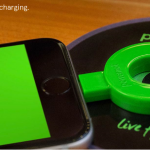
Wireless charging is already here. Though most individuals connect their phones to a wired charger, the charging landscape may soon change as companies such as Powermat Technologies Ltd., a developer of wireless power solutions for consumers, act as pioneers in the field. Wireless power, also known as inductive coupling and is based on magnets. The Powermat, is the first, perhaps, of many wireless chargers for hi tech gadgets. How does it work? You simply place your gadget on the mat to ch...
More