
Ask a scientist to simulate a splash of water, a collapsing sand dune and a folding protein, and the honest answer is that those are three different software projects. Each phenomenon has its own governing equations, and each simulator is hand-built around them. A team from MIT and the University of British Columbia (UBC) now says one AI system can handle all three. According to MIT News, the system is called WorldParticle, and its authors describe their goal as a "GPT moment for simulation...
More
Predictive Analytics
“Li-Fi” 100 Times Faster Than “Wi-Fi”

Li-fi is a new means of delivering data using visible spectrum as against the radio waves used by most other methods. This new technology has already been tested in a functional office. What makes Li-fi stand apart is the astonishing speed at which can deliver access to the internet, often 100 times faster compared to Wi-fi at a mind-boggling speed of 1Gbps. You need a light source similar to an LED bulb, a photo detector and an internet connection to use Li-fi. The visible spectrum of light use...
More
Skyscraper Uses Built-In Wind Turbines for Energy
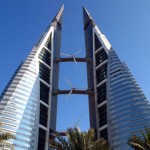
Bahrain is the home of the first skyscraper to have wind turbines integrated into the structure of the building.
The Bahrain World Trade Center is a 50-story twin tower complex containing two identical towers that rise over 240 meters in height. The sail-shaped buildings offer a visually striking image and boasts of one its very unique feature which is the 3 giant wind turbines tying the two “sails” together.
It is the first skyscraper in the world to integrate wind turbines into its desig...
More