
MIT’s Dry Bottlebrush Material Could Replace Ultrasound Gel

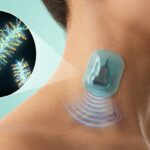
Translucent ultrasound patch on a neck with sound waves and an inset of bottlebrush polymer molecules
AI-generated illustration Anyone who has had an ultrasound knows the cold, sticky gel. It fills tiny gaps between the probe and skin so sound waves can pass through. For a doctor's visit that is fine, but for a wearable patch meant to image continuously the gel is a weak link, because it dries out within a day or two. On November 19, 2026, MIT engineers and colleagues reported a dry, stretchy replacement in the journal Science. What the team built According to MIT News, engineers at M...
More

MIT’s Flapping Microrobot Now Flies With Its Own Sensors

Tiny winged robot with a miniature circuit board hovering next to a sunflower
AI-generated illustration For a decade, MIT's tiny flying robots have been remarkably athletic, with bumblebee-like speed, agility and durability. They had one big limitation: they were tethered to a laboratory motion-capture system because they could not carry the electronics needed to know where they were. According to MIT News, that has changed. A new version carries its own sensors and computer and still flies precisely. Why weight was the obstacle The robot is roughly the size an...
More

MIT Trains Faster Climate Emulators With Synthetic Scenarios

Climate projections drive decisions about power grids, public health and farming, yet the physics-based models behind them can take months on a supercomputer to simulate a single future. A new technique from MIT aims to shrink that bottleneck by changing what AI models learn from. In research announced by MIT News on November 12, 2026 and published in the Proceedings of the National Academy of Sciences, a team describes a way to train climate emulators with a fraction of the usual data whil...
More

MIT’s WorldParticle Simulates Sand, Fluids and Proteins in One Model

Ask a scientist to simulate a splash of water, a collapsing sand dune and a folding protein, and the honest answer is that those are three different software projects. Each phenomenon has its own governing equations, and each simulator is hand-built around them. A team from MIT and the University of British Columbia (UBC) now says one AI system can handle all three. According to MIT News, the system is called WorldParticle, and its authors describe their goal as a "GPT moment for simulation...
More

MIT’s UQ-DAAAM Helps Robots Fix Their Own Wrong Memories

Picture a robot sent to fetch a wall-mounted defibrillator. If its stored memory wrongly lists that object as a fire extinguisher, it may never find the device. That example opens an MIT News report, published November 5, 2026, on a new system that lets a robot notice when its own memory might be wrong and repair it. The system is called UQ-DAAAM, short for Uncertainty Quantification for Describe Anything, Anywhere, at Any Moment. It was developed by researchers at MIT, led by associate pro...
More

MIT’s CheMeleon Predicts Molecule Behavior From Scant Data

Finding a new drug or material is mostly an exercise in elimination: chemists synthesize and test enormous numbers of molecules to find the few that behave the way they need. A machine-learning model from MIT called CheMeleon aims to shrink that pile by predicting molecular properties from very little experimental data. According to MIT News (November 6, 2026), the work was reported in the Journal of Chemical Information and Modeling and comes from the group of chemical engineering professor Wi...
More

MIT’s Sewn Fabric Molds Cast Concrete Beams With Less Material

Concrete is the most widely used building material on Earth, and making its key ingredient, cement, accounts for roughly 8 percent of human-caused carbon emissions, according to MIT. One of the simplest ways to cut that footprint is to use less concrete. MIT engineers have now shown a surprisingly low-tech way to do it: pour the concrete into molds sewn from fabric. In a paper in the Journal of Building Engineering, announced by MIT News on November 6, 2026, a team led by civil engineer Josephi...
More

MIT’s LUCID Implant Uses Ultrasound to Spread Drugs in the Brain

The problemGlioblastoma is an aggressive brain tumor; MIT News notes a little more than 10,000 cases are diagnosed in the US each year and patients survive 12 to 15 months on average. Surgeons struggle to remove every cancer cell, so tumors often recur. Implantable wafers and gels can release drugs locally, but they rely on passive diffusion.What MIT builtResearchers led by Canan Dagdeviren created LUCID, the Long-term Ultrasound-enhanced Convective Injection Device, described in a paper in the...
More

Grand Hybrid Digital Pianos: Combining Classical Music and Digital Software

Casio America Inc. has launched a magnificent 9-foot concert grand piano outstanding experience in a compact form for music lovers. Latest Hybrid Digital Pianos with Revolutionary New Technology have been launched by Casio America.Inc which combines the advantages of digital technology with the traditional sound and feel of pianos. There are two new models: the CELVIANO Grand Hybrid GP-500BP and GP-300. The hybrid has unmatched sound quality and advanced technological features that allow m...
More