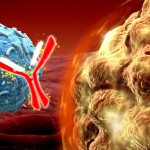
FDA approves Merck’s Pembrolizumab (KEYTRUDA) Checkpoint Inhibitor

U.S. Food and Drug Administration approved pembrolizumab (KEYTRUDA, Merck & Co., Inc.) for the treatment of patients with metastatic non-small cell lung cancer (NSCLC) whose tumors express PD-L1 as determined by an FDA-approved test. This is the first FDA approval of a checkpoint inhibitor for first-line treatment of lung cancer. This approval also expands the indication in second-line treatment of lung cancer to include all patients with PD-L1-expressing NSCLC. The FDA approval ad...
More

Kidney cancer research

Kidney cancer—also called renal cell cancer—is one of the major types of cancer for which new immune-based cancer treatments are currently in development. This page features information on kidney cancer and immunotherapy clinical trials for kidney cancer patients, and highlights the Cancer Research Institute’s role in working to bring effective immune-based cancer treatments to kidney cancer patients. In its early stages, kidney cancer typically has no symptoms. As a tumor grows, symptoms may...
More

FDA Cleared – Colorado Therapeutics Xenograft Dry for Immediate Implantation

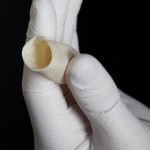
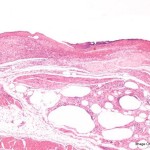
Colorado Therapeutics LLC, a privately held medical device company with a proprietary technology platform for the production of innovative cross-linked tissue products, announced today that it has received 510(k) clearance from the U.S. Food and Drug Administration (“FDA”) for a novel xenogenic biologic tissue matrix. The Colorado Therapeutics xenograft implant is intended to be used for implantation to reinforce soft tissue where weakness exists and for the surgical repair of damaged or rupt...
More

Brown University – Machine learning technique helps identify cancer cell types

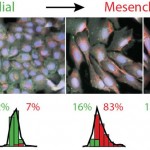
Identifying whether a potential drug is having an effect on cancer cells is not always obvious. If enough cells change their morphology, it’s fairly easy to see the change under a microscope. Spotting individual cells that are unique among millions of others is what researchers at Brown University have been working on. They developed a high speed vision system that outlines cells that just went through an epithelial–mesenchymal transition (EMT). Within tumors such cells lead to greater malignanc...
More

‘Mooltipass Mini’ is a new physical password manager you can carry with you

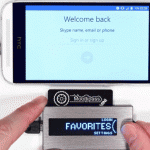
Mooltipass Mini connects to your computer or smartphone and stores your passwords using a PIN-protected smart card. When you get started, the Mooltipass browser extension or smartphone app asks you to enter your password for each account, which it then saves. It also acts as a USB keyboard for adding in passwords manually. After that you’ll only need to log in by connecting the device and hitting its login button. In theory, it cuts out the need to remember and enter passwords each time you logi...
More

Electronic nose helping tell if meat, poultry or fish in their fridge has gone bad

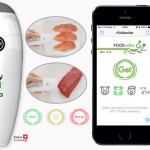
Food Safety has become one of the major priorities of the EU, with impact in public health and economy. The seriousness with which the Food Safety issue is addressed in Europe is reflected in the stringent national legislations and EU directives that have been issued over the recent years. The numerous food scandals that have The numerous food scandals that have been occurred during the last decade have increased consumers’ awareness concerning food safety, leading to calls for tighter food s...
More

‘Aladin’ – The new app that allows you to control your sofa …

Smartphone apps are now an integral part of our daily lives. We already use them to check in on our bank accounts, keep in touch with friends and play games but how about controlling our sofas? The brand new Aladin app by ROM will take the term ‘smart home’ to a whole new level by allowing you to control your sofa positions with a simple touch of a button. Your ALADIN Sofa is capable of things that other sofas are not capable of! After configuring your sofa via our app, you can simply s...
More

The quantum sniffer dog

As humans, we sniff out different scents and aromas using chemical receptors in our noses. In technological gas detection, however, there are a whole host of other methods available. One such method is to use infrared lasers, passing a laser beam through the gas to an adjacent separate detector, which measures the degree of light attenuation it causes. TU Wien's tiny new sensor now brings together both sides within a single component, making it possible to use the same microscopic structure for ...
More

OrCam My Eye Helps Patients with Low Vision to Read Text and Recognize Objects in Everyday Life

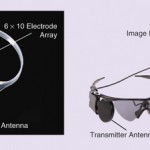
Approximately 2% of Americans have a visual disability— vision that cannot be corrected even with the strongest prescription—and in developing countries where infectious disease or untreated cataracts are more common, the percentage is often higher. Many different diseases and conditions can cause low vision, including age-related macular degeneration, diabetic retinopathy, and cone dystrophy (a genetic mutation affecting the cone cells of the retina). People with low vision find everyday act...
More

Bluetooth Electric Toothbrushes

One may not think that the humble toothbrush is a particularly glamorous health device, but if you scour the Dentistry category here on Medgadget, you’ll quickly discover how important oral health is to your overall health. So important is dental health that October in America has been designated National Dental Hygiene Month. To help commemorate this important month, we were given two electric toothbrushes that have evolved into the “smart” category. These smart toothbrushes feature Bluetooth t...
More

Gold Nanoparticles Fight Off Pancreatic Tumor Growth

Recent research suggests that nanotechnologies may lead to the development of novel cancer treatment. Gold nanoparticles with their unique physical and chemical properties hold great hopes for the development of thermal-based therapies against human malignancies. This review will focus on various strategies that have been developed to use gold nanoparticles as photothermal agents against human cancers. Pancreatic cancer begins in the tissues of your pancreas — an organ in your abdomen that li...
More

Touch Surgery, Episurf Medical Release Episealer Surgical Training Simulation

Touch Surgery, based in London, UK, is a mobile-first platform for the surgical community. Their services provide a virtual simulation environment to help surgeons learn and practice procedures, with the intent of driving better decisions and practices in the operating room. Since the mobile application’s initial release in 2010, Touch Surgery has amassed 1.3 million users globally and purportedly has been used in every country worldwide. In addition to its utility in training surgeons, the p...
More

University of Southampton – Nanoantenna lighting-rod effect produces fast optical switches

Team of scientists, led by the University of Southampton, have produced a fast nanoscale optical transistor using gold nanoantenna assisted phase transition. The work, published in the journal Light, Science and Applications, opens up new directions in antenna-assisted switches and optical memory. Small nanostructures that can interact strongly with light are of interest for a range of emerging new applications including small optical circuits and metasurface flat optics. Nanoantennas are ...
More

Phenotypic plasticity is a natural ability for plants and animals to evolve based on changes in the environment.

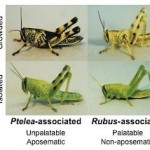
Phenotypic plasticity can be defined as the ability of one genotype to produce more than one phenotype when exposed to different environments. Phenotypic plasticity is the ability of an organism to change its phenotype in response to changes in the environment. With climate change forcing plant and animal species to adapt, shape-shifters are taking a unique approach that involves changing their physical appearance without having to migrate or evolve in order to cope, new research shows. A ...
More

Lab-Grown Diamonds And Science Behind It

Lab created diamonds are man-made diamonds that consist of actual carbon atoms arranged in the characteristic diamond crystal structure. Diamond simulants, such as cubic zirconia and moissanite, are diamond look-alikes and are not true carbon crystals. Lab created diamonds (also known as man-made diamonds, synthetic diamonds or pure grown diamonds) are grown in highly-controlled laboratory conditions that simulate the earth’s natural growing environment, producing real diamonds that are optic...
More

Viper SmartStart – locate, lock/unlock, and remotely start vehicles with smartphone

Start, locate and control your car from virtually anywhere with your iPhone, or Apple Watch! “Making the cloud-connected car a reality”. You can remote start or lock and unlock your car just by pushing a button on your iPhone or iPod Touch; using the exciting new Viper SmartStart app from Directed Electronics, the leader in vehicle security and remote start. The simple graphical interface gives you control over the following features of your installed Viper remote start or security/remote sta...
More

Brain Modulyzer Provides Interactive Window Into the Brain

Did you know that your brain processes information in a hierarchy? As you are reading this page, the signal coming in through your eyes enters your brain through the thalamus, which organizes it. That information then goes on to the primary visual cortex at the back of the brain, where populations of neurons respond to very specific basic properties. For instance, one set of neurons might fire up because the text on your screen is black and another set might activate because there are vertical l...
More

Planetarium Show Brings ‘Phantom’ Matter to Life – Visualizing the Invisible

From the journey of protons racing through the world’s largest particle collider in Europe to up-close views of the Big Bang and emergent universe, and the nearly mile-deep descent to an underground experiment in South Dakota, a new planetarium show is designed to immerse audiences in the manifold search for dark matter. Michael Barnett, a physicist at the Department of Energy’s Lawrence Berkeley National Laboratory (Berkeley Lab), imagined these scenes coming to life inside planetarium domes...
More

Harvard Scientists Train Computer to Distinguish Scents

A team of Harvard scientists led by Venkatesh Murthy, professor of molecular and cellular biology, tackled a seemingly complex phenomenon in their investigation: how mice can distinguish scents from one another. Using a machine-learning algorithm, Murthy and his colleagues “trained” a computer to recognize the neural patterns linked to various scents, and to identify specific odors in a mixture of smells. The study, published in the journal Neuron, focused on creating an algorithm for a compu...
More

Reprogramming Cancer Cells to Undergo Cellular Death

  Colorectal cancer is the second most common cancer. New treatments tend to be in high demand because current treatment options offer limited efficacy and can be ineffective in up to 70% of patients, in part due to genetic variation, rendering personalized medicine to be increasingly important. Argonaut Therapeutics plans to reboot the cancer cell so that it undergoes the body’s natural cell death process, known as apoptosis. Essentially, their therapies will target a “switch” that p...
More

Washington University Medical School detailed brain map unveiled

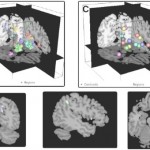
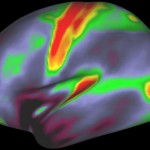
For years, doctors have had reliable charts of the body and its organs -- blood circulation, digestive system, nerves and the like -- but always with one frustrating grey zone: the brain. On Wednesday, a team of neuroscientists, computer specialists and engineers said they had compiled what "could be the most accurate map yet" of the mysterious expanse between our ears. In the process, they discovered nearly 100 previously unreported regions of the organ's wrinkly outer layer -- called the...
More

Hyper-fast. Super-simple. Brilliant WiFi.

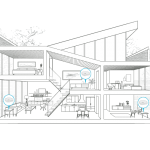
Relying on a single router is like asking a loud speaker in your living room to provide great sound throughout your home. It’s simple physics: WiFi waves don’t go through walls well and have an even harder time climbing stairs. Ever tried to stream a show from your bedroom when your router’s in the office downstairs? It’s a buffering nightmare. To solve this, you need multiple access points — devices that broadcast WiFi — distributed throughout your home. That’s what you’ll find in office bui...
More

Unprecedented Ultraviolet View of Mars Obtained

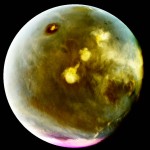
A new development in the MAVEN mission has shown an incredibly detailed ultraviolet glow from the Martian atmosphere. The pictures display dynamic behavior which was previously invisible, and shed light on how winds circulate at high altitudes. Dayside UV images display shifts in ozone amounts over various seasons and clouds which form over Martin volcanoes. According to Nick Schneider of the Laboratory of Atmospheric and Space Physics at the University of Colorado, Boulder who said in a NASA...
More

Smart Cube: A Novel Bluetooth Enabled Locking System

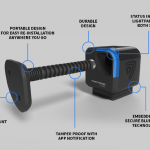
Do you ever wish you had a smart lock that would protect your belongings in any cabinet, drawer, or closet? Smart Cube is just that—it turns your phone, or rather the Smart Armor App, into a key and can allow a user to keep everything from harmful products (such as kitchen chemicals and medication) to personal documents, secure. Smart Cube is targeted towards a wide audience, from parents with babies who wish to protect their children from potentially harmful products, to business owners to r...
More

Berkeley Lab and University of Colorado-Boulder team develop new way to reveal crystal features in functional materials.

Detailing the molecular makeup of materials—from solar cells to organic light-emitting diodes (LEDs) and transistors, and medically important proteins—is not always a crystal-clear process. To understand how materials work at these microscopic scales, and to better design materials to improve their function, it is necessary to not only know all about their composition but also their molecular arrangement and microscopic imperfections. Now, a team of researchers working at the Department of...
More

iRBeacon the smarter remote for a smarter home

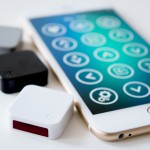
The iRBeacon is the one, simple solution that will rid you of the cluster of remotes - and it is capable of much more. The iRBeacon is the first step towards an intelligent home. It is a smart, elegant and tiny device which combines the infrared technology with the latest Bluetooth Low Energy (very energy efficient, more than a year working time with a single CR2032 coin battery), so the iRBeacon accompanied with the app (iOS, Android) can smart up your devices and replace your remotes in jus...
More

Meural Canvas, is a Wi-Fi-enabled digital canvas built to showcase artwork.

Meural Canvas, is a Wi-Fi-enabled digital canvas built to showcase artwork. Each frame gives you instant access to 20,000+ works of art and photography, and it’s easy to upload your own. Meural's proprietary technology renders each image as lifelike and textured as a real painting. Desktop digital picture frames have largely faded away, a side effect of the ubiquity of smartphones. Now the next thing to go digital is the artwork on your wall, such as the latest connected-art canvas from New Yor...
More

Blackbirds switch abruptly to fly-by-night behaviour at migration time

The normally diurnal birds don't need time to adjust their circadian clocks before departing for their winter habitats Each year, billions of songbirds set out on autumn evenings to fly to their wintering grounds, necessitating a change of daily rhythm for the usually diurnal animals. Scientists had always assumed that the birds gradually adjusted their rhythm, but new technology has now enabled researchers at the Max Planck Institute for Ornithology in Radolfzell, with international partners...
More

NASA Glenn Offers First Commercial Startup License to AirFlare

NASA’s Glenn Research Center in Cleveland has signed its first commercial Startup licensing agreement with AirFlare LLC in Nashville, Tennessee to productize the Glenn-patented Portable Unit for Metabolic Analysis, or PUMA. This agreement makes AirFlare the go-to source for the public to access NASA technology in the fitness market. Startup NASA is a new opportunity offered by NASA’s Technology Transfer Program. Startup companies can apply to license patented NASA technology with no up-front pa...
More

NASA – Electroactive Material for Wound Healing

This technology is a device that uses electrical activity to facilitate the wound healing process while protecting the wound. The bandage is made of an electroactive material (pictured above) that is stimulated by the heat of the body and the pressure of cell growth, thus no external power source is required. NASA has developed a high-tech electroactive bandage that creates an electric charge to help promote the healing process of wounds. Electroactive material is so sensitive that a push ...
More