KTH Royal Institute of Technology explains how Earth’s inner core remains solid despite extreme heat

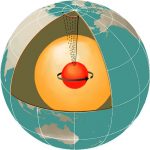
Even though it is hotter than the surface of the Sun, the crystallized iron core of the Earth remains solid. A new study from KTH Royal Institute of Technology may finally settle a longstanding debate over how that’s possible, as well as why seismic waves travel at higher speeds between the planet’s poles than through the equator. Spinning within Earth’s molten core is a crystal ball – actually a mass formation of almost pure crystallized iron – nearly the size of the moon. Unde...
More
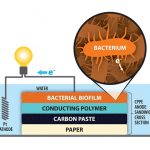

University of Rochester researchers have developed microbial fuel cell (MFC) with electrode made from paper, and will enable certain bacteria to produce electricity from waste

A microbial fuel cell (MFC), or biological fuel cell, is a bio-electrochemical system that drives an electric current by using bacteria and mimicking bacterial interactions found in nature. MFCs can be grouped into two general categories: mediated and unmediated. The first MFCs, demonstrated in the early 20th century, used a mediator: a chemical that transfers electrons from the bacteria in the cell to the anode. Unmediated MFCs emerged in the 1970s; in this type of MFC the bacteria typically...
More

Stanford engineers create a low-cost battery made with urea

Stanford University researchers created an aluminum-ion battery that uses an electrolyte material made of urea, the main component of urine (after water). A battery made with urea, commonly found in fertilizers and mammal urine, could provide a low-cost way of storing energy produced through solar power or other forms of renewable energy for consumption during off hours. A battery developed in Stanford Professor Hongjie Dai’s lab could provide low-cost storage for solar energy. (Image credit...
More

Citizen science is the involvement of the public in scientific research – whether community-driven research or global investigations

Citizen science is the involvement of the public in scientific research – whether community-driven research or global investigations. The Citizen Science Association unites expertise from educators, scientists, data managers, and others to power citizen science. Join us, and help speed innovation by sharing insights across disciplines. https://youtu.be/UVuEsuk9Dgc   Whether through grassroots action or technology-mediated crowdsourcing, there has been a rapid increase in public par...
More

University of Tokyo research findings will help thermal conduction and insulators. Study suggest trajectory of an electron passing through a magnetic field is bent.

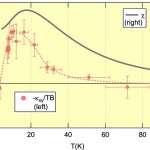
A research group at the University of Tokyo and their collaborators have observed a phenomenon similar to the Hall effect—found only in electricity-conducting metal—in a spin liquid state, which, as an insulator, does not carry electricity. This groundbreaking discovery presents a new research method for studying spin liquid states, which are shrouded in mystery. A trajectory of an electron passing through a magnetic field is bent by what is known as the Lorentz force—the force exerted on the...
More

Trinity College Dublin – CRANN researchers develop new method of splitting water into hydrogen and oxygen

Researchers at CRANN, Ireland’s leading Science Foundation Ireland funded nanoscience institute based at Trinity College Dublin (TCD), have developed a new method of splitting water into hydrogen and oxygen. The discovery will have significant impact in the worldwide race to cheaply and efficiently produce hydrogen gas, hailed as the clean energy source of the future. Professor Mike Lyons, a Principal Investigator at CRANN and TCD’s School of Chemistry and his team have developed new inexpens...
More

University of Würzburg has developed an alternative approach to fluorescent tagging of proteins

Advance in biomedical imaging: The Biocenter of the University of Würzburg in close collaboration with the University of Copenhagen has developed an alternative approach to fluorescent tagging of proteins. The new probes are practicable and compatible with high-resolution microscopic procedures. Fluorescence microscopy visualizes the molecular elements of cells. Proteins of nerve cells, for instance, can be labelled using probes which are subsequently excited with light to fluoresce. In the e...
More

University of Wisconsin–Madison, study shows that sediment storage blocks the oxidation of carbon

For the development of animals, nothing — with the exception of DNA — may be more important than oxygen in the atmosphere. Oxygen enables the chemical reactions that animals use to get energy from stored carbohydrates — from food. So it may be no coincidence that animals appeared and evolved during the “Cambrian explosion,” which coincided with a spike in atmospheric oxygen roughly 500 million years ago. It was during the Cambrian explosion that most of the current animal designs appeared....
More
Posted in Uncategorized Tagged

Columbia University Invention will soon make building material (Concrete) better and long lasting

Modern Building Materials The construction industry consumes more natural resources than any other industry. With increasing public awareness of the needs and demands of sustainable development and environmental conservation, no other industry is called on as much as the country's construction and building industry to evolve their practices to satisfy the needs of our current generation, without curtailing the resources of future generations to meet theirs. For example, concrete is by far the m...
More

Harvard & Columbia University research suggest that child in utero can respond and even adapt to environmental stimuli in ways that can affect his mental and physical health in years to come.

Before birth and early in life, the developing brain is acutely sensitive to its environment. A symposium at the Fifth Annual Aspen Brain Forum, hosted by the New York Academy of Sciences in New York City, explored how certain social and psychological aspects of environment influence biology and behavior. Tracy L. Bale, of the University of Pennsylvania, noted that maternal stress during pregnancy is associated with increased risk of neurodevelopmental disorders like autism and schizophrenia ...
More

‘Smart Agriculture’ project in UK helping farmers with optimum yield

University of Leeds (UK) has initiated a 'Smart Agriculture' project for organic farms in Riverford. Theobjective of the project was to collect real-time data for optimized yield. The project was to be able to capture useful data to start predicting measurements and events that could help farmers and agronomists to save time and money with its farms. In this project, the type of farm was not determining, because it has been deployed in a diverse range of crops, from vegetables to grain. Th...
More

University Of Tokyo Research Suggests That Lunar Cycle Affects Timing Of Birth In Cows

A popular belief that there is a higher number of births around the full moon has been shown to be true for dairy cows by a group of University of Tokyo researchers. Previous studies have found conflicting evidence on the moon cycle affecting the timing of human births and many researchers remain unconvinced that the moon influences human births. Associate Professor Tomohiro Yonezawa of the Graduate School of Agriculture and Life Sciences explains that the results may have varied because “...
More

University of Lincoln, UK, research on butterfly and moth suggest eggs of these species vary to give females control over the paternity of their offspring

Variation in butterfly eggs is driven by female promiscuity Butterfly micropyles The eggs of some butterfly and moth species vary to give females control over the paternity of their offspring, according to new research published today. The new study reveals for the first time that the number and location of micropyles (small openings in the outer surface of a female insect’s eggs which allow sperm to enter) are driven by a degree of female promiscuity. The researchers behind the study, ba...
More

NASA’s space research uses laser to understand interactions between Earth’s climate and key ocean ecosystems

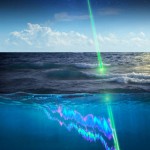
A new study using a NASA satellite instrument orbiting Earth has found that small, environmental changes in polar food webs significantly influence the boom-and-bust, or peak and decline, cycles of phytoplankton. These findings will supply important data for ecosystem management, commercial fisheries and our understanding of the interactions between Earth’s climate and key ocean ecosystems. “It’s really important for us to understand what controls these boom-and-bust cycles, and how they migh...
More

‘Electronic Nose’ – Device identify the specific components of an odor and analyzes its chemical makeup.

An electronic nose is a device intended to detect odors or flavors. Over the last decade, "electronicsensing" or "e-sensing" technologies have undergone important developments from a technical and commercial point of view. These device identify the specific components of an odor and analyzes its chemical makeup. An electronic nose consists of a mechanism for chemical detection, such as an array of electronic sensors, and a mechanism for pattern recognition, such as a neural network. The ba...
More

World’s first solar highway has been opened in France

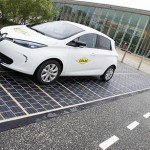
World's first solar highway has been opened in France. Wattway is a patented French innovation that is the fruit of 5 years of research undertaken by Colas, world leader in transport infrastructure, and the INES (French National Institute for Solar Energy). By combining road construction and photovoltaic techniques, Wattway pavement provides clean, renewable energy in the form of electricity, while allowing for all types of traffic. As the energy transition becomes reality, imagine a road ...
More

Earth sciences have defined a new human age – now social scientists are calling for broader and more interdisciplinary discussion

The earth sciences have defined a new human age - now social scientists are calling for broader and more interdisciplinary discussion. The Anthropocene is a proposed epoch dating from when human activities started to have a significant global impact on Earth's geology and ecosystems. The Anthropocence concept thus includes, but also transcends, the idea of anthropogenic climate change. The Early Anthropocene Hypothesis (sometimes called Early Anthropogenic) was proposed by William ...
More

Michigan State University researchers have created a new way to harvest energy from human motion. Soon you will be able to charge cellphones with finger swipes and power Bluetooth headsets simply by walking.

Michigan State University engineering researchers have created a new way to harvest energy from human motion, using a film-like device that actually can be folded to create more power. The research, funded by the National Science Foundation, suggests "we're on the path toward wearable devices powered by human motion," said Nelson Sepulveda, associate professor of electrical and computer engineering and lead investigator of the project. The completed device is called a biocompatible ferroel...
More

Researchers have developed a specialized type of glowing metal organic framework that is designed to detect and remove heavy-metal toxins from water.

Tiny, glowing crystals designed to detect and capture heavy-metal toxins such as lead and mercury could prove to be a powerful new tool in locating and cleaning up contaminated water sources. Motivated by publicized cases in which high levels of heavy metals were found in drinking water in Flint, Mich., and Newark, N.J., a science team led by researchers at Rutgers University used intense X-rays at Lawrence Berkeley National Laboratory (Berkeley Lab) to probe the structure of the crystals the...
More

New study of water-saving plants advances efforts to develop drought-resistant crops

As part of an effort to develop drought-resistant food and bioenergy crops, scientists at the Department of Energy’s Oak Ridge National Laboratory have uncovered the genetic and metabolic mechanisms that allow certain plants to conserve water and thrive in semi-arid climates. Semi-arid plants such as agave have adapted to survive in areas with little rainfall by developing a specialized mode of photosynthesis called crassulacean acid metabolism, or CAM. Unlike plants in wetter environments, C...
More

NASA and International team’s research shows, as CO2 levels are rising earth is getting greener.

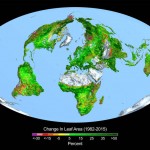
From a quarter to half of Earth’s vegetated lands has shown significant greening over the last 35 years largely due to rising levels of atmospheric carbon dioxide. An international team of 32 authors from 24 institutions in eight countries led the effort, which involved using satellite data from NASA’s Moderate Resolution Imaging Spectrometer and the National Oceanic and Atmospheric Administration’s Advanced Very High Resolution Radiometer instruments to help determine the leaf area index, or...
More

UNIVERSITY OF OREGON team suggest that fault curvature may control where big quakes occur

Major earthquakes - magnitude 8.5 and stronger -- occur where faults are mostly flat, say University of Oregon and French geologists. Curvier faults, they report in the journal Science, are less likely to experience earthquakes exceeding that strength. Large earthquakes, known as mega-quakes, were long thought to be possible only at the boundary between fast converging, young tectonic plates until two giant earthquakes -- the magnitude 9.4 quake in Indonesia in 2004 and the 9.0 quake in Japan...
More

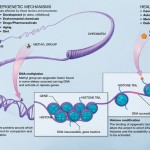
Research has found that certain pollutants can induce epigenetic modifications that cause disease and can be transmitted to later generations

Harmful chemicals, stress and other influences can permanently alter which genes are turned on without changing any of the genes’ code. Now, it appears, some of these “epigenetic” changes are passed down to—and may cause disease in—future generations. Epigenetics studies genetic effects not encoded in the DNA sequence of an organism, hence the prefix epi- (Greek: επί- over, outside of, around).Such effects on cellular and physiological phenotypic traits may result from external or environment...
More

German Max Planck Institute for Meteorology has quantified relationship between individual CO2 emissions and the Arctic’s shrinking summer sea ice

For each tonne of carbon dioxide (CO2) that any person on our planet emits, three square metres of Arctic summer sea ice disappear. This is the finding of a study that has been published in the journal Science this week by Dirk Notz, leader of a Max Planck Research Group at the Max Planck Institute for Meteorology and Julienne Stroeve from the US National Snow and Ice Data Centre. These figures enable us for the first time to grasp the individual contribution to global climate change. The study ...
More

Green City Solutions has engineered a street installation that uses biotech moss to combat pollution in urban cities

University of Dresden is supporting the City Tree developers Victor Splittberger and Peter Sänger by using a special programme to research how pollution could be most effectively filtered from the air. The programme can be employed to numerous locations worldwide. The CityTree structure is an amalgamation of sorts: a green, free-standing contraption that’s seemingly part tree sculpture, part park bench and part skate ramp. Its verdant wall stands about 13 feet high, and its square face st...
More

Scientists at the Department of Energy’s Oak Ridge National Laboratory have developed a process to turn carbon dioxide into fuel and alcohol

In a new twist to waste-to-fuel technology, scientists at the Department of Energy’s Oak Ridge National Laboratory have developed an electrochemical process that uses tiny spikes of carbon and copper to turn carbon dioxide, a greenhouse gas, into ethanol. Their finding, which involves nanofabrication and catalysis science, was serendipitous. ORNL’s Yang Song (seated), Dale Hensley (standing left) and Adam Rondinone examine a carbon nanospike sample with a scanning electron microscope. “We disc...
More

Researchers from the Max Planck Institute have ddiscovered that light transmitted from the shoot to the roots activates photoreceptors in the roots and triggers light-dependent growth responses in plants

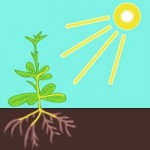
Researchers from the Max Planck Institute for Chemical Ecology in Jena, Germany, and Seoul National University, South Korea, were able to show for the first time that roots react directly to light which is transmitted from the shoot to the underground parts of Arabidopsis thaliana plants. Roots can thus effectively adapt plant growth to the light conditions in the environment. (Science Signaling, November 2016, DOI: 10.1126/scisignal.aaf6530). Light is not only a source of energ...
More

Phenotypic plasticity is a natural ability for plants and animals to evolve based on changes in the environment.

Phenotypic plasticity can be defined as the ability of one genotype to produce more than one phenotype when exposed to different environments. Phenotypic plasticity is the ability of an organism to change its phenotype in response to changes in the environment. With climate change forcing plant and animal species to adapt, shape-shifters are taking a unique approach that involves changing their physical appearance without having to migrate or evolve in order to cope, new research shows. A ...
More

Coudersport Ice Mine (PA) – Mysterious Ice Cave That Produces Ice Only During Summer

Sweden Valley Ice Mine, one of the unexplained mysteries of nature, is located about four miles east of Coudersport, the county seat of Potter County, Pa. A similar phenomenon is situated on Dingman Run, about three miles west of Coudersport. These are natural ice-manufacturing plants, running under full head during the warm season of the year, but shutting down entirely during the cold months of winter, when there is plenty of ice and snow to be had elsewhere and when it would seem to be the mo...
More

Thonis-Heracleion was found after a thousand years underwater

Heracleion (Greek: Ἡράκλειον), also known as Thonis (Θῶνις), was an ancient Egyptian city near Alexandria whose ruins are located in Abu Qir Bay, currently 2.5 km off the coast, under 10 m (30 ft) of water. Its legendary beginnings go back to as early as the 12th century BC, and it is mentioned by ancient Greek historians. Its importance grew particularly during the waning days of the Pharaohs—the late period, when it was Egypt's main port for international trade and collection of taxes. Hera...
More