
Every wall in a modern building hides a quiet, constant source of energy that nobody uses. The copper wiring that carries household and office electricity produces a weak, oscillating magnetic field around it, sixty times a second in North America. Researchers at the University of Arkansas and the University of Michigan have now shown that this stray field can do useful work: it can keep a tiny temperature sensor running with no battery at all.
According to the University of Arkansas announceme...
More
University of Arkansas
Tiny sea creatures feature transparent optical systems as tough as their shells.
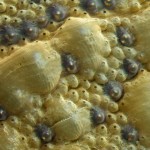
Sea-dwelling mollusks called chitons have armor-plated eyes embedded in their shells, and this incredible feature could provide a model for protective armor that could be used by the army and workers exposed to dangerous conditions. The chitons, or Acanthopleura granulates, have hundreds of these armored eyes on the surface of their shells, MIT reported. Unlike most eyes in the biological world that are made primarily of protein, these eyes are made of the mineral aragonite, but can still form f...
More
This creature could hold the key to eternal life
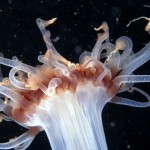
Sea anemones are a common sight on many coastlines, and despite their brightly colored appearance it seems they may have more common with humans than people realize. What's more, researchers are wondering whether the creatures could hold the secret to eternal life.
Once thought to be plants, sea anemones are soft bodied animals that attach themselves to rocks and coral reefs in shallow waters. Their tentacles inject venom into the small fish and shrimp that brush up against them and guide the...
More
Clues to Waterproof Glue Found in Antarctic Creature
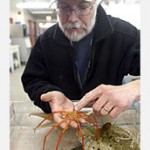
Scientists are recycling nutrients in the oceans to make waterproof glue.
Today, animal glues made from bone glue, hide or skin glue, and fish glue are sparsely used for making and restoring objects, paintings, and illuminated parchment manuscripts due to difficulty of storage in a wet state and constant requirement for fresh raw materials.
For 20 years, Sam Bowser, a scientist at the New York State Department of Health's Wadsworth Center, has been doing research on a single-celled creatur...
More