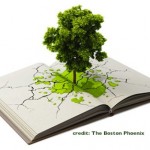
University Of Washington research shows encounters with nearby nature helps our wellbeing

Encounters with nearby nature help alleviate mental fatigue by relaxing and restoring the mind. Within built environments parks and green spaces are settings for cognitive respite, as they encourage social interaction and de-stressing through exercise or conversation, and provide calming settings. Having quality landscaping and vegetation in and around the places where people work and study is a good investment. Both visual access and being within green space helps to restore the mind’s ability ...
More
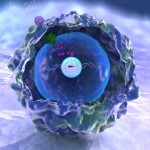
MIT Research on recording analog memories in human cells

MIT biological engineers have devised a memory storage system as a DNA-embedded meter that is recording the activity of a signaling pathway in a human cell. MIT biological engineers have devised a way to record complex histories in the DNA of human cells, allowing them to retrieve “memories” of past events, such as inflammation, by sequencing the DNA. This analog memory storage system — the first that can record the duration and/or intensity of events in human cells — could also help scien...
More

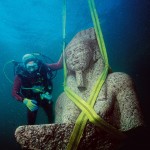
Thonis-Heracleion was found after a thousand years underwater

Heracleion (Greek: Ἡράκλειον), also known as Thonis (Θῶνις), was an ancient Egyptian city near Alexandria whose ruins are located in Abu Qir Bay, currently 2.5 km off the coast, under 10 m (30 ft) of water. Its legendary beginnings go back to as early as the 12th century BC, and it is mentioned by ancient Greek historians. Its importance grew particularly during the waning days of the Pharaohs—the late period, when it was Egypt's main port for international trade and collection of taxes. Hera...
More

Consciousness

Researchers from the George Washington University have managed to switch consciousness on and off in an epileptic woman by stimulating a single region of the brain with electrical impulses. While this is a single case study, it provides an exciting insight into the neural mechanisms behind consciousness, a subject of great interest that is poorly understood despite decades of research. The study has been published in Epilepsy & Behavior. Consciousness is a fascinating topic that has both ...
More

GABA (gamma amino butyric acid) is the main inhibitory neurotransmitter in the central nervous system

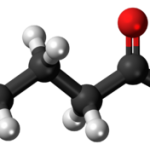
GABA (gamma amino butyric acid) is considered the main inhibitory neurotransmitter in the central nervous system. It regulates neuronal excitability and muscle tone.1 GABA is synthesized from glutamate (using vitamin B6 as a cofactor). GABA is Interestingly, while glutamate is the brain’s main excitatory neurotransmitter,2 GABA “puts the brakes” on in the brain, helping to control overstimulation. gamma-Aminobutyric acid (γ-Aminobutyric acid) /ˈɡæmə əˈmiːnoʊbjuːˈtɪrᵻk ˈæsᵻd/ (also called G...
More

Pentaho Labs experts to incubate breakthrough data orchestration and advanced analytic capabilities

Pentaho, a Hitachi Group company, is a leading data integration and business analytics company with an enterprise-class, open source-based platform for diverse big data deployments. Pentaho’s unified data integration and analytics platform is comprehensive, completely embeddable and delivers governed data to power any analytics in any environment. Pentaho’s mission is to help organizations across multiple industries harness the value from all their data, including big data and IoT, enabling them...
More

MIT: New institute will accelerate innovations in fibers and fabrics

An independent nonprofit founded by MIT has been selected to run a new, $317 million public-private partnership announced today by Secretary of Defense Ashton Carter. National public-private consortium led by MIT will involve manufacturers, universities, agencies, companies. The partnership, named the Advanced Functional Fabrics of America (AFFOA) Institute, has won a national competition for federal funding to create the latest Manufacturing Innovation Institute. It is designed to acceler...
More

NASA’s research on Cognitive Process for 3-D Orientation perception and Navigation in Weightlessness (Cogni)

The Cogni experiment consists of two parts: The 3D Navigation protocol is geared towards understanding how the human brain represents motion, especially the issue as to whether all three dimensions are represented in the same way or whether the horizontal level is treated differently. This part of the experiment will help better understand what spatial references the brain uses to build a mental representation of the path of motion. We know that detection of symmetries is speedier ...
More

MIT’s study reveals shared behavior of microbes and electrons

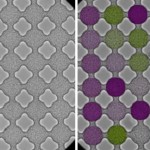
There are certain universal patterns in nature that hold true, regardless of objects’ size, species, or surroundings. Take, for instance, the branching fractals seen in both tree limbs and blood vessels, or the surprisingly similar spirals in mollusks and cabbage. Now scientists at MIT and Cambridge University have identified an unexpected shared pattern in the collective movement of bacteria and electrons: As millions of bacteria stream through a microfluidic lattice, they synchronize and swim...
More

MIT’s Abdul Latif Jameel World Water and Food Security Lab (J-WAFS)

Dedicated to working Institute-wide to improve the productivity, accessibility, and sustainability of the world's water and food systems, the Abdul Latif Jameel World Water and Food Security Lab (J-WAFS) coordinates the efforts of MIT's faculty, labs, and centers to work towards solutions for water and food security that are environmentally benign and energy-efficient.  J-WAFS supports technology innovation and basic research activities by motivating, accelerating, and coordinating research in w...
More

Columbia University – Time Management Strategies

Time Management Strategies Creating and setting goals gives you a plan for achieving academic success. Setting Goals Goals are deciding what we want to achieve. I want to have a 3.5 GPA at the end of this semester. I want to join an on-campus group to meet new people. Goals involve a plan to get what we want. I will write out a study schedule to follow for each week of the semester. I will talk to other students to see what interest groups are on campus. Goals should be re...
More

University of Washington Project – Wifi signal enabling gesture recognition

WiSee is a novel interaction interface that leverages ongoing wireless transmissions in the environment (e.g., WiFi) to enable whole-home sensing and recognition of human gestures. Since wireless signals do not require line-of-sight and can traverse through walls, WiSee can enable whole-home gesture recognition using few wireless sources (e.g., a Wi-Fi router and a few mobile devices in the living room). WiSee is the first wireless system that can identify gestures in line-of-sight, non-line-...
More

New Mathematics Accurately Captures Liquids and Surfaces Moving in Synergy

Gas bubbles in a glass of champagne, thin films rupturing into tiny liquid droplets, blood flowing through a pumping heart and crashing ocean waves—although seemingly unrelated, these phenomena have something in common: they can all be mathematically modeled as interface dynamics coupled to the Navier-Stokes equations, a set of equations that predict how fluids flow. ' https://youtu.be/grf9PBPH9cs A new mathematical framework developed at Berkeley Lab allows researchers to capture fluid...
More

MIT ‘Holosuite’ Project – An Exploration into Interactive Holographic Telepresence

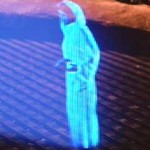
Holosuite is an optimized, multi-threaded implementation of end-to-end 3D telepresence operating on two remote PCs via internet. It can render visual output to holographic displays, as well as advanced 3D displays with motion parallax reprojection. There is a temptation to label Holosuite as “3D Skype” or “3D Videoconferencing”, but this fails to distinguish what is important about Holosuite, as it neglects the collaborative and interactive aspects of Holosuite. The Holosuite software proj...
More

MIT – Ingestible origami robot

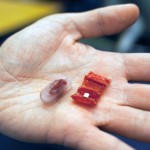
Robot unfolds from ingestible capsule, removes button battery stuck to wall of simulated stomach In experiments involving a simulation of the human esophagus and stomach, researchers at MIT, the University of Sheffield, and the Tokyo Institute of Technology have demonstrated a tiny origami robot that can unfold itself from a swallowed capsule and, steered by external magnetic fields, crawl across the stomach wall to remove a swallowed button battery or patch a wound. The new work, which the ...
More

EARLY CHILDHOOD EDUCATION VERY IMPORTANT

Brains are built over time, from the bottom up. The basic architecture of the brain is constructed through an ongoing process that begins before birth and continues into adulthood. Early experiences affect the quality of that architecture by establishing either a sturdy or a fragile foundation for all of the learning, health and behavior that follow. In the first few years of life, 700 new neural connections are formed every second. After this period of rapid proliferation, connections are...
More

NASA’s Research On Quantum Teleportation

The world at the quantum level, at the scale of particles too small for the eye to see, is very strange. It's possible, for instance, to have two particles that are "entangled" -- that is, they function as if they were connected, even if they are many miles away from each other. New research co-authored by Francesco Marsili, microdevices engineer at NASA's Jet Propulsion Laboratory, Pasadena, California, makes use of this phenomenon in a technological advancement published in the journal ...
More

University of Tokyo’s 6th sense headband

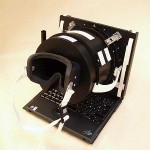
University of Tokyo is developing a wearable and modular device allowing users to perceive and respond to spatial information using haptic cues in an intuitive and unobtrusive way. The system is composed of an array of "optical-hair modules", each of which senses range information and transduces it as an appropriate vibro-tactile cue on the skin directly beneath it (the module can be embedded on clothes or strapped to body parts as in the figures below). An analogy for our artificial sensory sys...
More

River pollution causes gender-bending in fish

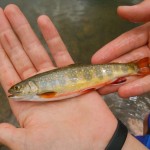
According to a recent report by the U.S. Geological Survey, male bass are experiencing sex changes due to chemicals that are found in most waterways across Northeast National Wildlife Refuges. Studies have found that up to 85% of male smallmouth bass in the region are demonstrating "characteristics of the opposite sex" – including eggs being located where testes should be. This isn't a one off – in fact, 27% of largemouth bass in the same region also show undesirable sex change indications. M...
More

Reversal of the Sun’s Magnetic Field

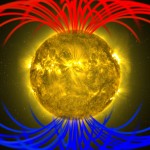
According to measurements from NASA-supported observatories, the sun's vast magnetic field flips every 11 years. The sun's magnetic field changes polarity approximately every 11 years. It happens at the peak of each solar cycle as the sun's inner magnetic dynamo re-organizes itself. The coming reversal will mark the midpoint of Solar Cycle 24. Half of "solar max" will be behind us, with half yet to come. Hoeksema is the director of Stanford's Wilcox Solar Observatory, one of the few observ...
More

NASA helping students and professionals launch their own mini satellites known as CubeSats

NASA’s CubeSat Launch initiative (CSLI) provides opportunities for small satellite payloads to fly on rockets planned for upcoming launches. These CubeSats are flown as auxiliary payloads on previously planned missions. To participate in the CSLI program, CubeSat investigations should address research in science, exploration, technology, or education consistent with NASA's Strategic Plan and the Education Strategic Coordination Framework. CSLI provides educational opportunities that attrac...
More

MIT COURSE – Internet of Things: Roadmap to a Connected World

Internet of Things: Roadmap to a Connected World   MIT COURSE Course Number IOTx Classes Start Apr 12, 2016 Classes End May 24, 2016 By 2020, there will be 50 billion devices connected to the Internet. How will you and your organization capitalize on this tremendous opportunity? While the promise of the Internet of Things (IoT) brings many new business prospects, it also presents significant challenges ranging from technology architectural choices to security...
More
Posted in Uncategorized

Core of science foundation – History of scientific methodologies

The history of science is the study of the development of science and scientific knowledge, including both the natural sciences and social sciences. (The history of the arts and humanities is termed as the history of scholarship.) Science is a body of empirical, theoretical, and practical knowledge about the natural world, produced by scientists who emphasize the observation, explanation, and prediction of real world phenomena. Historiography of science, in contrast, often draws on the historica...
More
Posted in Uncategorized Tagged

NASA – Spider web in Zero Gravity

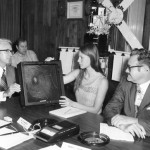
High school student Judith Miles Skylab experiment with Keith Demorest and Henry Floyd, both of Marshall Space Flight Center (MSFC). In her experiment, called "Web Formation in Zero Gravity," spiders were released into a box and their actions recorded to determine how well they adapted to the absence of gravity. The experiment flew aboard the Skylab 3 mission and proved that spiders could still spin webs in microgravity. The experiement was designed to measure motor response, an indicat...
More

Imaging with an “optical brush”

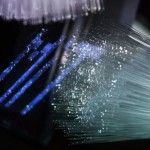
Researchers at the MIT Media Lab have developed a new imaging device that consists of a loose bundle of optical fibers, with no need for lenses or a protective housing. The fibers are connected to an array of photosensors at one end; the other ends can be left to wave free, so they could pass individually through micrometer-scale gaps in a porous membrane, to image whatever is on the other side. Bundles of the fibers could be fed through pipes and immersed in fluids, to image oil fields, a...
More

International Space Station Experiments

  Drosophila Motility, Behaviour and Ageing The main scientific objectives of the experiment are to study in more detail the mechanisms of the abnormal motility response encountered in space by young flies with consequences on the posterior aging response of the flies. For this purpose, three different fly strains with different phenotypes are used, in four configurations. The three strains are a long-lived strain, a short-lived strain and a strain showing an abnormal gravitropic resp...
More

Penguin Anti-Ice.

Scientists studying penguins’ feathers have revealed how the birds stay ice free when hopping in and out of below zero waters in the Antarctic. Penguins living in the Antarctic are highly evolved to cope with harsh conditions, their short outer feathers overlap to make a thick protective layer over fluffier feathers which keep them warm. Under their skin, a thick layer of fat keeps them insulated. The flightless birds spend a lot of time in the sea and are extremely agile and graceful swimmers, ...
More

Mild Traumatic Brain Injury

Traumatic brain injury (TBI) is the chief cause of death and disability among children and adults from 1 to 44 years of age in the United States, leading to more than two million emergency department visits annually. A brain protein is thought to be the source of long-term cognitive impairments in those who have had seemingly mild, concussion-type head injuries, and a blood test may one day be available to predict such damage. Researchers from the Perelman School of Medicine at the University of...
More

Prenatal smoking shows up in little kids’ blood

This was the finding of a study led by Johns Hopkins Bloomberg School of Public Health in Baltimore, MD, and published in the journal Environmental Research. Previous research has already established that the DNA of cord blood from newborns is altered if the mother smokes during pregnancy. The difference is not in the genetic code itself but in the presence of "epigenetic" marks left on the DNA at 26 locations of the genome. Epigenetic markers are molecules that attach to genes and influence the...
More

Earth not due for a geomagnetic flip in the near future.

Over the past couple of hundred years, the strength of the Earth’s geomagnetic field has been waning, leading scientists to wonder if our planet’s polarity is on the verge of flipping. A new study suggests this won’t happen in the near future and that the intensity of today’s field is uncharacteristically strong. Predicting a geomagnetic flip is important for two primary reasons, one biological, one technological. The Earth’s magnetic field deflects solar wind and cosmic rays, so with a weakened...
More