The birth of a ‘baby planet’

Using a novel technique, scientists have observed a "baby planet" being formed nearly 450 light years away. When new planets absorb nearby gases and dust they get hot. A strange light is emitted as a result and that has allowed researchers to watch a distant exoplanet as it is being formed. The plant is circling a star dubbed LkCa 15 and was discovered by astronomers Adam Kraus and Michael Ireland using the Keck II telescope. Named LkCa 15b, and in orbit in a system with two other planets (aptly...
More
An inside look at the Big Bang.

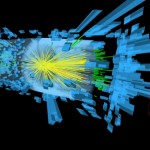
The Large Hadron Collider began its second run of experiments in June after a two-year hiatus from being the world’s largest particle accelerator. And the results are promising, achieving the highest energy ever achieved in a laboratory by colliding subatomic particles at 13 teraelectronvolts (TeV), physicists hope that these high-energy collisions may produce entirely new particles and simulate conditions seen in the early universe, according to an MIT statement.Soon to be published in Physics ...
More

To infinity and beyond.

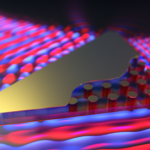
Researchers at the Harvard John A. Paulson School of Engineering and Applied Sciences (SEAS) have designed the first on-chip metamaterial with a refractive index of zero, meaning that the phase of light can travel infinitely fast.,This new metamaterial was developed in the lab of Eric Mazur, the Balkanski Professor of Physics and Applied Physics and Area Dean for Applied Physics at SEAS, and is described in the journal Nature Photonics. “Light doesn’t typically like to be squeezed or manipula...
More

Oxygen found on Comet

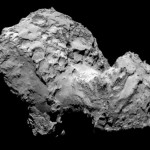
For the first time ever, molecular oxygen has been found on a comet. Comet 67P/Churyumov–Gerasimenko, currently being orbited by the European Space Agency's Rosetta spacecraft, is the subject of a study published in Nature. According to ESA researchers, the oxygen present in the comet's surrounding gasses has likely been there since the formation of the comet. "It is the most surprising discovery we have made so far, because oxygen was not among the molecules expected in a cometary coma," the Un...
More

Cosmic ‘Death Star’ destroys a planet

Astronomers announced that they have spotted a large, rocky object disintegrating in its death spiral around a distant white dwarf star. The discovery also confirms a long-standing theory behind the source of white dwarf “pollution” by metals. “This is something no human has seen before,” said lead author Andrew Vanderburg of the Harvard-Smithsonian Center for Astrophysics (CfA). “We’re watching a solar system get destroyed.” The evidence for this unique system came from NASA’s Kepler K2 miss...
More

Signs of acid fog found on Mars.

Mars has acid fog which eats away rocks and is caused by volcanic eruptions on the red planet, a new study suggests. A planetary scientist has pieced together a compelling story about how acidic vapors may have eaten at the rocks in a 100-acre area on Husband Hill in the Columbia Hills of Gusev Crater on Shoshanna Cole. An assistant professor at Ithaca College in New York, used a variety of data gathered by multiple instruments on the 2003 Mars Exploration Rover Spirit to tease out informatio...
More

Harvard research focus to treat the progressive loss of eyesight associated with aging at its source

Eye Diseases Eighty percent of Americans fear losing their sight. But, unfortunately, after the age of forty, macular degeneration, and with it cloudy, soft, blurred vision at best, becomes a reality for millions of people. Age-related macular degeneration, and Stargardt disease, the most common form of inherited juvenile macular degeneration, are diseases of the retina that cause a loss of central vision over time. The retina is a layer of light-sensitive cel...
More

MIT launch of Digital Currency Initiative.

Digital currencies like Bitcoin are poised to make a dramatic impact on most people’s lives over the next decade. They offer tremendous possibilities for growing our global economy, and, similar to the cell phone, enabling developing nations to leapfrog the tech of developed nations. But, we are at a pivotal point for this nascent technology. Getting digital currencies right and realizing the projected impact, present daunting challenges that will require significant research and development to ...
More

Microwave camera that can see through the wall

A team of researchers have been working on a handheld camera that sports the technology that can see through the wall using micro wave, additionally future usage envisioned is for cancer detection and aerospace engineering. The camera currently takes 30 images per second by transmitting millimeter and microwaves to a "collector" on the other side of a subject, and then sends them to a laptop for real-time inspection. Aside from being able to see straight through your BVDs, it can also be used...
More

Regenerating teeth now possible

Using lasers to regenerate and grow body parts sounds like science fiction, but researchers have just demonstrated that it might be a tranformative tool in medicine—or at least dentistry—in the future. A Harvard-led team just successfully used low-powered lasers to activate stem cells and stimulate the growth of teeth in rats and human dental tissue in a lab. The results were published today in the journal Science Translational Medicine. Stem cells exist throughout the body, and they fasci...
More

Brain auto pilot mode – a fast track path

The structure of the human brain is complex, reminiscent of a circuit diagram with countless connections. But what role does this architecture play in the functioning of the brain? To answer this question, researchers at the Max Planck Institute for Human Development in Berlin, in cooperation with colleagues at the Free University of Berlin and University Hospital Freiburg, have for the first time analysed 1.6 billion connections within the brain simultaneously. They found the highest agreement ...
More

Smart Mice with half Human brain

Smart Mice with half Human brain Mice have been created whose brains are half human. As a result, the animals are smarter than their siblings by professors at the University of Rochester Medical Center in New York. The idea is not to mimic fiction, but to advance our understanding of human brain diseases by studying them in whole mouse brains rather than in dishes. The altered mice still have mouse neurons – the “thinking” cells that make up around half of all their brain cells. But pra...
More

‘IQ gene’ and inevitably the possibility of enhancing human intelligence

“IQ gene” and, inevitably, the possibility of enhancing human intelligence. The inspiration for the study of Tang et al. comes from the predominant theory on the cellular basis for learning, called Hebb's rule, which states that synaptic transmission between two neurons will be strengthened if the two cells are simultaneously active and one cell repeatedly excites or causes the other cell to fire. This form of synaptic plasticity called long-term potentiation (LTP) clearly exists, as well as th...
More

Latest Intuos Tablets Make Creative Dreams Come True

Wacom®, the world leader in pen-based creative tablets, introduced its next generation Intuos® product family to empower and inspire creative enthusiasts. The new range of Intuos Pen & Touch tablets consists of four models: Intuos Art, (for beginners with a passion for creativity), Intuos Comic, (more advanced painting and artistic skill) Intuos Photo (for photo editors who want to try new creative techniques) and Intuos Draw. (For comic and manga enthusiasts). Each model includes free...
More

Temperature Increase Could Lead to Drastic Sea Level Rise

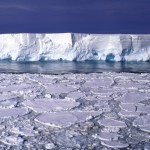
Antarctic ice shelf collapse and unstoppable sea level rise 'very likely' without tough climate action, say scientists. Warming of 1.5 to 2 degrees Celsius above current levels could lead to "unstoppable" sea level rise that would last for thousands of years. The new model, published today in Nature, shows that such temperatures would result in 80 to 85 per cent loss of major Antarctic ice shelves, something that is possible by the end of the century under existing IPCC scenarios. Collapse of th...
More

How a moth slows its brain to see in the dark

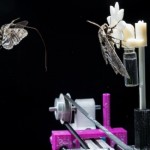
Hawkmoths are big, agile insects that hover in place expertly as they feed on nectar at dawn, dusk, and in the evenings. So, not only is it dark out, but the flowers are moving targets thanks to the breeze. Now, with the help of a robotic flower, researchers reveal how hawkmoths forage in the darkness: Their twilight or night vision is exquisitely attuned to flowers swaying in the wind. The findings, suggest that hawkmoth sight and flight evolved to perfectly match the movements of their only so...
More

Neutrinos scoop the 2015 Nobel Prize in Physics

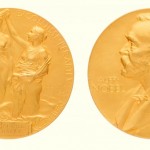
Neutrinos have the smallest mass of any known particle, and are created in several ways, including during radioactive decay, directly in the Sun’s core, and when cosmic rays from the Sun hit the Earth’s atmosphere. Thousands of billions of neutrinos are streaming through our bodies each second. The prize has been awarded to two physicists who discovered a strange property of neutrinos, which Imperial scientists are still unravelling today. Today’s physics laureates, Professor Arthur B. McDona...
More

Scientists paint quantum electronics with beams of light.

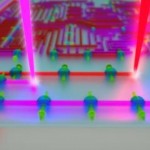
A team of scientists from the University of Chicago and Penn State University have accidentally discovered a new way of using light to draw and erase quantum-mechanical circuits in a unique class of materials called topological insulators. Researchers may be able to "paint" quantum electronics with beams of light. The electrons in topological insulators have unique quantum properties that many scientists believe will be useful for developing spin-based electronics and quantum computers. Howev...
More
Posted in Uncategorized

Fossil teeth place humans in Asia “20,000 years early.”

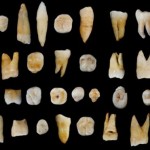
The discovery of 47 human teeth from a cave in southern China has rewritten the narrative of our ancestors' spread out of Africa. Scientists excavating an area in Daoxian say the fossils belong to modern humans and date to at least 80,000 years ago. The date is 20,000 years earlier than had been previously thought, and fills a gap our knowledge on the spread of modern humans around the world. It suggests that modern humans reached southern China from Africa long before they had arrived in northe...
More

NASA: Studying twins for a year in space

A Northwestern-led research team is one of 10 NASA-funded groups across the country studying identical twins Scott and Mark Kelly to learn how living in space for a long period of time, such as a mission to Mars affects the human body. While Scott spends a year in space, his brother, Mark, also a veteran NASA astronaut, will remain on Earth, as a ground-based control. The study will allow researchers to understand how the long-term exposure to space impacts the human brain and body and how the s...
More

Object recognition through flexible machine learning.

At the Annual Conference on Neural Information Processing Systems, MIT researchers will present a new way of doing machine learning that enables semantically related concepts to reinforce each other. Machine learning, which is the basis for most commercial artificial-intelligence systems, is intrinsically probabilistic. An object-recognition algorithm asked to classify a particular image, for instance, might conclude that it has a 60 percent chance of depicting a dog, but a 30 percent chance of ...
More

Drawing in the third dimension

Storybooks and graphic novels could soon be three dimensional. A new software platform from small business Mental Canvas reimagines drawing in the digital age. The company has introduced a new concept of picture books and graphic novels which are not flat two dimensional but could let us spin the whole story in a three dimensional setup. The company believes that digital illustration does not enhance the sketch value whereas if the image is presented in 3D, it acts as a communication tool ...
More