
Article details
Primary domain: Robotics & Automation (Autonomous Systems)Secondary domain: Artificial Intelligence & Machine Learning (Computer Vision)Article type: Research & DiscoveryTechnology: UQ-DAAAM uncertainty-aware robot memoryInnovation maturity: ExperimentalMission: ResearchBusiness impact: Could make household and industrial robots more reliable at multistep tasks by flagging and fixing uncertain perceptionsAudience: Research, IT, Business/LeadershipPublication date: No...
More
Vision-Language Models
Flexible, implantable device could block pain signals

Building on wireless technology that has the potential to interfere with pain, scientists have developed flexible, implantable devices that can activate and, in theory, block pain signals in the body and spinal cord before those signals reach the brain. The researchers, at Washington University School of Medicine in St. Louis and the University of Illinois at Urbana-Champaign, said the implants one day may be used in different parts of the body to fight pain that doesn’t respond to other therapi...
More
Samsung Flexible Smartphone
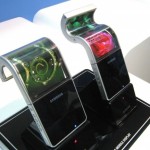
Samsung promises that flexible and foldable screens are coming to devices soon. The company’s latest patent, which was spotted by Patently Mobile, is for a flexible phone that morphs into a smart bangle you can strap onto your wrist. It’s an entirely bizarre and futuristic idea that certainly puts more focus on accessibility than style, but it sure sounds awesome.
The patent features a flexible OLED screen that’s so flexible you can curl it into a bracelet and wear it on your wrist as a smart...
More
Brain cells can be activated by a prosthetic hand.
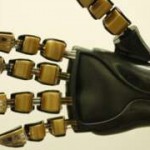
Researchers from Stanford University have improved artificial hands by attaching some flexible sensors on the fingertips, which can generate some electrical signals that can communicate with our brain directly instead of via a processor or a computer to translate back the signals to our brain.
Engineers have built a flexible sensor that detects touch and, just like skin, produces electrical pulses that get faster when the pressure increases. They have also used those pulses to drive neuronal ...
More
Object recognition through flexible machine learning.

At the Annual Conference on Neural Information Processing Systems, MIT researchers will present a new way of doing machine learning that enables semantically related concepts to reinforce each other. Machine learning, which is the basis for most commercial artificial-intelligence systems, is intrinsically probabilistic. An object-recognition algorithm asked to classify a particular image, for instance, might conclude that it has a 60 percent chance of depicting a dog, but a 30 percent chance of ...
More
New light-controlled gel makes big strides in soft robotics.

A new material controlled by light may help scientists build better soft-bodied robots. The UC Berkeley scientists created the gel using graphene and a synthetic protein similar to elastin, which is found in humans' blood vessels, skin and more. The synthetic elastin, created from genetically engineered bacteria, absorbs water at room temperature, but at higher temperatures it expels the water and shrinks.
Inspired by the way plants grow toward light sources, a phenomenon known as phototropis...
More
Ultra-flexible, Ultra-Thin Devices Developed to Monitor the Brain

Brain activity can be monitored with tiny flexible electronics which could roll up to fit in a pocket.
Charles Lieber, a nanoscientist and nanotechnologist at Harvard University, has designed latest ultra-thin electronics flexible enough to get stuffed into the needle of a syringe with a diameter as small as the average width of a human hair.
Traditional electronics are rigid and the procedures to measure brain activity would involve surgery; surgeons would make an opening equal to the siz...
More