
The Harvard trio of Arthur Jaffe, the Landon T. Clay Professor of Mathematics and Theoretical Science, postdoctoral fellow Zhengwei Liu, and researcher Alex Wozniakowski has developed a 3-D picture-language for mathematics with potential as a tool across a range of topics, from pure math to physics.
We present a 3D, topological picture-language for quantum information. Our approach combines charged excitations carried by strings, with topological properties that arise from embedding the strin...
More
RTX Spark
University College London research suggest long-term stress can result in higher levels of obesity
People who suffer long-term stress may also be more prone to obesity, according to research by scientists at UCL which involved examining hair samples for levels of cortisol, a hormone which regulates the body’s response to stress.
The paper, published in the journal Obesity, showed that exposure to higher levels of cortisol over several months is associated with people being more heavily, and more persistently, overweight.
The prevalence of overweight and obesity has markedly increased duri...
More
‘Sonoporation’ Gene transfer using ultrasound
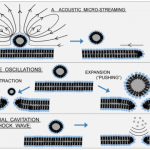
Sonoporation, or cellular sonication, is the use of sound (typically ultrasonic frequencies) for modifying the permeability of the cell plasma membrane. This technique is usually used in molecular biology and non-viral gene therapy in order to allow uptake of large molecules such as DNA into the cell, in a cell disruption process called transfection or transformation. Sonoporation employs the acoustic cavitation of microbubbles to enhance delivery of these large molecules.
The bioactivity of ...
More
MIT researchers discover astonishing behavior of water confined in carbon nanotubes making water freeze solid at boiling temperatures
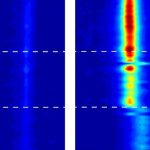
It’s a well-known fact that water, at sea level, starts to boil at a temperature of 212 degrees Fahrenheit, or 100 degrees Celsius. And scientists have long observed that when water is confined in very small spaces, its boiling and freezing points can change a bit, usually dropping by around 10 C or so.
But now, a team at MIT has found a completely unexpected set of changes: Inside the tiniest of spaces — in carbon nanotubes whose inner dimensions are not much bigger than a few water molecule...
More
Oak Ridge National Laboratory (ORNL) researchers discover new fourth state of water molecule
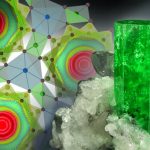
Neutron scattering and computational modeling have revealed unique and unexpected behavior of water molecules under extreme confinement that is unmatched by any known gas, liquid or solid states.
In a paper published in Physical Review Letters, researchers at the Department of Energy’s Oak Ridge National Laboratory describe a new tunneling state of water molecules confined in hexagonal ultra-small channels – 5 angstrom across – of the mineral beryl. An angstrom is 1/10-billionth of a meter, a...
More
Researchers at Nottingham Trent University (UK) have developed smart balaclava with electric-conductive yarns that can help athletes stay warm and avert chest infections in cold weather
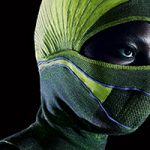
Researchers have developed a smart balaclava which warms oxygen before it’s inhaled to reduce the risk of athletes contracting chest infections in winter.
Nottingham Trent University and German advanced knitting machine manufacturer Stoll GmBH created a prototype to help runners and skiers who can be exposed to increased risk of infections when exercising in the cold.
The technology centres on a knitted patch of electric-conductive yarn over the nose and mouth which emits heat when cha...
More
Cosmic Watch app changes how you view time, by moving beyond hours, minutes and seconds to reveal your position in the cosmos and relate that position to the movement of celestial bodies
More often than not, time is merely a metric for setting schedules. But a new app aims to change how you view time, by moving beyond hours, minutes and seconds to reveal your position in the cosmos and relate that position to the movement of celestial bodies.
The app, named the Cosmic Watch, can tell you what the solar system was like when you were born, or set the scene for the next solar eclipse.
COSMIC WATCH is two in one: a world clock and an astronomical clock. The celestial watch is ...
More
University of Tokyo suggest calcium controls sleep duration. Change in calcium concentration in neurons determines sleep or waking state
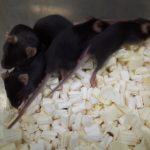
University of Tokyo and RIKEN researchers have identified seven genes responsible for causing mice to stay awake or fall asleep based on a theoretical model of sleep and on experiments using 21 different genetically-modified mice, some of which showed different sleep durations. Researchers hope that their research will contribute to the understanding and treatment of sleep disorders and associated neurodegenerative diseases.
All animals appear to sleep for varying durations. In humans, sleep ...
More
Queen Mary University of London research suggest bees are smart and can learn the task by observing and also pass down skills through several generations of learners, ensuring its longevity in the population.
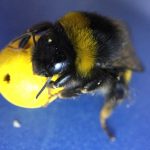
Pulling strings to obtain food is an experiment often used to test the intelligence of apes and birds, but it is the first time this technique has been discovered in an insect.
Moreover the cultural spread of such a technique from a single informed individual has also been described for the first time in an invertebrate animal.
The results, published in PLOS Biology, show that rare innovator bees were able to solve the problem of pulling the string to reach a sugar water reward by themsel...
More
Carnegie Mellon University study provides the first biological evidence that suggest that married people are healthier than those who are single, divorced or widowed.
Studies have suggested that married people are healthier than those who are single, divorced or widowed. A new Carnegie Mellon University study provides the first biological evidence to support that claim.
Published in Psychoneuroendocrinology, the researchers found that married individuals had lower levels of the stress hormone cortisol than those who never married or were previously married. These findings support the belief that unmarried people face more psychological stress than married in...
More
Nova Southeastern University (NSU) research suggest immune genes, legumain and Bag1 in sharks have unique rapid healing power and high resistance to cancer
New genomics study of shark DNA, including from great white and great hammerhead sharks, reveals unique modifications in their immunity genes that may underlie the rapid wound healing and possibly higher resistance to cancers in these ocean predators. This research brings us a few steps closer to understanding, from a genetic sense, why sharks exhibit some characteristics that are highly desirable by humans.
Sharks and rays are well known to be highly
efficient wound healers, and suspected ...
More
Georgia Institute of Technology researchers have developed four-stroke engine that produces hydrogen from methane and captures co2
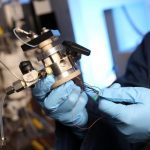
When is an internal combustion engine not an internal combustion engine? When it’s been transformed into a modular reforming reactor that could make hydrogen available to power fuel cells wherever there’s a natural gas supply available.
By adding a catalyst, a hydrogen separating membrane and carbon dioxide sorbent to the century-old four-stroke engine cycle, researchers have demonstrated a laboratory-scale hydrogen reforming system that produces the green fuel at relatively low temperature i...
More
Engineers and biologists at MIT have developed Living sensors bandages that light up when in contact with certain chemicals
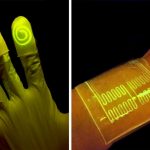
Engineers and biologists at MIT have teamed up to design a new “living material” — a tough, stretchy, biocompatible sheet of hydrogel injected with live cells that are genetically programmed to light up in the presence of certain chemicals.
In a paper published this week in the Proceedings of the National Academy of Sciences, the researchers demonstrate the new material’s potential for sensing chemicals, both in the environment and in the human body.
The team fabricated various wearable sensor...
More
UCLA neuroscience research suggests, people who had the strongest responses in the areas of the brain associated with perceiving pain and emotion and imitating others were also the most generous.
Your brain might be hard-wired for altruism
It’s an age-old quandary: Are we born “noble savages” whose best intentions are corrupted by civilization, as the 18th century Swiss philosopher Jean-Jacques Rousseau contended? Or are we fundamentally selfish brutes who need civilization to rein in our base impulses, as the 17th century English philosopher Thomas Hobbes argued?
After exploring the areas of the brain that fuel our empathetic impulses — and temporarily disabling other regions that o...
More
University Of Melbourne research team has developed method to accurately identify a term baby who is at risk of stillbirth
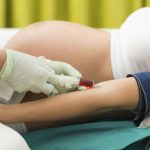
We don’t know the full causes of stillbirth, but in about half of cases it is caused by the placenta not working properly. The placenta feeds and oxygenates the baby so when it isn’t working well babies become growth restricted. Fetuses that are growth restricted are at 3-4 times increased risk of stillbirth. So, finding a test that accurately flags babies that are growth restricted and intervening early may be the key to reducing stillbirths.
But it is surprisingly hard to identify such grow...
More
Engineers at MIT have fabricated transparent, hydrogel – gel-based robots that may one day assist in surgical operations
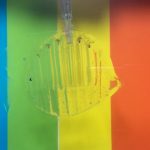
Engineers at MIT have fabricated transparent, gel-based robots that move when water is pumped in and out of them. The bots can perform a number of fast, forceful tasks, including kicking a ball underwater, and grabbing and releasing a live fish.
The robots are made entirely of hydrogel — a tough, rubbery, nearly transparent material that’s composed mostly of water. Each robot is an assemblage of hollow, precisely designed hydrogel structures, connected to rubbery tubes. When the researchers p...
More
University of Rochester researchers have developed microbial fuel cell (MFC) with electrode made from paper, and will enable certain bacteria to produce electricity from waste
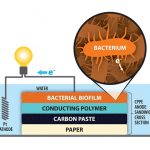
A microbial fuel cell (MFC), or biological fuel cell, is a bio-electrochemical system that drives an electric current by using bacteria and mimicking bacterial interactions found in nature. MFCs can be grouped into two general categories: mediated and unmediated.
The first MFCs, demonstrated in the early 20th century, used a mediator: a chemical that transfers electrons from the bacteria in the cell to the anode. Unmediated MFCs emerged in the 1970s; in this type of MFC the bacteria typically...
More
Stanford engineers create a low-cost battery made with urea
Stanford University researchers created an aluminum-ion battery that uses an electrolyte material made of urea, the main component of urine (after water).
A battery made with urea, commonly found in fertilizers and mammal urine, could provide a low-cost way of storing energy produced through solar power or other forms of renewable energy for consumption during off hours.
A battery developed in Stanford Professor Hongjie Dai’s lab could provide low-cost storage for solar energy. (Image credit...
More
Multiple research studies suggest cocoa solids are one of the richest sources of flavanol antioxidants and carry health benefits, protecting against everything from heart disease to stroke to dementia.
Cocoa solids are a mixture of many substances remaining after cocoa butter is extracted from cacao beans. When sold as an end product, it may also be called cocoa powder or cocoa. In contrast, the fatty component of chocolate is cocoa butter. Cocoa butter is 50% to 57% of the weight of cocoa beans and gives chocolate its characteristic melting properties. Cocoa liquor or cocoa mass is a paste of roasted cocoa beans with cocoa butter and solids in their natural proportions. Chocolate requires the...
More
UC Davis Cancer Center research suggests cancer affects different people differently
Researchers and clinicians in UC Davis Comprehensive Cancer Center’s Population Sciences and Health Disparities Program are dedicated to understanding why Cancer affects different people differently, and are working in different ways to eliminate disparities and improve outcomes for everyone.
At UC Davis Comprehensive Cancer Center, researchers are working to understand the biological mechanisms that may be at work in certain cancers that disproportionately affect different populations. They...
More
Hanson Robotics has created the most expressive and engaging robot called ‘Professor Einstein’ that can teach you physics

Hanson Robotics creates the most expressive and engaging robots that build trusted relationships with people.
Hanson Robotics has enchanted and captured the imagination of the world with uncannily humanlike robots endowed with remarkable expressiveness, aesthetics, and interactivity.
https://youtu.be/kXVpqWhe2hc
Professor Einstein rolls his eyes, sticks out his tongue, and can give a simple explanation of the theory of relativity. With his lifelike rubbery "skin" and bushy mustache, he ...
More
University of Michigan has developed two legged robot and in future it’s possible that an autonomous delivery van may pull up in front of your house and a bipedal robot will then step out, and carry a package to your front door.
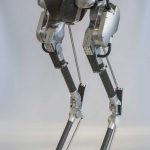
A new two-legged robot is coming to the University of Michigan—the third generation biped in the lab of Professor Jessy Grizzle, whose previous bots have been programmed to walk unassisted over rough terrain and jog a nine-minute mile.
"Cassie" is the first offering from new startup Agility Robotics, spun out of the lab of Oregon State University's Jonathan Hurst, who is a longtime collaborator of Grizzle's. It is loosely modeled on the cassowary, a flightless bird similar to an ostrich—legs ...
More
MIT researchers have developed ingestible electronic devices that can harness stomach acid to power it and could monitor physiological conditions or deliver drugs
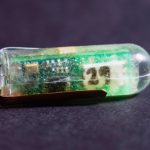
Researchers at MIT and Brigham and Women’s Hospital have designed and demonstrated a small voltaic cell that is sustained by the acidic fluids in the stomach. The system can generate enough power to run small sensors or drug delivery devices that can reside in the gastrointestinal tract for extended periods of time.
This type of power could offer a safer and lower-cost alternative to the traditional batteries now used to power such devices, the researchers say.
“We need to come up with ways to...
More
Senstone is a wearable intelligent voice recorder that records voice memos, organizes them, and then translates them into text.
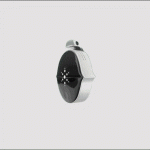
Senstone is an “Intelligent Wearable Voice Recorder” – the first of its kind, according to Senstone Founder and CEO Nazar Fedorchuk. The concept for this device is simple: touch the device to activate it and take voice notes that will be automatically organized and synced to the cloud, automatically.
https://youtu.be/Vbxvh_PpKI4
Senstone device is “backed by AI” in the cloud and uses your smartphone as a conduit to the Internet.
There's also a Senstone app that you download onto your sm...
More
Curta was a small mechanical calculator introduced in 1947 that supported 11 to 15 digits
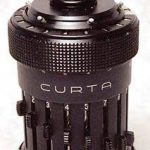
The Curta is a small mechanical calculator developed by Curt Herzstark. The Curta's design is a descendant of Gottfried Leibniz's Stepped Reckoner and Charles Thomas' Arithmometer, accumulating values on cogs, which are added or complemented by a stepped drum mechanism. It has an extremely compact design: a small cylinder that fits in the palm of the hand.
The Curta was introduced in 1947, the last models were produced in 1970. It supported 11 to 15 digits making it even more accurate than mo...
More
Theoretical Physicists and Astrophysicists research suggest entire universe may be an illusion and reality is a 2D hologram
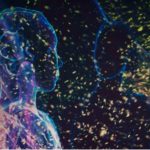
The holographic principle is a principle of string theories and a supposed property of quantum gravity that states that the description of a volume of space can be thought of as encoded on a lower-dimensional boundary to the region—preferably a light-like boundary like a gravitational horizon.
This could be thought of as rather like watching a 3D film in a movie theater. We see the pictures as having height, width, and depth—when in fact it all originates from a flat 2D screen. ...
More
UC San Diego Jacobs school of engineering has created nanoparticle-based device that can absorb infrared light upto 98%
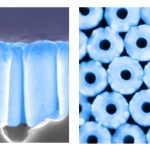
Transparent window coatings that keep buildings and cars cool on sunny days. Devices that could more than triple solar cell efficiency. Thin, lightweight shields that block thermal detection. These are potential applications for a thin, flexible, light-absorbing material developed by engineers at the University of California San Diego.
The material, called a near-perfect broadband absorber, absorbs more than 87 percent of near-infrared light (1,200 to 2,200 nanometer wavelengths), with 98 per...
More
NASA Research Reveals Biological Clock Misalignment Effects on Sleep for Astronauts
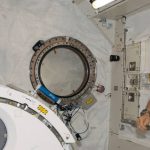
Since the beginning of the space program, astronauts have dealt with the realities of spaceflight from microgravity in weak muscles and space radiation, to sleep deprivation and disorientation. Both before and during astronauts’ flights, changes in biological clocks, or circadian rhythms, contribute to sleep deficiency and increase the use of sleep-promoting medications.
For most people, the circadian rhythm is a little longer than 24 hours. On Earth, our daily exposure to light from the sun ...
More
Scientists at MIT have developed a new material that can temporarily protect and tighten skin, and smooth wrinkles.
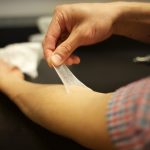
Scientists at MIT, Massachusetts General Hospital, Living Proof, and Olivo Labs have developed a new material that can temporarily protect and tighten skin, and smooth wrinkles. With further development, it could also be used to deliver drugs to help treat skin conditions such as eczema and other types of dermatitis.
The material, a silicone-based polymer that could be applied on the skin as a thin, imperceptible coating, mimics the mechanical and elastic properties of healthy, youthful skin....
More
iPhone app that allow you to take a picture of a page in a book and then it reads it to you

'SayText' reads aloud the text in the image. It is intended for visually impaired users. SayText is a free spin off product from the DocScanner team.
Place the iPhone center of a document and double-tap the “Take picture” -button
Slowly elevate the iPhone upwards from the document, until the whole document is in picture. A beep sound indicates, that the document has been detected. The camera will shoot automatically when focused
While the OCR is running, tap the screen to hear the...
More