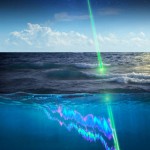
NASA’s space research uses laser to understand interactions between Earth’s climate and key ocean ecosystems

A new study using a NASA satellite instrument orbiting Earth has found that small, environmental changes in polar food webs significantly influence the boom-and-bust, or peak and decline, cycles of phytoplankton. These findings will supply important data for ecosystem management, commercial fisheries and our understanding of the interactions between Earth’s climate and key ocean ecosystems. “It’s really important for us to understand what controls these boom-and-bust cycles, and how they migh...
More

Automatic Car Wash now for Airplanes

Aviator NORDIC DINO robot is a computerised and self-contained system purpose built for washing aircraft exteriors. The system consists of a mobile power unit, spray nozzles and rotating cleaning brushes powered by a lightweight remote control that permits safe and simple one-man operation. NORDIC DINO meets the requirements for washing aircraft exteriors and incorporates safety features designed to prevent accidental personal injury and aircraft damage. NORDIC DINO II The NORDIC DIN...
More

World’s first solar highway has been opened in France

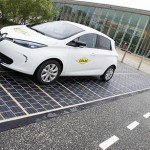
World's first solar highway has been opened in France. Wattway is a patented French innovation that is the fruit of 5 years of research undertaken by Colas, world leader in transport infrastructure, and the INES (French National Institute for Solar Energy). By combining road construction and photovoltaic techniques, Wattway pavement provides clean, renewable energy in the form of electricity, while allowing for all types of traffic. As the energy transition becomes reality, imagine a road ...
More

Pacific Northwest National Laboratory witnessed the birth of atmospheric ice clouds in the laboratory

Scientists have witnessed the birth of atmospheric ice clouds, creating ice cloud crystals in the laboratory and then taking images of the process through a microscope, essentially documenting the very first steps of cloud formation. The team witnessed a process known as ice nucleation in unprecedented detail, taking time-lapse movies of the first few seconds when a particle attracts water vapor, forming ice crystals that become the core of icy cirrus clouds — the high, wispy clouds that act ...
More

Earth sciences have defined a new human age – now social scientists are calling for broader and more interdisciplinary discussion

The earth sciences have defined a new human age - now social scientists are calling for broader and more interdisciplinary discussion. The Anthropocene is a proposed epoch dating from when human activities started to have a significant global impact on Earth's geology and ecosystems. The Anthropocence concept thus includes, but also transcends, the idea of anthropogenic climate change. The Early Anthropocene Hypothesis (sometimes called Early Anthropogenic) was proposed by William ...
More

Michigan State University researchers have created a new way to harvest energy from human motion. Soon you will be able to charge cellphones with finger swipes and power Bluetooth headsets simply by walking.

Michigan State University engineering researchers have created a new way to harvest energy from human motion, using a film-like device that actually can be folded to create more power. The research, funded by the National Science Foundation, suggests "we're on the path toward wearable devices powered by human motion," said Nelson Sepulveda, associate professor of electrical and computer engineering and lead investigator of the project. The completed device is called a biocompatible ferroel...
More

Researchers have developed a specialized type of glowing metal organic framework that is designed to detect and remove heavy-metal toxins from water.

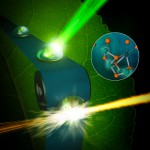
Tiny, glowing crystals designed to detect and capture heavy-metal toxins such as lead and mercury could prove to be a powerful new tool in locating and cleaning up contaminated water sources. Motivated by publicized cases in which high levels of heavy metals were found in drinking water in Flint, Mich., and Newark, N.J., a science team led by researchers at Rutgers University used intense X-rays at Lawrence Berkeley National Laboratory (Berkeley Lab) to probe the structure of the crystals the...
More

New study of water-saving plants advances efforts to develop drought-resistant crops

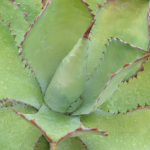
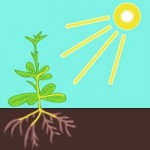
As part of an effort to develop drought-resistant food and bioenergy crops, scientists at the Department of Energy’s Oak Ridge National Laboratory have uncovered the genetic and metabolic mechanisms that allow certain plants to conserve water and thrive in semi-arid climates. Semi-arid plants such as agave have adapted to survive in areas with little rainfall by developing a specialized mode of photosynthesis called crassulacean acid metabolism, or CAM. Unlike plants in wetter environments, C...
More

NASA and International team’s research shows, as CO2 levels are rising earth is getting greener.

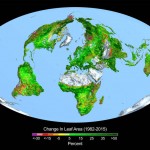
From a quarter to half of Earth’s vegetated lands has shown significant greening over the last 35 years largely due to rising levels of atmospheric carbon dioxide. An international team of 32 authors from 24 institutions in eight countries led the effort, which involved using satellite data from NASA’s Moderate Resolution Imaging Spectrometer and the National Oceanic and Atmospheric Administration’s Advanced Very High Resolution Radiometer instruments to help determine the leaf area index, or...
More

UNIVERSITY OF OREGON team suggest that fault curvature may control where big quakes occur

Major earthquakes - magnitude 8.5 and stronger -- occur where faults are mostly flat, say University of Oregon and French geologists. Curvier faults, they report in the journal Science, are less likely to experience earthquakes exceeding that strength. Large earthquakes, known as mega-quakes, were long thought to be possible only at the boundary between fast converging, young tectonic plates until two giant earthquakes -- the magnitude 9.4 quake in Indonesia in 2004 and the 9.0 quake in Japan...
More

Berkeley Lab X-Rays has captured Images of Photosynthesis in Action

Never mind the story of Moses parting the Red Sea. How exactly do plants split water? An international team of scientists is getting closer to the answer thanks to unprecedented, atomic-scale images of a protein complex found in plants, algae, and cyanobacteria captured by ultrafast X-ray lasers. The experiments, led by the Department of Energy’s Lawrence Berkeley National Laboratory (Berkeley Lab), are helping researchers narrow down the process by which the protein, called photosyste...
More

Palazzo Italia building in Milan is a smog-eating machine

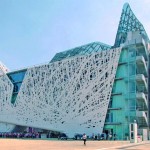
The spectacular Palazzo Italia building in Milan is a smog-eating machine. This unusual Palazzo Italia building is clad with biodynamic concrete panels. The Palazzo Italia actually consumes smog and takes pollution out of the air through its incredibly engineered biodynamic skin. The cladding of the white sinuous building is both highly innovative and sustainable. The 9,000-square-meter façade was realized with 900 biodynamic concrete panels developed by Italcementi. Its TX Active technolo...
More

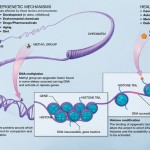
Research has found that certain pollutants can induce epigenetic modifications that cause disease and can be transmitted to later generations

Harmful chemicals, stress and other influences can permanently alter which genes are turned on without changing any of the genes’ code. Now, it appears, some of these “epigenetic” changes are passed down to—and may cause disease in—future generations. Epigenetics studies genetic effects not encoded in the DNA sequence of an organism, hence the prefix epi- (Greek: επί- over, outside of, around).Such effects on cellular and physiological phenotypic traits may result from external or environment...
More

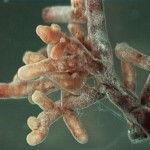
Mycorrhizae Fungi symbiotic relationships with plants

A mycorrhiza (Greek: μυκός, mykós, "fungus", and ρίζα, riza, "root", pl. mycorrhizae or mycorrhizas) is a symbiotic association composed of a fungus and roots of a vascular plant. In a mycorrhizal association, the fungus colonizes the host plant's roots, either intracellularly as in arbuscular mycorrhizal fungi (AMF or AM), or extracellularly as in ectomycorrhizal fungi. They are an important component of soil life and soil chemistry. The association is generally mutualistic, but occasionally we...
More

German Max Planck Institute for Meteorology has quantified relationship between individual CO2 emissions and the Arctic’s shrinking summer sea ice

For each tonne of carbon dioxide (CO2) that any person on our planet emits, three square metres of Arctic summer sea ice disappear. This is the finding of a study that has been published in the journal Science this week by Dirk Notz, leader of a Max Planck Research Group at the Max Planck Institute for Meteorology and Julienne Stroeve from the US National Snow and Ice Data Centre. These figures enable us for the first time to grasp the individual contribution to global climate change. The study ...
More

Green City Solutions has engineered a street installation that uses biotech moss to combat pollution in urban cities

University of Dresden is supporting the City Tree developers Victor Splittberger and Peter Sänger by using a special programme to research how pollution could be most effectively filtered from the air. The programme can be employed to numerous locations worldwide. The CityTree structure is an amalgamation of sorts: a green, free-standing contraption that’s seemingly part tree sculpture, part park bench and part skate ramp. Its verdant wall stands about 13 feet high, and its square face st...
More

Northwestern Longitudinal Study Links Air Pollution With Cardiovascular Disease Risk

An increased concentration of air pollution within metropolitan areas is associated with progression in coronary calcification and with acceleration of atherosclerosis, according to a study published in The Lancet. In the prospective, 10-year cohort study, Northwestern Medicine scientists and collaborators at other institutions repeatedly measured coronary artery calcium by CT scan in 6,795 participants aged 45 to 84 years, who were enrolled in the Multi-Ethnic Study of Atherosclerosis and Ai...
More

Researchers from the Max Planck Institute have ddiscovered that light transmitted from the shoot to the roots activates photoreceptors in the roots and triggers light-dependent growth responses in plants

Researchers from the Max Planck Institute for Chemical Ecology in Jena, Germany, and Seoul National University, South Korea, were able to show for the first time that roots react directly to light which is transmitted from the shoot to the underground parts of Arabidopsis thaliana plants. Roots can thus effectively adapt plant growth to the light conditions in the environment. (Science Signaling, November 2016, DOI: 10.1126/scisignal.aaf6530). Light is not only a source of energ...
More

Phenotypic plasticity is a natural ability for plants and animals to evolve based on changes in the environment.

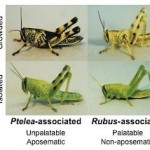
Phenotypic plasticity can be defined as the ability of one genotype to produce more than one phenotype when exposed to different environments. Phenotypic plasticity is the ability of an organism to change its phenotype in response to changes in the environment. With climate change forcing plant and animal species to adapt, shape-shifters are taking a unique approach that involves changing their physical appearance without having to migrate or evolve in order to cope, new research shows. A ...
More

German Research Center – DL-methionine from Evonik can be added to the animal feed to reduce emission of ammonia

The UN estimates that the global population is increasing by about 80 million people each year. By the year 2050, nine billion people will need to be fed. The middle class will continue to grow, and with greater prosperity and urbanization, food habits will change: Meat, fish, dairy products, and eggs will become staples on many menus. How will all these people be adequately fed, and how will the increasing demand for meat be satisfied in the future? Amino acids from Evonik Industries, used a...
More

Lucy: The Smart Mirror that Redirects Sunlight Into Your Home

Lucy is the first device of its kind: It can illuminate your home with real sunlight, by finding and redirecting natural light for you. Most individuals spend over 90% of their lives inside, with limited exposure to natural light. Winters can lead to seasonal depression, and at large, last a long time, preventing us from receiving the Vitamin D and serotonin boosts associated with natural light. Further still, from an aesthetic standpoint, interior designers suggest decorating tricks to br...
More

Battery that self destructs in Water in 30 Minutes

A breakthrough invention in developing transient batteries has been developed:  a self-destructing battery that completely dissolves in water without leaving behind any trace. Researchers at Iowa State University have designed a one-millimeter-thick, five-millimeter-long and six millimeters wide battery that use typical lithium-ion technology. The transient battery is made up of eight layers, including an anode, a cathode and the electrolyte separator, all wrapped up in two layers of a polyvi...
More
Posted in Uncategorized Tagged

Altered: The Innovative Faucet Solution that Uses 98% Less Water

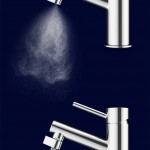
The Altered Company has created a nozzle that uses 2% of your normal water usage. It’s flexible, designed to fit over any tap, customizable, with two modes depending on the needed amount of water, and an environmentally conscious solution to the everyday problem of water waste. Water stress is a global issue that affects one billion people at present, and will impact an estimated 3 billion people in 2020. Furthermore, when one uses a regular tap, much of the water simply bounces off the surfa...
More
Posted in Uncategorized

Monash University in Melbourne researchers have successfully created artificial photosynthesis that could power homes

Researchers at Monash University in Melbourne have successfully developed the world’s most energy-efficient ‘artificial photosynthesis’ technique, which effectively mimics plant-based photosynthesis by using solar energy to convert water into hydrogen. The process, which creates hydrogen and oxygen by running an electric current through water, could be used to inexpensively power our homes and cars in just a few years, say the researchers. Electrochemical splitting of water could provide a ch...
More

Thonis-Heracleion was found after a thousand years underwater

Heracleion (Greek: Ἡράκλειον), also known as Thonis (Θῶνις), was an ancient Egyptian city near Alexandria whose ruins are located in Abu Qir Bay, currently 2.5 km off the coast, under 10 m (30 ft) of water. Its legendary beginnings go back to as early as the 12th century BC, and it is mentioned by ancient Greek historians. Its importance grew particularly during the waning days of the Pharaohs—the late period, when it was Egypt's main port for international trade and collection of taxes. Hera...
More

NASA : Heat Wave and La Niña

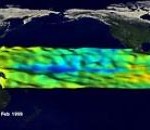
Record high temperatures along the United State's east coast are being linked to La Niña by scientists at the National Center for Atmospheric Research and NOAA's Climate Prediction Center. During La Niña unusually cold water pools along the tropical Pacific Ocean. This sea surface temperature anomaly causes strange summer weather around the world, such as drought in the Mid-Atlantic states, cool temperatures in California, and rain in Indonesia. The above image shows the La Niña as seen by TOPE...
More

Tiny1: The World’s Smallest Astronomy Camera

Tiny1 is the smallest, and arguably one of the smartest and most social astronomy cameras. Created by Grey Tan, Tiny1 allows you to capture the starry night sky and share photos in the palm of your hands.   The device includes an interactive star map to easily locate and shoot celestial objects. Augmented Reality Star Maps guide users to the stars and constellations. The map shows a user stars and constellations in real time and has a search function as well. Capture presets a...
More

‘Breathe Up’ – air quality monitoring and physical activity tracking device.

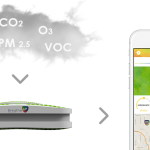
Breathe Up is a unique solution that combines advanced air quality monitoring technology and physical activity tracking. Based on your location, Breathe Up application will connect you to the most relevant sensor in your area and provide you with real time information on current air quality. The impact of air quality also depends on your individual profile and your activity. A young child, an elderly person, an athlete or a person with asthma will not be impacted in the same proportions when ...
More

Biomimetics -learning from nature

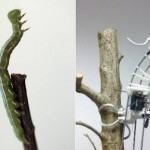
Biomimetics or biomimicry is the imitation of the models, systems, and elements of nature for the purpose of solving complex human problems.[1] The terms "biomimetics" and "biomimicry" derive from Ancient Greek: βίος (bios), life, and μίμησις (mīmēsis), imitation, from μιμεῖσθαι (mīmeisthai), to imitate, from μῖμος (mimos), actor. A closely related field is bionics.[2] Living organisms have evolved well-adapted structures and materials over geological time through natural selection. Biomimeti...
More

NASA Tsunami Research Makes Waves in Science Community

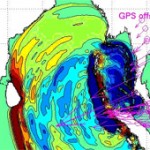
PASADENA, Calif. – A wave of new NASA research on tsunamis has yielded an innovative method to improve existing tsunami warning systems, and a potentially groundbreaking new theory on the source of the December 2004 Indian Ocean tsunami. In one study, published last fall in Geophysical Research Letters, researcher Y. Tony Song of NASA's Jet Propulsion Laboratory, Pasadena, Calif., demonstrated that real-time data from NASA's network of global positioning system (GPS) stations can detect groun...
More