
Article details
Primary domain: Research & Scientific Innovation (Scientific AI)Secondary domain: Artificial Intelligence & Machine Learning (Agentic AI)Article type: Pilot & ImplementationTechnology: AURORA agentic AI co-scientist platformInnovation maturity: EmergingMission: ResearchBusiness impact: Could speed hypothesis generation and experiment selection in complex research programsAudience: Research, Business/Leadership, ITPublication date: November 2026Author / Contributor: I...
More
AI co-scientist
Pot Breathalyzer

An Oakland company working with scientists from the University of California at Berkeley is claiming a breakthrough in the race to develop an instant roadside marijuana Breathalyzer. Hound Labs Inc, said on Wednesday it had found an accurate way to measure THC, the psychoactive component in cannabis within one or two blows. The portable device is designed to help determine if a driver is impaired from recent marijuana use. The idea is to replace a complicated assortment of costly blood and urine...
More
Astronomers measure ‘heartbeats’ of distant stars

In many ways stars are like living beings. They’re born, they live, they die and they even have a heartbeat. Using a novel technique, astronomers have detected thousands of stellar “pulses” in the galaxy Messier 87 (M87). Their measurements offer a new way of determining a galaxy’s age. We tend to think of stars as stable and unchanging. However, late in life stars like the Sun undergo a significant transformation. They become very bright and swell up to an enormous size, swallowing any planets ...
More
How the brain keeps time
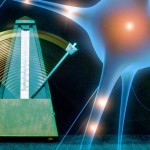
Neuroscientists at MIT and Columbia University have now figured out how neurons in one part of the brain measure time intervals and accurately reproduce them. Keeping track of time is critical for many tasks, such as playing the piano, swinging a tennis racket, or holding a conversation. The researchers found the lateral intraparietal cortex (LIP), which plays a role in sensorimotor function, represents elapsed time, as animals measure, and then reproduce a time interval. They also demonstrated ...
More
A noninvasive way to measure pressure in the brain.
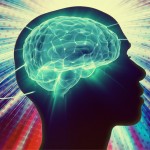
MIT researchers team up with Boston Medical Center and Philips to test a noninvasive way to measure intracranial pressure. Current methods to check for increased pressure in a patient’s brain are invasive. One widely used technique is to drill a hole in the skull to insert a catheter or sensor into the brain tissue. Because of the risk of brain injury and infection, doctors typically only measure intracranial pressure or ICP when a patient is very sick, even though knowledge of this pressure cou...
More
Contacts lenses that changes color when sugar levels change in the blood

Smart contact lens, created by a University of Western Ontario professor, help measure blood glucose levels for people with diabetes.
An ongoing innovative research of a new Smart Lens by Jin Shang, a professor of biochemical engineering at the University of Western Ontario is a contact lens that changes color when sugar levels change in the blood.
Diabetes is a huge and growing problem affecting one in every 19 people on the planet. It is a daily struggle for people with diabetes to keep ...
More