Human Data for Frontier AI and Recording Videos for Physical AI Training: Inside Mercor

Professionals at laptops send glowing threads of feedback into a luminous neural-network sphere while, on the right, a person wearing a small head camera wipes a cafe counter near a white robot arm
AI-generated illustration: experts feeding knowledge into AI models, and a worker recording hands-on tasks so robots can learn them Two years ago, Mercor was a recruiting startup that used AI interviews to match engineers with tech companies. Today it describes itself as “organizing human intelligence to power the AI economy,” and investors value it at US$20 billion. The pitch is simple: the more capable AI gets, the more it needs real experts to teach and test it. Now that s...
More

Recording Videos for Physical AI Training: Inside Objectways

A person wearing a head-mounted camera folds laundry in a home-style studio while a white faceless humanoid robot stands near the kitchen counter
AI-generated illustration: recording household tasks on camera so robots can learn them Large language models learned to write by reading the internet. Robots have no such library. To learn how to fold a shirt, screw on a bottle cap or stack plates without smashing them, they need to watch people do it, thousands of times, from angles that match a robot’s own eyes and hands. That has created a new kind of work: recording videos for physical AI training. One of the companies doing i...
More

WHOI’s Deep Venture AUV Is Built for Full-Ocean-Depth Science

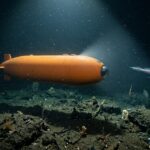
Orange autonomous underwater vehicle with a spotlight above a dark deep seafloor beside a pale chimera fish
AI-generated illustration The deepest parts of the ocean are still among the least observed places on Earth, partly because reaching them has meant big ships, specialized crews and one-purpose machines. On November 20, 2026, the Woods Hole Oceanographic Institution (WHOI) announced a different approach: Deep Venture, a compact autonomous underwater vehicle (AUV) built with NASA's Jet Propulsion Laboratory (JPL) that is rated for full ocean depth. What Deep Venture isAccording to WHOI'...
More

Fresh O Need: Freeze-Dried Indian Meals Ready in 5 Minutes

Ask any Indian student who has moved abroad what they miss most, and the answer is rarely the weather. It is dal and rice, a bowl of khichdi, the taste of a kitchen thousands of kilometres away. Fresh O Need, a brand from Surat in Gujarat, is betting that a technology refined for astronauts can close that distance. Its pitch is simple: cook a familiar Indian meal, take out almost all of the water, seal it in a light pouch or bowl, and let the customer bring it back to life with hot water in...
More

2getthere: 27 Years of Driverless Transit, Next Stop Mumbai

Long before robotaxis became a headline, a small fleet of driverless shuttles was already carrying office workers between a Rotterdam metro station and a business park. That system, built by Utrecht-based 2getthere, opened to the public in 1999 and is still running. In October 2026 its third-generation vehicles welcomed their one millionth passenger, and the company that built them now has a new owner, a new headquarters and its largest project yet: a 390-vehicle pod network planned for Mum...
More

CMU’s ESTIMATA-EX Uses Phone Photos to Estimate Surgical Blood Loss

In many operating rooms, one of the most important numbers is still an educated guess: how much blood has the patient lost? Chiang Mai University in Thailand says it has built an AI system to replace that guess with a measurement. In a university announcement dated 2 November 2026, the team introduced ESTIMATA-EX, which estimates blood loss and counts blood-soaked surgical materials from photos taken on a smartphone or tablet. This article covers the announcement as news and is not medical ...
More

New Technology Creates “Cyborg Insects”

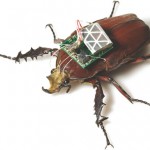
Scientists at the University of California demonstrated a new technology for creating "cyborg insects." That is, beetles implanted with miniaturized electronics that allows the insects to be controlled. The flying beetle is powered by a wireless signal from a mobile transmitter that controls the insect. Varying impulses trigger an appropriate response from the beetle so that it flies according to its handler. The movements of flying insects is controlled using a radio transmitter and a min...
More