

Vision-Language Models 2026: Gemma, DINOv3 and 8 More Compared

3D illustration of a camera lens sending glowing image tiles through a connector into a neural network that forms blank speech bubbles
AI-generated illustration Ask a modern AI model to read a scanned invoice, find the dent in a photo of a car door, or tell you when the forklift first appears in a two-hour warehouse video, and there is a good chance it will manage. That everyday trick is the work of vision-language models, or VLMs: systems that take pictures and words in together and answer in words. By late 2026 the field has split into a crowded open-weight camp and a handful of frontier cloud services, with specialis...
More

How Robots See in 3D: Vision Cameras, vSLAM and ToF

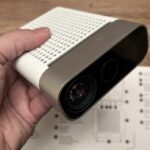
Microsoft Azure Kinect depth camera
A robot vacuum that remembers your floor plan, a phone that measures a room, a warehouse robot that weaves around pallets: they lean on some mix of the same three building blocks. A computer vision camera sees the scene, visual SLAM (vSLAM) works out where the device is and builds a map, and a time-of-flight (ToF) sensor measures how far away everything is. This guide explains each one in detail, how they fit together, and where you'll find them today. 1. The computer vision camera: turning ...
More

CMU’s ESTIMATA-EX Uses Phone Photos to Estimate Surgical Blood Loss

In many operating rooms, one of the most important numbers is still an educated guess: how much blood has the patient lost? Chiang Mai University in Thailand says it has built an AI system to replace that guess with a measurement. In a university announcement dated 2 November 2026, the team introduced ESTIMATA-EX, which estimates blood loss and counts blood-soaked surgical materials from photos taken on a smartphone or tablet. This article covers the announcement as news and is not medical ...
More

XPENG’s GroundingPI Puts Perception First in Physical AI

Robots are getting better at reasoning and planning, yet they still stumble on a more basic question: where, exactly, is the thing I am supposed to pick up? On November 4, 2026, XPENG announced GroundingPI, an open-source visual perception model built with researchers from Peking University, The University of Hong Kong and other institutions, that tackles that question head-on. According to XPENG's announcement, the roughly 4-billion-parameter model reached an average score of 73.68 across 34 p...
More

New moulds can sculpt vegetables and fruits in different shapes

Tony Dighera in California has come up with a technology to develop molds that can sculpts edible fruits and vegetables to look like just about anything you want. Fruits can be grown to form various shapes like Frankstein's Face or Buddha or into any other idea that appeals to the customers. Plastic molds with the required shapes are placed over immature fruits till they ripen. The art of modifying, arranging, or decorating food to enhance its aesthetic appeal is known as "plating." This u...
More