Cyborg Rose: Researchers implant electronic circuits inside plants.

A team of Swedish researchers, by using living roses, has created analogue and digital electronic circuits inside living plants, calling them "electronic plants". The experiment demonstrates wires, digital logic and displays elements fabricated inside the plants that could develop new applications for organic electronics and new tools in plant science. The group at Linkoping University in Sweden, under the leadership of professor Magnus Berggren, used the vascular system of living roses to build...
More
Posted in Uncategorized

Drug prevents Type 1 diabetes in mice

A compound that blocks the synthesis of hyaluronan, a substance generally found in in all body tissue, protects mice from getting Type 1 diabetes.Nadine Nagy and Paul Bollyky and their colleagues found that a drug helped prevent the onset of Type 1 diabetes in mice. They hope to find out if the drug will work similarly in humans. Type 1 diabetes, formerly called juvenile diabetes, afflicts one in 300 people in the United States. A compound that blocks the synthesis of hyaluronan, a substance ...
More
Posted in Uncategorized

Hydrogel superglue is 90 percent water.

Nature has developed innovative ways to solve a sticky challenge. Mussels and barnacles stubbornly glue themselves to cliff faces, ship hulls, and even the skin of whales. Likewise, tendons and cartilage stick to bone with incredible robustness, giving animals flexibility and agility. The natural adhesive in all these cases is hydrogel, a sticky mix of water and gummy material that creates a tough and durable bond. Engineers at MIT have developed a method to make synthetic, sticky hydrogel th...
More
Posted in Uncategorized

Desalination

MIT has developed a new and more efficient way to desalinate water. The process, called shock electrodialysis, filters water through a material made of small glass particles, according to an MIT News report. When an electric current is introduced to the system, the water divides into areas of high or low salt concentration. Once the current reaches a certain point, a shockwave is produced that divides the streams and allows the salty and fresh waters to be separated by a physical barrier. The pr...
More
Posted in Uncategorized

Hot Jupiter ‘Companions’ could shed light on planet formation.

The discovery of two exoplanet "companions" provides insight into the hot Jupiter solar system, discovered from data collected by the K2 mission. Out of the some 300 hot Jupiters that have been spotted over the past two decades, these new objects are the first close-in planets to be discovered. Discovery of two close-in planet companions sheds new light on planet formation. For the past 20 years, astronomers peered into the night sky, puzzled about a type of planet called hot Jupiters. As they a...
More
Posted in Uncategorized

Navy seeks secret of invisibility from fish.

A study released Thursday says that two ocean fish the big-eyed scad and the lookdown have fine-tuned a method of avoiding predators by hiding in light. Elements in their silvery skin render them nearly impossible to see. The Navy funded the study as part of an effort understand how fish do this, and how it could be used to the Navy's advantage. Although the study focused mostly on just two types of fish, the scad and lookdown are members of a family called the Carangidae, a bountiful clan that ...
More
Posted in Uncategorized

Lasers could rapidly make materials hotter than the Sun.

Lasers could heat materials to temperatures hotter than the centre of the Sun in only 20 quadrillionths of a second, according to new research that could revolutionise energy production. Physicists from Imperial College London have devised an extremely rapid heating mechanism that they believe could heat certain materials to ten million degrees in much less than a million millionth of a second. The method, proposed for the first time, could be relevant to new avenues of research in thermonuclear...
More
Posted in Uncategorized

Using Holography to better understand clouds.

Scientists have just made a breakthrough in understanding how clouds interact with the surrounding air by studying clouds in unprecedented detail. Raymond Shaw, a professor of physics at Michigan Tech, looks at the smallest part of clouds, droplets. To understand groups of droplets, Shaw and the NCAR team flew airplanes through fluffy, cottonball cumulus clouds in Wyoming and Colorado. Aboard the plane, the team took detailed 3-D images with an instrument called the Holographic Detector for Clou...
More
Posted in Uncategorized

A whale of a tale.

Scientists led by Peter Girguis, professor of organismic and evolutionary biology at Harvard, have found that the gut microbiome of right whales and other baleen species shares characteristics with those of both cows and meat-eating predators. The dual microbial communities allow whales to extract the most nutrition possible from their diet, digesting not only the copepods they eat, but their chitin-rich shells as well. The great whales are carnivores, feeding on tiny, shrimp-like animals such a...
More
Posted in Uncategorized

New flu tracker uses Google search data better than Google.

A team of Harvard statisticians has come up with a new way to track the flu virus using Internet search data. The system uses a method that has been used before, tracking searchers for key words and phrases, but has coupled it with additional data to improve its accuracy. The new model, ARGO (AutoRegression with Google search data), was published in the Proceedings of the National Academy of Sciences and was built on Google Flu Trends, which was Google’s flu tracking model that emerged in 200...
More
Posted in Uncategorized

New “tricorder” technology might be able to “hear” tumors growing.

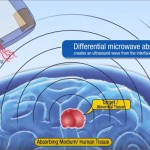
A team of scientists from Stanford University is testing a new “tricorder” technology able to remotely detect abnormal matter, such as buried plastic explosives or even early stage cancers in humans, by manipulating microwaves and ultrasound. The new “radio frequency (RF)/ultrasound hybrid imaging system,” the brainchild of Assistant Professor Amin Arbabian and Research Professor Pierre Khuri-Yakub, was designed for remote detection of embedded objects in a number of different kinds of matter, i...
More
Posted in Uncategorized

The surprising trick jellyfish and lampreys use to swim.

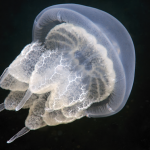
Jellyfish and lampreys have among the most energy-efficient swimming motions of any animal. From a long time, researchers have assumed that in order to move forward, fly or swim, humans and animals exert pressure on surface, air or water around them. But a new study published in the journal Nature Communications has revealed that two sea animals do not follow the general theory. Jellyfish and lampreys pull their way through the water, as per the study. A Stanford led team shows how these anci...
More
Posted in Uncategorized

3D printed objects may be toxic

Parts produced by some commercial 3D printers may be toxic, according to a new study that raises concerns about how to dispose of parts and waste materials from the devices which are becoming increasingly popular. Researchers at the University of California, Riverside studied two common types of 3D printers, one that melts plastic to build a part, and another that uses light to turn a liquid into a solid part. They found that parts from both types of printers were measurably toxic to zebrafish e...
More
Posted in Uncategorized

Mars Solar Storms.

NASA’s Mars Atmosphere and Volatile Evolution (MAVEN) mission has identified the process that appears to have played a key role in the transition of the Martian climate from an early, warm and wet environment that might have supported surface life to the cold, arid planet Mars is today. Scientists studying Mars’ atmosphere say solar storms probably played a big role in transforming the Red Planet from the warm, hospitable place it was billions of years ago to the cold world it is today. The miss...
More
Posted in Uncategorized

Milky Way

A team of astronomers, led by Istvan Dékány of the Pontificia Universidad Católica de Chile, has used data from the survey, taken between 2010 and 2014, to make a remarkable discovery, a previously unknown component of our home galaxy, the Milky Way. “The central bulge of the Milky Way is thought to consist of vast numbers of old stars. But the VISTA data has revealed something new, and very young by astronomical standards!” says Istvan Dékány, lead author of the new study. Analysing data fro...
More
Posted in Uncategorized

Memory and conductivity

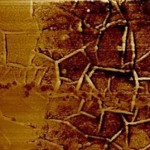
Scientists from Stanford University and the Department of Energy’s SLAC National Accelerator Laboratory have made the first direct images showing that electrical currents can flow along the boundaries between tiny magnetic regions of a material that normally doesn’t conduct electricity. The results could have major implications for magnetic memory storage. "This can provide a more straightforward way to use magnetic material as memory,” said Eric Yue Ma, a graduate student in the laboratory of Z...
More
Posted in Uncategorized

Signs of acid fog found on Mars.

Mars has acid fog which eats away rocks and is caused by volcanic eruptions on the red planet, a new study suggests. A planetary scientist has pieced together a compelling story about how acidic vapors may have eaten at the rocks in a 100-acre area on Husband Hill in the Columbia Hills of Gusev Crater on Shoshanna Cole. An assistant professor at Ithaca College in New York, used a variety of data gathered by multiple instruments on the 2003 Mars Exploration Rover Spirit to tease out informatio...
More
Posted in Uncategorized

Scientists Discover the Key to Making Slow Melting Ice Cream

Scientists have discovered a naturally occurring protein that can be used to create ice cream that is more resistant to melting than conventional products. The protein binds together the air, fat and water in ice cream, creating a super-smooth consistency. The new ingredient could enable ice creams to keep frozen for longer in hot weather. It could also prevent gritty ice crystals from forming, ensuring a fine, smooth texture like those of luxury ice creams. The development could allow products ...
More
Posted in Uncategorized

Harvard research focus to treat the progressive loss of eyesight associated with aging at its source

Eye Diseases Eighty percent of Americans fear losing their sight. But, unfortunately, after the age of forty, macular degeneration, and with it cloudy, soft, blurred vision at best, becomes a reality for millions of people. Age-related macular degeneration, and Stargardt disease, the most common form of inherited juvenile macular degeneration, are diseases of the retina that cause a loss of central vision over time. The retina is a layer of light-sensitive cel...
More
Posted in Uncategorized

MIT launch of Digital Currency Initiative.

Digital currencies like Bitcoin are poised to make a dramatic impact on most people’s lives over the next decade. They offer tremendous possibilities for growing our global economy, and, similar to the cell phone, enabling developing nations to leapfrog the tech of developed nations. But, we are at a pivotal point for this nascent technology. Getting digital currencies right and realizing the projected impact, present daunting challenges that will require significant research and development to ...
More
Posted in Uncategorized

Microwave camera that can see through the wall

A team of researchers have been working on a handheld camera that sports the technology that can see through the wall using micro wave, additionally future usage envisioned is for cancer detection and aerospace engineering. The camera currently takes 30 images per second by transmitting millimeter and microwaves to a "collector" on the other side of a subject, and then sends them to a laptop for real-time inspection. Aside from being able to see straight through your BVDs, it can also be used...
More
Posted in Uncategorized

Regenerating teeth now possible

Using lasers to regenerate and grow body parts sounds like science fiction, but researchers have just demonstrated that it might be a tranformative tool in medicine—or at least dentistry—in the future. A Harvard-led team just successfully used low-powered lasers to activate stem cells and stimulate the growth of teeth in rats and human dental tissue in a lab. The results were published today in the journal Science Translational Medicine. Stem cells exist throughout the body, and they fasci...
More
Posted in Uncategorized

Lifetime of atoms extended using a mirror

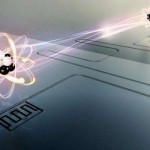
Researchers at Chalmers University of Technology have succeeded in an experiment where they get an artificial atom to survive ten times longer than normal by positioning the atom in front of a mirror. The findings were recently published in the journal Nature Physics. The artificial atom consists of a superconducting circuit on a silicon chip. The interaction between the atom and its mirror image modifies the vacuum fluctuations seen by the atom and thus its lifetime. The microwaves that mediate...
More
Posted in Uncategorized

Glueballs: Particles purely made of nuclear force

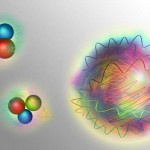
For decades, scientists have been looking for so-called “glueballs." Now it seems they have been found at last. A glueball is an exotic particle, made up entirely of gluons, the “sticky” particles that keep nuclear particles together. Glueballs are unstable and can only be detected indirectly, by analyzing their decay. This decay process, however, is not yet fully understood. Professor Anton Rebhan and Frederic Brünner from TU Wien (Vienna) have now employed a new theoretical approach to calcula...
More
Posted in Uncategorized

Disappearing Carbon Circuits on Graphene

Georgia Tech researchers have deposited carbon atoms onto graphene using a focused electron beam process to create patterns that evolve over time on the graphene. The patterns could be used to make reconfigurable electronic circuits, which evolve over a period of hours before ultimately disappearing into a new electronic state of the graphene. Graphene is also made up of carbon atoms, but in a highly-ordered form. Beyond allowing fabrication of disappearing circuits, the technology could be u...
More
Posted in Uncategorized

Kidney created from stem cells

Harvard Stem Cell Institute (HSCI) principal faculty at Brigham and Women’s Hospital (BWH) have established a highly efficient method for making kidney structures from stem cells derived from skin taken from patients. The kidney structures formed could be used to study abnormalities of kidney development, chronic kidney disease, and the effects of toxic drugs, and could be incorporated into bioengineered devices to treat patients with acute and chronic kidney injury. In the longer term, these me...
More
Posted in Uncategorized

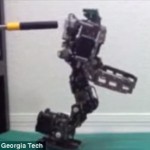
How robots can fall gracefully

Researchers at Georgia Tech have identified a way to teach robots how to fall with grace and without serious damage. The work is important as costly robots become more common in manufacturing alongside humans. The skill becomes especially important, too, as robots are sought for health care or domestic tasks working near the elderly, injured, children or pets. These machines are expensive to make and typically take months, if not years, to complete meaning every time they fall they can become da...
More
Posted in Uncategorized

Young stars’ flickering light reveals link with matter-eating black holes.

Astronomers have discovered a previously unknown link between the way young stars grow and the way black holes and other exotic space objects feed from their surroundings. The study, 'Accretion-induced variability links young stellar objects, white dwarfs, and black holes,' which is published in the journal Science Advances, shows how the 'flickering' in the visible brightness of young stellar objects (YSOs), very young stars in the final stages of formation is similar to the flickering seen fro...
More
Posted in Uncategorized

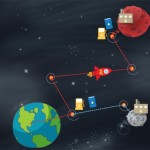
Journey to Mars: Detour to the Moon is the best way to travel to the Red Planet.

As NASA gears up for a mission to Mars, planning a route to the Red Planet is important. Now, researchers have found that to save on weight and have concluded that a detour to the moon is the best route to Mars. Previous studies have suggested that lunar soil and water ice in certain craters of the moon could potentially be mined and converted to fuel. With the assumption that this tech exists at the time of a Mars mission, taking a detour to the moon to refuel actually reduces the mass of a mis...
More
Posted in Uncategorized

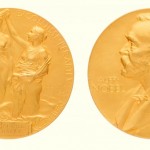
Neutrinos scoop the 2015 Nobel Prize in Physics

Neutrinos have the smallest mass of any known particle, and are created in several ways, including during radioactive decay, directly in the Sun’s core, and when cosmic rays from the Sun hit the Earth’s atmosphere. Thousands of billions of neutrinos are streaming through our bodies each second. The prize has been awarded to two physicists who discovered a strange property of neutrinos, which Imperial scientists are still unravelling today. Today’s physics laureates, Professor Arthur B. McDona...
More
Posted in Uncategorized