
Article details
Primary domain: Robotics & Automation (Autonomous Systems)Secondary domain: Artificial Intelligence & Machine Learning (Computer Vision)Article type: Research & DiscoveryTechnology: UQ-DAAAM uncertainty-aware robot memoryInnovation maturity: ExperimentalMission: ResearchBusiness impact: Could make household and industrial robots more reliable at multistep tasks by flagging and fixing uncertain perceptionsAudience: Research, IT, Business/LeadershipPublication date: No...
More
Robot Memory
Ultra-flexible, Ultra-Thin Devices Developed to Monitor the Brain
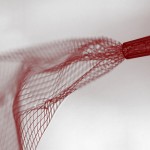
Brain activity can be monitored with tiny flexible electronics which could roll up to fit in a pocket.
Charles Lieber, a nanoscientist and nanotechnologist at Harvard University, has designed latest ultra-thin electronics flexible enough to get stuffed into the needle of a syringe with a diameter as small as the average width of a human hair.
Traditional electronics are rigid and the procedures to measure brain activity would involve surgery; surgeons would make an opening equal to the siz...
More