Illness & Climate Change

A new NOAA study, published in the journal Ecological Modeling, forecasts an increase in ciguatera fish poisoning in the Gulf of Mexico and the U.S. Southeast Atlantic coast with predicted rising global ocean temperatures due to climate change. People can be affected by ciguatera, the most common form of algal-induced seafood poisoning, by eating contaminated tropical marine reef fish such as grouper, snapper and barracuda. Scientists are now predicting that global climate change will ciguatera,...
More

The Indoor Garden System That “Feeds” Itself

Fresh mint for your mojitos? Tomato-basil for your salad? How about a thyme branch for the barbecue? Perhaps a lemon balm tea infusion? The Véritable indoor garden provides the perfect growing conditions for each plant type and guarantees you a sizable harvest, with hardly any need for intervention. ImaginThe Veritable® indoor garden allows you produce your own food in the comfort of your home, without having to worry about anything. It is an  indoor garden which is a merge of technologies th...
More

Hydrogel Baits Offer Novel Way to Manage Invasive Ants

Water-storing crystals known as hydrogels can effectively deliver pesticide bait to invasive Argentine ants, quickly decimating a colony, a Purdue University study finds. Pesticide sprays and baits are common tactics for managing pest ants. But sprays can have little long-term impact and carry environmental costs such as chemical contamination of soil and water sources. Baits also present challenges. Ants prefer liquid food to solids, rendering granular baits less appetizing. But liquid baits ca...
More

Penguin Anti-Ice.

Scientists studying penguins’ feathers have revealed how the birds stay ice free when hopping in and out of below zero waters in the Antarctic. Penguins living in the Antarctic are highly evolved to cope with harsh conditions, their short outer feathers overlap to make a thick protective layer over fluffier feathers which keep them warm. Under their skin, a thick layer of fat keeps them insulated. The flightless birds spend a lot of time in the sea and are extremely agile and graceful swimmers, ...
More

Tamu Massif, the “World’s Largest Single Volcano”.

After 36 days of battling sharks that kept biting their equipment, scientists have returned from the remote Pacific Ocean with a new way of looking at the world’s largest and possibly most mysterious volcano, Tamu Massif. The team has begun making 3-D maps that offer the clearest look yet at the underwater mountain, which covers an area the size of New Mexico. In the coming months, the maps will be refined and the data analyzed, with the ultimate goal of figuring out how the mountain was formed....
More

Research Suggests Some Commercial 3D Printers are Toxic

Parts produced by some commercial 3D printers may be toxic according to a new study that raises concerns about how to dispose of parts and waste materials from the devices which are becoming increasingly popular. Researchers at the University of California, Riverside studied two common types of 3D printers, one that melts plastic to build a part, and another that uses light to turn a liquid into a solid part. They found that parts from both types of printers were measurably toxic to zebrafish em...
More

Genetically Modified Fruit Fly may solve pest problems.

The Mediterranean fruit fly, or medfly, is an invasive species that is now endemic to Western Australia. The female medfly “stings” fresh fruit and then lays her eggs in the puncture site. The hatching larvae then feast on the decomposing fruit. A British bioengineering firm called Oxitec has created genetically modified medflies that, when released into the environment, could mate with wild fruit flies and pass on a gene that would prevent their female offspring from reaching adulthood which wo...
More

Genetically Engineered Mosquitoes can no longer spread Malaria

US scientists have bred a genetically modified mosquito that is incapable of spreading malaria to humans, according to reports. A gene editing technique called Crispr was used to alter the genetic makeup of the insect, making it resistant to Plasmodium falciparum, one of the parasites that causes malaria in humans. Crucially, the GM mosquitoes passed on their anti-malarial DNA strain to 99.5% of their offspring, raising the prospect of the altered species being released in the wild one day to co...
More

Earth not due for a geomagnetic flip in the near future.

Over the past couple of hundred years, the strength of the Earth’s geomagnetic field has been waning, leading scientists to wonder if our planet’s polarity is on the verge of flipping. A new study suggests this won’t happen in the near future and that the intensity of today’s field is uncharacteristically strong. Predicting a geomagnetic flip is important for two primary reasons, one biological, one technological. The Earth’s magnetic field deflects solar wind and cosmic rays, so with a weakened...
More

Using jeans to purify the air.

There are more jeans in the world than people. That sparked an idea in the mind of University of Sheffield chemist Tony Ryan. Why not use people’s penchant for wearing denim to help purify the air? With thoughts of reducing pollutants such as the nitrogen oxides and volatile organic compounds emitted by vehicles, power plants, residential heating, cooking and various consumer products, Ryan, in partnership with former fashion designer Helen Storey, came up with the concept of “Catalytic Clothing...
More

Global warming will be faster than expected.

Scientists suggest that global warming could progress faster than was previously believed because increased temperatures influence natural greenhouse gas emissions. Numerous studies from the Swedish research team over the past two years have determined that natural greenhouse gas emissions will increase when the climate gets warmer, Linköping University reported.  Now, their most recent study has backed up these findings. "Everything indicates that global warming caused by humans leads to increa...
More

Link between comet, asteroid showers & mass extinctions.

Dr Ken Caldeira of Carnegie Institution and Dr Michael Rampino of New York University offer new support linking the age of these craters with recurring mass extinctions of life, including the demise of the dinosaurs. Mass extinctions occurring over the past 260 million years were likely caused by comet and asteroid showers. Specifically, they show a cyclical pattern over the studied period, with both impacts and extinction events taking place every 26 million years. This cycle has been linked...
More

New, inexpensive way to clean water from oil sands production

Researchers have developed a process to remove contaminants from oil sands wastewater using only sunlight and nanoparticles that is more effective and inexpensive than conventional treatment methods. Frank Gu, a professor in the Faculty of Engineering at the University of Waterloo and Canada Research Chair in Nanotechnology Engineering, is the senior researcher on the team that was the first to find that photocatalysis , a chemical reaction that involves the absorption of light by nanoparticles ...
More

Smartphone app helps predict famine.

A new mobile phone app designed to help aid workers predict where hunger may strike and provide help in good time was launched by Austrian scientists on Thursday. The app, which is free to use, combines and analyses satellite data and information collected through crowdsourcing using mobile phones, and creates a map highlighting areas at risk of food shortages and malnutrition. Useful information includes how often people in an area eat or whether there is civil unrest that might prevent people ...
More

Thousands of tree species in shrinking Amazon threatened by deforestation.

An international team of 158 scientists found that depending on the degree to which deforestation comes under control in the next 35 years, between 36 and 57 percent of the 16,000 tree species in the tropical rainforest area would be considered threatened. A first-of-its-kind examination of the Amazon's trees found that as many as half the species may be threatened with extinction or heading that way because of massive deforestation. Among the more than 5,000 tree species in deep trouble, the on...
More
Posted in Uncategorized

Cyborg Rose: Researchers implant electronic circuits inside plants.

A team of Swedish researchers, by using living roses, has created analogue and digital electronic circuits inside living plants, calling them "electronic plants". The experiment demonstrates wires, digital logic and displays elements fabricated inside the plants that could develop new applications for organic electronics and new tools in plant science. The group at Linkoping University in Sweden, under the leadership of professor Magnus Berggren, used the vascular system of living roses to build...
More

Hydrogel superglue is 90 percent water.

Nature has developed innovative ways to solve a sticky challenge. Mussels and barnacles stubbornly glue themselves to cliff faces, ship hulls, and even the skin of whales. Likewise, tendons and cartilage stick to bone with incredible robustness, giving animals flexibility and agility. The natural adhesive in all these cases is hydrogel, a sticky mix of water and gummy material that creates a tough and durable bond. Engineers at MIT have developed a method to make synthetic, sticky hydrogel th...
More

The birth of a ‘baby planet’

Using a novel technique, scientists have observed a "baby planet" being formed nearly 450 light years away. When new planets absorb nearby gases and dust they get hot. A strange light is emitted as a result and that has allowed researchers to watch a distant exoplanet as it is being formed. The plant is circling a star dubbed LkCa 15 and was discovered by astronomers Adam Kraus and Michael Ireland using the Keck II telescope. Named LkCa 15b, and in orbit in a system with two other planets (aptly...
More
Posted in Uncategorized Tagged

Microbiomes could hold keys to improving life.

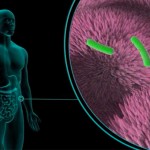
Microbial life forms including viruses, bacteria, and fungi are the most diverse and abundant organisms on earth. They have shaped our evolutionary origins for billions of years and continue to have widespread impact. The UMIC foresees the microbiomes being leveraged through genetic engineering for applications within 10 years. “Microbes are everywhere. Therefore understanding microbiomes, whether they be the ones that live in and on our bodies or the ones in the environment, is essential to ...
More

New flu tracker uses Google search data better than Google.

A team of Harvard statisticians has come up with a new way to track the flu virus using Internet search data. The system uses a method that has been used before, tracking searchers for key words and phrases, but has coupled it with additional data to improve its accuracy. The new model, ARGO (AutoRegression with Google search data), was published in the Proceedings of the National Academy of Sciences and was built on Google Flu Trends, which was Google’s flu tracking model that emerged in 200...
More

New “tricorder” technology might be able to “hear” tumors growing.

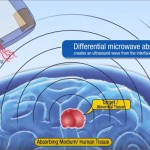
A team of scientists from Stanford University is testing a new “tricorder” technology able to remotely detect abnormal matter, such as buried plastic explosives or even early stage cancers in humans, by manipulating microwaves and ultrasound. The new “radio frequency (RF)/ultrasound hybrid imaging system,” the brainchild of Assistant Professor Amin Arbabian and Research Professor Pierre Khuri-Yakub, was designed for remote detection of embedded objects in a number of different kinds of matter, i...
More

An inside look at the Big Bang.

The Large Hadron Collider began its second run of experiments in June after a two-year hiatus from being the world’s largest particle accelerator. And the results are promising, achieving the highest energy ever achieved in a laboratory by colliding subatomic particles at 13 teraelectronvolts (TeV), physicists hope that these high-energy collisions may produce entirely new particles and simulate conditions seen in the early universe, according to an MIT statement.Soon to be published in Physics ...
More
Posted in Uncategorized Tagged

Cosmic ‘Death Star’ destroys a planet

Astronomers announced that they have spotted a large, rocky object disintegrating in its death spiral around a distant white dwarf star. The discovery also confirms a long-standing theory behind the source of white dwarf “pollution” by metals. “This is something no human has seen before,” said lead author Andrew Vanderburg of the Harvard-Smithsonian Center for Astrophysics (CfA). “We’re watching a solar system get destroyed.” The evidence for this unique system came from NASA’s Kepler K2 miss...
More
Posted in Uncategorized Tagged

Researchers Discover How Termites Ventilate

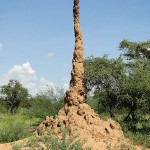
Termites build massive, empty structures above their underground nest in order to control their local environment. Hunter King and Samuel A. Ocko, under the supervision of Applied Mathematics professor Lakshminarayan Mahadevan discovered the key to ventilation in the mounds of an Indian termite species. It is well known that termites build such massive, empty structures above their underground nest in order to control their local environment. The researchers conducted tests on live and dea...
More

Temperature Increase Could Lead to Drastic Sea Level Rise

Antarctic ice shelf collapse and unstoppable sea level rise 'very likely' without tough climate action, say scientists. Warming of 1.5 to 2 degrees Celsius above current levels could lead to "unstoppable" sea level rise that would last for thousands of years. The new model, published today in Nature, shows that such temperatures would result in 80 to 85 per cent loss of major Antarctic ice shelves, something that is possible by the end of the century under existing IPCC scenarios. Collapse of th...
More

UBC students develop “pro-bee-otic”, a probiotic for bees

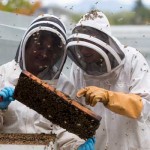
University of British Columbia students have developed a probiotic for honey bees, which they’ve coined the ‘pro-bee-otic.’ This innovative study by a group of UBC students is regarding the development a probiotic for honey bees. This is a particularly important solution, as global bee declines are a major problem and so much of the food we eat depends on pollination by insects. The students want to address this important issue and they feel that betting probiotics could be the key to prot...
More

Neutrinos scoop the 2015 Nobel Prize in Physics

Neutrinos have the smallest mass of any known particle, and are created in several ways, including during radioactive decay, directly in the Sun’s core, and when cosmic rays from the Sun hit the Earth’s atmosphere. Thousands of billions of neutrinos are streaming through our bodies each second. The prize has been awarded to two physicists who discovered a strange property of neutrinos, which Imperial scientists are still unravelling today. Today’s physics laureates, Professor Arthur B. McDona...
More

Scientists explain earthworms’ ability to counteract plant toxins

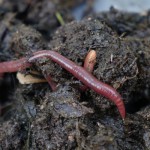
Earthworms have chemical compounds that help them overcome toxic plant defenses to digest difficult leaf litter. Researchers have identified unique chemical compounds in the digestive tracts of earthworm species which counteract the defensive toxins produced by plants, allowing earthworms to consume them safely. Many plants produce defensive chemicals called polyphenols. By binding gut enzymes, polyphenols inhibit the digestion of plant matter. Dead plants retain these chemicals even as th...
More

NASA’s Cassini Probe Spies an ocean under the Icy shell of Saturn’s moon Enceladus

New research using data from its Cassini spacecraft shows a global ocean lies beneath the icy crust of Saturn’s moon Enceladus. NASA’s Cassini mission has confirmed the presence of what it termed a “global ocean” beneath the icy crust of Saturn’s moon, Enceladus and it has managed to deduce the presence of the ocean after analyzing new data from the Cassini mission. This exciting discovery expands the region of habitability for Enceladus from just a regional sea under the South Pole to all of...
More

Scientists reveal birth date of earth’s inner core.

A reassessment of ancient rocks has led scientists to estimate that Earth's inner core started to form earlier than was previously thought, around 1.3 billion years ago. As it started to freeze, the core began generating a bigger magnetic field, which continues to today. Earth's active core contrasts sharply with that of our neighbor Mars, whose strong early magnetic field died around four billion years ago. Our planet's magnetic field is generated deep in the planet by the turbulent motion o...
More