The Indoor Garden System That “Feeds” Itself

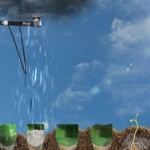
Fresh mint for your mojitos? Tomato-basil for your salad? How about a thyme branch for the barbecue? Perhaps a lemon balm tea infusion? The Véritable indoor garden provides the perfect growing conditions for each plant type and guarantees you a sizable harvest, with hardly any need for intervention. ImaginThe Veritable® indoor garden allows you produce your own food in the comfort of your home, without having to worry about anything. It is an  indoor garden which is a merge of technologies th...
More
Hydrogel Baits Offer Novel Way to Manage Invasive Ants

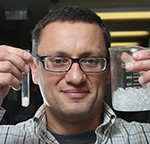
Water-storing crystals known as hydrogels can effectively deliver pesticide bait to invasive Argentine ants, quickly decimating a colony, a Purdue University study finds. Pesticide sprays and baits are common tactics for managing pest ants. But sprays can have little long-term impact and carry environmental costs such as chemical contamination of soil and water sources. Baits also present challenges. Ants prefer liquid food to solids, rendering granular baits less appetizing. But liquid baits ca...
More

Penguin Anti-Ice.

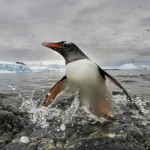
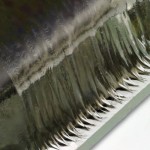
Scientists studying penguins’ feathers have revealed how the birds stay ice free when hopping in and out of below zero waters in the Antarctic. Penguins living in the Antarctic are highly evolved to cope with harsh conditions, their short outer feathers overlap to make a thick protective layer over fluffier feathers which keep them warm. Under their skin, a thick layer of fat keeps them insulated. The flightless birds spend a lot of time in the sea and are extremely agile and graceful swimmers, ...
More

AquaFresco – Reinventing laundry

AquaFresco provides the state-of-the-art filtration technology which regenerates 95% of laundry wastewater. Three MIT grad students have invented a washing-machine filter that cleans wastewater and reuses it over and over again. “Washing machines are one of the major sources of detergent pollution in rivers,” Huang says. “Current laundry technology is not sustainable. A regular washer discards the water right into the drain after one usage, but less than 1 percent is the actual waste component.”...
More

Microbe Powered Robot

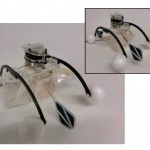
A new robot created by researchers at the University of Bristol has the mission of cleaning ponds and lakes. Powered by the microbes it scoops up from the water and digests, it doesn't need any recharging to keep going. The Row-bot is inspired by the water boatman insect and uses a similar mechanism to glide across the surface of water, in the robot's case, a paddle powered by a 0.75 Watt DC motor. Both bug and robot maximize surface area when making a power stroke and then minimize surface area...
More

A Look at Intel’s Smart House

The brain of the house is Intel’s new Internet of Things Platform for connecting and controlling smart devices. It basically allows you to control all of a home’s systems from a single tablet app which you can swipe a slider to adjust the thermostat, change the color and brightness of the home’s lighting, and even open the door for a repairman while you’re away. Older non-connected appliances can also be controlled using smart outlets. All of the systems respond to voice control, and the platfor...
More

Falling Fruit: An Interactive Food Map

This amazing, interactive, world map from Falling Fruit is a map that charts known fruit trees on publicly accessible land, and as an added bonus, you and your family can add your own finds to the map and share your knowledge of where to forage local food with the world. Technology has dramatically changed our life even our way of eating. We would post the food we eat on social media and we even use applications to know where the best place to chow down is. An interactive crowd-sourced map ca...
More

Genetically Modified Fruit Fly may solve pest problems.

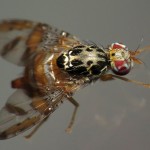
The Mediterranean fruit fly, or medfly, is an invasive species that is now endemic to Western Australia. The female medfly “stings” fresh fruit and then lays her eggs in the puncture site. The hatching larvae then feast on the decomposing fruit. A British bioengineering firm called Oxitec has created genetically modified medflies that, when released into the environment, could mate with wild fruit flies and pass on a gene that would prevent their female offspring from reaching adulthood which wo...
More

Genetically Engineered Mosquitoes can no longer spread Malaria

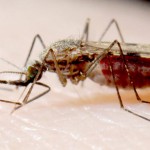
US scientists have bred a genetically modified mosquito that is incapable of spreading malaria to humans, according to reports. A gene editing technique called Crispr was used to alter the genetic makeup of the insect, making it resistant to Plasmodium falciparum, one of the parasites that causes malaria in humans. Crucially, the GM mosquitoes passed on their anti-malarial DNA strain to 99.5% of their offspring, raising the prospect of the altered species being released in the wild one day to co...
More

This Saltwater-Powered Lamp can also charge your cell phone!

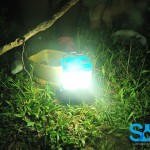
Lighting is something that we take for granted in the developed world, but there are still many areas around the globe where people lack reliable access to light at night. Around one-fifth of the world’s population has no access to electricity. They often use kerosene lamps, which contribute to indoor pollution and have to be refilled with oil regularly. Also they are bad for the environment and human health. To solve this problem, an engineering start-up called SALt(Sustainable Alternative Ligh...
More

Earth not due for a geomagnetic flip in the near future.

Over the past couple of hundred years, the strength of the Earth’s geomagnetic field has been waning, leading scientists to wonder if our planet’s polarity is on the verge of flipping. A new study suggests this won’t happen in the near future and that the intensity of today’s field is uncharacteristically strong. Predicting a geomagnetic flip is important for two primary reasons, one biological, one technological. The Earth’s magnetic field deflects solar wind and cosmic rays, so with a weakened...
More

Using jeans to purify the air.

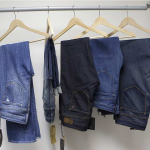
There are more jeans in the world than people. That sparked an idea in the mind of University of Sheffield chemist Tony Ryan. Why not use people’s penchant for wearing denim to help purify the air? With thoughts of reducing pollutants such as the nitrogen oxides and volatile organic compounds emitted by vehicles, power plants, residential heating, cooking and various consumer products, Ryan, in partnership with former fashion designer Helen Storey, came up with the concept of “Catalytic Clothing...
More

Global warming will be faster than expected.

Scientists suggest that global warming could progress faster than was previously believed because increased temperatures influence natural greenhouse gas emissions. Numerous studies from the Swedish research team over the past two years have determined that natural greenhouse gas emissions will increase when the climate gets warmer, Linköping University reported.  Now, their most recent study has backed up these findings. "Everything indicates that global warming caused by humans leads to increa...
More

Link between comet, asteroid showers & mass extinctions.

Dr Ken Caldeira of Carnegie Institution and Dr Michael Rampino of New York University offer new support linking the age of these craters with recurring mass extinctions of life, including the demise of the dinosaurs. Mass extinctions occurring over the past 260 million years were likely caused by comet and asteroid showers. Specifically, they show a cyclical pattern over the studied period, with both impacts and extinction events taking place every 26 million years. This cycle has been linked...
More

Porous Liquid.

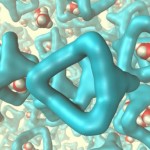
Researchers in the School of Chemistry and Chemical Engineering at Queen’s, along with colleagues at the University of Liverpool, UK, and other, international partners, have invented the new liquid and found that it can dissolve unusually large amounts of gas, which are absorbed into the ‘holes’ in the liquid. Porous materials, as their name would suggest, are materials with holes. These are materials that look totally solid to the naked eye, but on a molecular level, contain lots of empty space...
More

Tiny sea creatures feature transparent optical systems as tough as their shells.

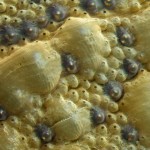
Sea-dwelling mollusks called chitons have armor-plated eyes embedded in their shells, and this incredible feature could provide a model for protective armor that could be used by the army and workers exposed to dangerous conditions. The chitons, or Acanthopleura granulates, have hundreds of these armored eyes on the surface of their shells, MIT reported. Unlike most eyes in the biological world that are made primarily of protein, these eyes are made of the mineral aragonite, but can still form f...
More

New, inexpensive way to clean water from oil sands production

Researchers have developed a process to remove contaminants from oil sands wastewater using only sunlight and nanoparticles that is more effective and inexpensive than conventional treatment methods. Frank Gu, a professor in the Faculty of Engineering at the University of Waterloo and Canada Research Chair in Nanotechnology Engineering, is the senior researcher on the team that was the first to find that photocatalysis , a chemical reaction that involves the absorption of light by nanoparticles ...
More

Smartphone app helps predict famine.

A new mobile phone app designed to help aid workers predict where hunger may strike and provide help in good time was launched by Austrian scientists on Thursday. The app, which is free to use, combines and analyses satellite data and information collected through crowdsourcing using mobile phones, and creates a map highlighting areas at risk of food shortages and malnutrition. Useful information includes how often people in an area eat or whether there is civil unrest that might prevent people ...
More

Old laptop batteries could power slums.

Old laptop batteries still have enough life in them to power homes in slums, researchers have said. An IBM study analyzed a sample of discarded batteries and found 70% had enough power to keep an LED light on more than four hours a day for a year. Researchers said using discarded batteries is cheaper than existing power options, and also helps deal with the mounting e-waste problem. The IBM team created what they called an UrJar, a device that uses lithium-ion cells from the old batteries to ...
More

Thousands of tree species in shrinking Amazon threatened by deforestation.

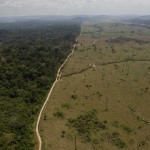
An international team of 158 scientists found that depending on the degree to which deforestation comes under control in the next 35 years, between 36 and 57 percent of the 16,000 tree species in the tropical rainforest area would be considered threatened. A first-of-its-kind examination of the Amazon's trees found that as many as half the species may be threatened with extinction or heading that way because of massive deforestation. Among the more than 5,000 tree species in deep trouble, the on...
More
Posted in Uncategorized

Cyborg Rose: Researchers implant electronic circuits inside plants.

A team of Swedish researchers, by using living roses, has created analogue and digital electronic circuits inside living plants, calling them "electronic plants". The experiment demonstrates wires, digital logic and displays elements fabricated inside the plants that could develop new applications for organic electronics and new tools in plant science. The group at Linkoping University in Sweden, under the leadership of professor Magnus Berggren, used the vascular system of living roses to build...
More

Desalination

MIT has developed a new and more efficient way to desalinate water. The process, called shock electrodialysis, filters water through a material made of small glass particles, according to an MIT News report. When an electric current is introduced to the system, the water divides into areas of high or low salt concentration. Once the current reaches a certain point, a shockwave is produced that divides the streams and allows the salty and fresh waters to be separated by a physical barrier. The pr...
More

Using Holography to better understand clouds.

Scientists have just made a breakthrough in understanding how clouds interact with the surrounding air by studying clouds in unprecedented detail. Raymond Shaw, a professor of physics at Michigan Tech, looks at the smallest part of clouds, droplets. To understand groups of droplets, Shaw and the NCAR team flew airplanes through fluffy, cottonball cumulus clouds in Wyoming and Colorado. Aboard the plane, the team took detailed 3-D images with an instrument called the Holographic Detector for Clou...
More

SlingShot: Quest to solve the world’s safe water crisis.

Kamen's SlingShot (so-named after the Biblical David & Goliath story) device is an energy-efficient "vapor compression distiller," and one possible answer to the safe water crisis. The SlingShot is designed to take virtually any unfit source of water, such as contaminated well water or seawater, and turn it into clean water, without requiring a filter (which regularly need to be replaced) or using any chemical additives (which have to be purchased). The device does use combustible fuel to po...
More
Posted in Uncategorized Tagged

Microbiomes could hold keys to improving life.

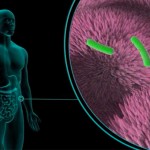
Microbial life forms including viruses, bacteria, and fungi are the most diverse and abundant organisms on earth. They have shaped our evolutionary origins for billions of years and continue to have widespread impact. The UMIC foresees the microbiomes being leveraged through genetic engineering for applications within 10 years. “Microbes are everywhere. Therefore understanding microbiomes, whether they be the ones that live in and on our bodies or the ones in the environment, is essential to ...
More

New flu tracker uses Google search data better than Google.

A team of Harvard statisticians has come up with a new way to track the flu virus using Internet search data. The system uses a method that has been used before, tracking searchers for key words and phrases, but has coupled it with additional data to improve its accuracy. The new model, ARGO (AutoRegression with Google search data), was published in the Proceedings of the National Academy of Sciences and was built on Google Flu Trends, which was Google’s flu tracking model that emerged in 200...
More

Big Data

Massachusetts Institute of Technology (MIT) researchers at the Computer Science and Artificial Intelligence Laboratory (CSAIL) are looking to take human intuition out of big data analysis by letting computers choose the feature set used to identify predictive patterns in the data. This effort is called “Data Science Machine”. Big Data represents a huge, complex ecosystem that brings together innovative processes from across the spectrum of data analysis, storage, networking, curation, search,...
More

Drones Could Plant 1 Billion Trees a Year

A UK-based startup called BioCarbon Engineering with CEO Lauren Fletcher and his team have a plan for using fixed-wing and multiple-rotor drones to plant 1 billion trees per year. The startup run by a former NASA engineer, is on a mission to fight industrial-scale deforestation, which robs our planet of 26 billion trees each year. The process begins by deploying fixed wing drones to assess areas in need of replanting and create 3-D maps. The drones conduct aerial surveys and produce detailed ...
More
Posted in Uncategorized Tagged

Manmade Tidal Lagoon could change the future of clean energy.

The Swansea Bay Tidal Lagoon will be the world’s first ever plant to generate electricity using its own novel method. Should it prove successful, the plant’s template could be adopted worldwide as a way of generating green power while simultaneously providing sea wall protection to coastal communities. Just outside the Welsh city of Swansea, the U.K. is planning one of the most innovative power plants ever constructed. It’s not the plant’s size that is striking, though it could ultimately pro...
More

Tiny technology helps save the honey bees.

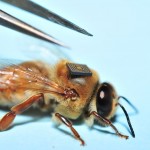
Microsensors may be the key to solving the mystery behind the collapse of honeybee colonies. Australian researchers announced  that they have attached tiny, top-of-the-line trackers to about 10,000 healthy honeybees in an effort to find out what is driving a decline in the pollinators’ global population. The experiment, supported by an international group of scientists, farmers, beekeepers, and tech companies, is the latest to use tracking and tagging technology to study animal behavior and resp...
More