DroneTracker: Novel Multi-Sensor Drone Warning System

European startup, DeDrone, has been initiated to combat the possible dangers by using a DroneTracker system to identify unauthorized drones. These drones can then be monitored to ensure they are not being used maliciously. The DroneTracker guards against spying, smuggling, potential terrorist attacks and invasions of personal privacy. Based on multiple parameters such as noise, shape, and movement patterns, it is unlike any other drone warning system able to reliably detect all types of drones. ...
More
Posted in Uncategorized Tagged

Xerox system automatically counts vehicle passengers.

Xerox rolls out Vehicle Passenger Detection System with highway speed accuracy for HOV/HOT Lane Enforcement. This system identifies the number of occupants in a vehicle with better than 95 percent accuracy at speeds ranging from stop-and-go to 100 mph. High occupancy carpooling lanes are critical to combating roadway congestion. However, their benefits are severely limited when motorists do not abide by the rules. Xerox (NYSE: XRX) announced the launch of its HOV/HOT lane compliancy test system ...
More

CubeSensors monitor your sleeping environment

CubeSensors is a startup that makes small, pretty stylish, connected devices that monitor rooms, feeding back information about air quality, temperature, and other things. They are little boxes containing a few environmental sensors. These let you know how much nasty stuff was in your air and has systems of measuring temperature and humidity. Sense is a sleep tracking device measures temperature, humidity and ambient light. The Cubes that use the new Sleep feature glow gently to remind you wh...
More

Breathe fresh clean air in a SmartVent home.

SmartVent Evolve is an intelligent tablet based system that lets you control your home’s internal climate. This new system quietly ventilates your home with fresher, drier air, removing condensation and moisture and creating a healthier, more comfortable living environment. It is set to change home ventilation forever. Evolve’s sensor technology can monitor both temperature and humidity to effectively control condensation. This air is passed through a high efficiency filter and introduced int...
More

Grow herbs with zero effort

With Click & Grow smartpots, the technology does all the work. This is where nature and technology meet to make dreams come true. Click & Grow was made to take complete care of your plants while you enjoy your life to the fullest. The company makes a little capsule of seeds that requires water and batteries, and it sells the plastic box that does all the work for you. All plants are grown using automatically controlled technology in a unique and specially developed Smart Soil. The Sma...
More

Wikipearls: Bite-sized foods wrapped in edible Food packaging

WikiFoods, Inc. has developed a revolutionary, plastic-free food and beverage packaging technology that delivers Triple Good called WikiPearls™ which are good for you, good for the environment, and just plain good. Created by David Edwards, a Harvard professor and biomedical engineer, the intention of the WikiPearl is to kill the packaging and make its relationship with food symbiotic. WikiPearl skins are inspired by the way nature packages fruits and vegetables. These skins are delicious ...
More

Improving Solar Efficiency with Stanford coating

Stanford engineers invent transparent coating that cools solar cells to boost efficiency. A transparent material that can improve the efficacy of solar cells, this coating has been invented by three Stanford engineers and has the tendency to radiate thermal energy into space which is released by solar cells, making cells cool. This invention shunts away the heat generated by a solar cell under sunlight and cools it in a way that allows it to convert more photons into electricity. The gr...
More

Ebola color coded Protection Suit

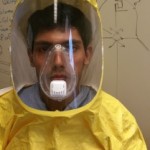
The Johns Hopkins University’s has developed a new personal protective suit for front-line health care workers in Ebola. The suit uses technology originally designed by Johns Hopkins to keep cancer patients comfortable. This new suit is color coded to show what surfaces are safe to touch when removing it. The suit, intended for use in future Ebola outbreaks like the 2014 epidemic that killed thousands in West Africa, has elements to keep the wearer more comfortable than existing suits, reduce...
More
Posted in Uncategorized Tagged

The New Swan Umbrella Dryer

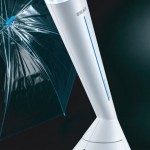
A new concept called the Swan umbrella dryer has just been introduced, to dry a wet umbrella to avoid water from spilling all around the place. We all get caught out in the rain on many occasions and need to use an umbrella. Sometimes it is really pouring along with thunderstorms and windy climate. We get totally drenched along with a soaking umbrella in such situations. The house gets very slippery and messy when the umbrella is all wet and we normally tend to leave them on the front p...
More

Penn Research Simplifies Recycling of Rare-earth Magnets

Chemical technology can instantaneously separate elements and enable a smaller scale recycler. The latest news from researchers at the University of Pennsylvania is that they have pioneered a process that could enable the efficient recycling of two metals, neodymium and dysprosium. These elements comprise the small, powerful magnets that are found in many high-tech devices. Despite their ubiquity in consumer electronics, rare-earth metals are, as their name suggests, hard to come by. Mi...
More

A House that Walks

An eco friendly house can actually walk. The latest invention derived from a collaborative effort between MIT and the Danish design collective N55 is a house that walks about five kilometers an hour similar to the walking speed of a human. The eco-friendly  prototype house powered by solar cells, miniature windmills and 6 legs walked around the campus of the Wysing Arts Centre in Cambridgeshire, England. It comprises of a kitchen, a composting toilet, a system for collecting rain water,...
More

Nest: The Smart Thermostat

Tony Fadell who invented the iPod and the iPhone has developed a new thermostat called 'Nest'. The slimmer and sleeker Nest Thermostat includes many features, one of which is a bigger, sharper display which saves energy. Nest is a thermostat that utilizes artificial intelligence and learns from manual adjustments. It uses sensors to detect room temperatures and can also know whether a room is occupied or not. It can interact with you directly or communicate with you over the internet throu...
More

Amazing Batteries that Run on Any Liquid

A new, “organic” battery has been invented which generates a charge within 10 seconds and will last anywhere from two days to a week depending on the liquid. The world’s first chlorophyll organic battery has been invented by Chungpin Liao, a professor at the Graduate School of Electro-Optic and Material Science of National Formosa University in Taiwan. He claims that his battery can be filled up with almost anything, including water and urine, and it can provide electricity from two to sev...
More

Energy Harvesting Soccer Ball

New soccer ball, called the sOccet ball, generates enough energy to light up a home. This invention was developed by four students from Harvard University in partnership with the Laboratory at Harvard Think-Tank; it's a soccer ball which they call the sOccet that generates electricity from normal kicking during game play. The ball has a built-in inductive coil that collects kinetic energy. After about 15 minutes of kicking the ball around it will produce enough electricity to charge LED li...
More

New Technology Creates “Cyborg Insects”

Scientists at the University of California demonstrated a new technology for creating "cyborg insects." That is, beetles implanted with miniaturized electronics that allows the insects to be controlled. The flying beetle is powered by a wireless signal from a mobile transmitter that controls the insect. Varying impulses trigger an appropriate response from the beetle so that it flies according to its handler. The movements of flying insects is controlled using a radio transmitter and a min...
More

Amazing Water Drop Lenses

A new discovery has led to the creation of liquid optical lenses. Bruno Berge, physicist and inventor, has created liquid optical lens by a process known as electro-wetting. In this process, a water drop is deposited on a metal substrate and covered by a thin insulating layer. When a voltage is applied to the metal, it modifies the angle of the liquid drop. The liquid lens is comprised of two liquids, water and oil; one is a conductor while the other is an insulator. A variation in the ...
More

Atmospheric Water Generators that Make Water from Air

The WaterMill WM-200 is unlike any other water collection device. It is an  intelligent system that can regulate itself to produce pure water for a healthy family and environment. Johathan Ritchey has invented this novel device, which is essentially an atmospheric water collection device that condenses water vapor and purifies it. Originally designed for areas that do not have clean drinking water, the Watermill is for households that need an eco-friendly, cost effective alternative to bot...
More

BAT: The floating balloon Wind Turbine

Altaeros Energies is aiming high with new heights for wind energy. The company, led by Ben Glass, has created a new invention with the help of balloon and airship technology to lift a wind turbine. Their novel Buoyant Airborne Turbine--the BAT--is a balloon that lifts a wind turbine. Most wind turbine manufacturers are competing to build taller turbines to harness more powerful winds above 500 feet, or 150 meters. The Altaeros BAT can reach 2,000 feet, or 600 meters. At this altitude, w...
More

Sponge-like “Swelling Glass” absorbs toxins in contaminated water

A new glass has been developed that swells up like a sponge to clean contaminated groundwater. A company called Absorbent Materials has used nanotechnology to create a nanobot particle made from glass that can absorb pollutants from dirty water. The glass particles act like sponges by attracting and binding contaminants to themselves and expanding eight times in size during the process. However, unlike a sponge, these nanobots are hydrophobic, meaning they don't absorb water. This new s...
More

Non-Toxic Sterilizing Spray Invented

An innovative product promises dirt and germ free surfaces without using toxic coatings. This latest science invention from the Saarbrücken Institute for New Materials in Turkey and patented by Nanopool GmbH Germany is a spray-on invisible thin glass coating that sterilizes, protects and strengthens surfaces. It is a flexible and breathable spray-on glass film which repels water, dirt, stains, fungus, bacteria and viruses. The film is approximately 500 times thinner than a human hair and h...
More

Portable water purification device for the ultimate traveler

 Inventor Micheal Pritchard has found a solution for safe drinking water with a handheld water purification device that creates fresh water instantly. The LifeSaver bottle provides refreshing, germ free water anywhere. The bottle itself is designed to be uncomplicated and user friendly. This bottle consists of long lasting cartridges which help remove viruses and bacteria from contaminated water. One just needs to pump the products manually a few times and pristine drinking water will start t...
More

Skyscraper Uses Built-In Wind Turbines for Energy

Bahrain is the home of the first skyscraper to have wind turbines integrated into the structure of the building. The Bahrain World Trade Center is a 50-story twin tower complex containing two identical towers that rise over 240 meters in height. The sail-shaped buildings offer a visually striking image and boasts of one its very unique feature which is the 3 giant wind turbines tying the two “sails” together. It is the first skyscraper in the world to integrate wind turbines into its desig...
More

New Plant-Based Insulation Created

Plant-based, natural building materials have the potential to boost energy savings for homeowners. Over a three-year period, University of North Texas researchers developed and tested a low-cost process to prepare kenaf, a plant in the hibiscus family that is similar to bamboo, for use as a building material; specifically, kenaf is used to create structured insulated panel building materials. Scientists worldwide are turning to plants as a resource for biodegradable, renewable and environm...
More

Clues to Waterproof Glue Found in Antarctic Creature

Scientists are recycling nutrients in the oceans to make waterproof glue. Today, animal glues made from bone glue, hide or skin glue, and fish glue are sparsely used for making and restoring objects, paintings, and illuminated parchment manuscripts due to difficulty of storage in a wet state and constant requirement for fresh raw materials. For 20 years, Sam Bowser, a scientist at the New York State Department of Health's Wadsworth Center, has been doing research on a single-celled creatur...
More

A unique self-healing bio plastic

Scientists at Pennsylvania State University have create a power plastic that sticks together with a drop of water. This mold-able polymer heals itself when exposed to water. It was observed that all squids around the world had proteins in their system which allow them to self-heal. This observation was the basis for creating this polymer. The yield of these proteins is quite low per squid meaning that many animals would have to be processed in order to obtain a usable amount for use in pol...
More

Wearable Pollution Monitor Created

Environmentally conscious? The TZOA Pollution Monitor might interest you. It’s a wearable device that detects air pollution, an environmental issue that plagues many modern cities. It’s simple: “A fan directly beneath TZOA’s triangular cover sucks in air. As pollutants cross a laser, they scatter light onto a sensor that counts them. TZOA then glows a color corresponding to the air safety level. A smartphone app also displays that data, along with daily UV light exposure and crowdsourced polluti...
More

Pollution-fighting plants

Scientists at the University of Washington are engineering poplar trees that can clean up contamination sites by absorbing groundwater pollutants through their roots. The plants then break the pollutants down into harmless byproducts that are incorporated into their roots, stems and leaves or released into the air. In laboratory tests, the transgenic plants are able to remove as much as 91 percent of trichloroethylene — the most common groundwater contaminant at U.S. Superfund sites — out...
More
Posted in Uncategorized