Aerion Mouse

Aerion Mouse is a gesture-driven computer mouse that’s somewhat smaller than traditional mice. It gets placed between the top of any two of the user’s fingers. The user then points the mouse at the display to operate it and, instead of clicking on any buttons, just leans to the left to achieve what a typical left click on a mouse would and leans to the right for a right click. One main benefits to Aerion is that it allows one to keep fingers close to a typing position without having to grab a se...
More

“Li-Fi” 100 Times Faster Than “Wi-Fi”

Li-fi is a new means of delivering data using visible spectrum as against the radio waves used by most other methods. This new technology has already been tested in a functional office. What makes Li-fi stand apart is the astonishing speed at which can deliver access to the internet, often 100 times faster compared to Wi-fi at a mind-boggling speed of 1Gbps. You need a light source similar to an LED bulb, a photo detector and an internet connection to use Li-fi. The visible spectrum of light use...
More

Earth not due for a geomagnetic flip in the near future.

Over the past couple of hundred years, the strength of the Earth’s geomagnetic field has been waning, leading scientists to wonder if our planet’s polarity is on the verge of flipping. A new study suggests this won’t happen in the near future and that the intensity of today’s field is uncharacteristically strong. Predicting a geomagnetic flip is important for two primary reasons, one biological, one technological. The Earth’s magnetic field deflects solar wind and cosmic rays, so with a weakened...
More

The birth of a ‘baby planet’

Using a novel technique, scientists have observed a "baby planet" being formed nearly 450 light years away. When new planets absorb nearby gases and dust they get hot. A strange light is emitted as a result and that has allowed researchers to watch a distant exoplanet as it is being formed. The plant is circling a star dubbed LkCa 15 and was discovered by astronomers Adam Kraus and Michael Ireland using the Keck II telescope. Named LkCa 15b, and in orbit in a system with two other planets (aptly...
More

ORNL’s hybrid device combines microscopy and mass spectrometry

Researchers from the Department of Energy’s (DOE's) Oak Ridge National Laboratory (ORNL) have created a hybrid optical microscope/mass spectrometry-based imaging system capable of observing and analyzing specimens simultaneously. They have created a hybrid optical microscope, which also features a mass spectrometry-based imaging system. This new device paves the way for advance developments in the areas of chemical and pharmaceutical sciencesThe new device does not require any type of pretreatme...
More

An inside look at the Big Bang.

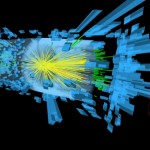
The Large Hadron Collider began its second run of experiments in June after a two-year hiatus from being the world’s largest particle accelerator. And the results are promising, achieving the highest energy ever achieved in a laboratory by colliding subatomic particles at 13 teraelectronvolts (TeV), physicists hope that these high-energy collisions may produce entirely new particles and simulate conditions seen in the early universe, according to an MIT statement.Soon to be published in Physics ...
More

To infinity and beyond.

Researchers at the Harvard John A. Paulson School of Engineering and Applied Sciences (SEAS) have designed the first on-chip metamaterial with a refractive index of zero, meaning that the phase of light can travel infinitely fast.,This new metamaterial was developed in the lab of Eric Mazur, the Balkanski Professor of Physics and Applied Physics and Area Dean for Applied Physics at SEAS, and is described in the journal Nature Photonics. “Light doesn’t typically like to be squeezed or manipula...
More

Tanvas allows you to feel what you see.

Tanvas’ surface haptics technology allows you, for the first time, to feel what you see on a touchscreen, the edges of keys, the snap of a toggle switch, the swipe of a turned page or the direction and magnitude of impacts in a game. The company is poised to change the way people interact with touchscreens across essentially every industry, from automotive to education, from retail to medical, from consumer electronics to industrial applications. The technology sends ultrasonic sound waves th...
More

Oxygen found on Comet

For the first time ever, molecular oxygen has been found on a comet. Comet 67P/Churyumov–Gerasimenko, currently being orbited by the European Space Agency's Rosetta spacecraft, is the subject of a study published in Nature. According to ESA researchers, the oxygen present in the comet's surrounding gasses has likely been there since the formation of the comet. "It is the most surprising discovery we have made so far, because oxygen was not among the molecules expected in a cometary coma," the Un...
More

MIT launch of Digital Currency Initiative.

Digital currencies like Bitcoin are poised to make a dramatic impact on most people’s lives over the next decade. They offer tremendous possibilities for growing our global economy, and, similar to the cell phone, enabling developing nations to leapfrog the tech of developed nations. But, we are at a pivotal point for this nascent technology. Getting digital currencies right and realizing the projected impact, present daunting challenges that will require significant research and development to ...
More

Personal robot

Robots are an intriguing technology that can straddle both the physical and social world of people. Inspired by animal and human behavior, MIT's robotic team's goal is to build capable robotic creatures with a "living" presence, and to gain a better understanding of how humans will interact with this new kind of technology. People will physically interact with them, communicate with them, understand them, and teach them, all in familiar human terms. Ultimately, such robots will possess the socia...
More

Latest Intuos Tablets Make Creative Dreams Come True

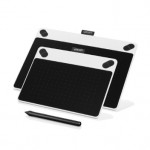
Wacom®, the world leader in pen-based creative tablets, introduced its next generation Intuos® product family to empower and inspire creative enthusiasts. The new range of Intuos Pen & Touch tablets consists of four models: Intuos Art, (for beginners with a passion for creativity), Intuos Comic, (more advanced painting and artistic skill) Intuos Photo (for photo editors who want to try new creative techniques) and Intuos Draw. (For comic and manga enthusiasts). Each model includes free...
More

MIT System- Learning spoken language

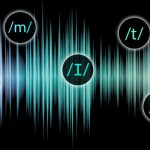
System learns to distinguish words’ and phonetic components without human annotation of training data. MIT researchers have developed a revolutionary new machine-learning system that can learn to distinguish spoken words and unlike its predecessors, it can also learn to distinguish lower-level phonetic units, such as syllables and phonemes. Every language has its own collection of phonemes, or the basic phonetic units from which spoken words are composed. The English language has somewhere...
More

How a moth slows its brain to see in the dark

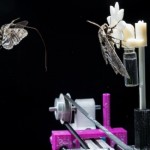
Hawkmoths are big, agile insects that hover in place expertly as they feed on nectar at dawn, dusk, and in the evenings. So, not only is it dark out, but the flowers are moving targets thanks to the breeze. Now, with the help of a robotic flower, researchers reveal how hawkmoths forage in the darkness: Their twilight or night vision is exquisitely attuned to flowers swaying in the wind. The findings, suggest that hawkmoth sight and flight evolved to perfectly match the movements of their only so...
More

Neutrinos scoop the 2015 Nobel Prize in Physics

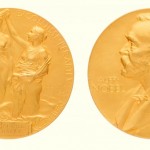
Neutrinos have the smallest mass of any known particle, and are created in several ways, including during radioactive decay, directly in the Sun’s core, and when cosmic rays from the Sun hit the Earth’s atmosphere. Thousands of billions of neutrinos are streaming through our bodies each second. The prize has been awarded to two physicists who discovered a strange property of neutrinos, which Imperial scientists are still unravelling today. Today’s physics laureates, Professor Arthur B. McDona...
More

Scientists paint quantum electronics with beams of light.

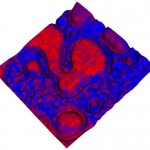
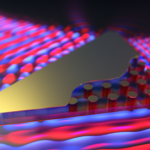
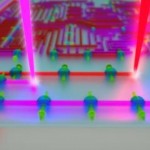
A team of scientists from the University of Chicago and Penn State University have accidentally discovered a new way of using light to draw and erase quantum-mechanical circuits in a unique class of materials called topological insulators. Researchers may be able to "paint" quantum electronics with beams of light. The electrons in topological insulators have unique quantum properties that many scientists believe will be useful for developing spin-based electronics and quantum computers. Howev...
More
Posted in Uncategorized

Soft robot to swim through Europa’s oceans

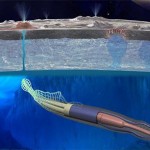
A soft, swimming robot for exploring Jupiter’s moon Europa. A Cornell engineering team has received a nine-month, $100,000 starter grant from NASA to develop a soft, swimming robot suitable for exploring the harsh conditions of other worlds, notably Jupiter’s moon Europa. An amphibious robot that can swim through the oceans of distant moons and planets could be the next iteration of self-sustaining, robotic space exploration. The Cornell team developing this otherworldly robot is led by Ma...
More

‘Hackaball’ turns programming into play.

A smart and responsive ball that children can program to invent and play games has been created. A team of industrial designers is aiming to turn "programming into play" with a hackable ball that lets kids invent their own games. "Hackaball is a tough, responsive, programmable ball that pairs with an iPad app," explains William Owen, from innovation consultants Inside it is a gyro, an accelerometer, a vibration motor, nine LEDs, a rechargeable battery, some memory and a speaker. That...
More

NASA: Studying twins for a year in space

A Northwestern-led research team is one of 10 NASA-funded groups across the country studying identical twins Scott and Mark Kelly to learn how living in space for a long period of time, such as a mission to Mars affects the human body. While Scott spends a year in space, his brother, Mark, also a veteran NASA astronaut, will remain on Earth, as a ground-based control. The study will allow researchers to understand how the long-term exposure to space impacts the human brain and body and how the s...
More

Object recognition through flexible machine learning.

At the Annual Conference on Neural Information Processing Systems, MIT researchers will present a new way of doing machine learning that enables semantically related concepts to reinforce each other. Machine learning, which is the basis for most commercial artificial-intelligence systems, is intrinsically probabilistic. An object-recognition algorithm asked to classify a particular image, for instance, might conclude that it has a 60 percent chance of depicting a dog, but a 30 percent chance of ...
More

ScanMarker – The incredible digital highlighter.

Scanmarker is a pen-shaped digital highlighter. Just slide it across any printed text, and it instantly transfers the text into any application on your computer. The pen tip is clear and relatively slim, allowing the user to see what he/she is scanning. It feels similar to a pen in your hand, but as you move over sentences on the page, it will scan them and type them onto your computer. It can retype text 30 times faster than manual typing, and your computer will read out loud what you have scan...
More

Interact with real objects by reaching through your screen.

Unreal MIT invention Inform - allows you to reach through the screen and touch things. Recently unveiled, inFORM is MIT's new scrying pool for imagining the interfaces of tomorrow. Almost like a table of living clay, the inFORM is a surface that three-dimensionally changes shape, allowing users to not only interact with digital content in meatspace, but even hold hands with a person hundreds of miles away inFORM can also interact with the physical world around it, for example moving obj...
More

‘Osmo Numbers’ Takes the Fear Out Of Figures

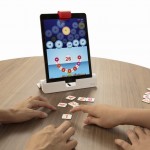
iPad Game System Osmo wants to make learning math fun. Osmo, the clever educational gadget for iPads, got a new game. Numbers teaches math with special tiles. Aiming to make math fun and engaging, Osmo Numbers offers multiple ways to solve each puzzle and real time feedback. Numbers is an under-the-sea themed game where players have to come up with equations that equal a given integer using physical tiles. If they are successful, a trapped fish is freed from a bubble. As numbers appear ...
More

Breakthrough technology for hearing impaired

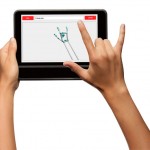
MotionSavvy is putting forward a device to help the hearing impaired listen and speak. UNI, a sensitive tablet that interprets sign language and turns it into text and audible voice. There are plenty of things to take for granted in this life, and the ability to hear is one of them. MotionSavvy, is building a tablet case that leverages the power of the Leap Motion controller in order to translate American Sign Language into English and vice versa. The entire 6-person team is deaf. Known...
More

The Combi Monitor: The Screen That Prints

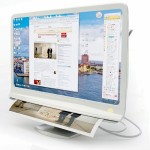
The combi Monitor is a screen that doubles up as a printer as well. The latest sleek design of the Document Extractor Combi Monitor, puts touch screen controls, paper scanning, and smart screen printing harmoniously into one computer body. This new device boasts a 27" display with a graphical user interface designed for simple touch-screen use. This monitor is just not a convergence product which is combined of printer and scanner but has the solution for saving our precious working times ...
More

Drawing in the third dimension

Storybooks and graphic novels could soon be three dimensional. A new software platform from small business Mental Canvas reimagines drawing in the digital age. The company has introduced a new concept of picture books and graphic novels which are not flat two dimensional but could let us spin the whole story in a three dimensional setup. The company believes that digital illustration does not enhance the sketch value whereas if the image is presented in 3D, it acts as a communication tool ...
More

NOAA’s Science On a Sphere is a room sized, global display system

Novel and revolutionary Science On a Sphere® (SOS) is an educational tool that uses computers and video projectors to help illustrate Earth System science to people of all ages. This tool has been developed by Dr. Sandy MacDonald along with researchers at NOAA. Unique and captivating, it's been used in science museums, visitor centers, zoos, aquariums, laboratories, and schools around the world. It consists of a spherical projection system created by NOAA which presents high-resolution vid...
More