
Quantum computers will only become useful when two curves meet: the hardware gets bigger and more reliable, and the algorithms that run on it get cheaper. A new collaboration between QuEra Computing, Harvard University and Anthropic targets the second curve, and the numbers are eye-catching. According to QuEra's November 10, 2026 announcement, AI-designed circuits cut a combined gate-and-qubit resource metric by as much as 39 times.
What the researchers actually did
The work is described...
More
Research & Scientific Innovation
Penn Cell-Membrane Trick Makes Bioelectronic Sensors 67x Faster
Electronics that talk to living tissue face an awkward bargain. To exchange signals, they have to let ions, and the water those ions travel in, move through their materials. That same water can swell and slowly wreck the device. Penn Engineering researchers say they have found a way around the bargain, and the result is striking: a transistor that is not just more durable but roughly 67 times faster.
The work, led by Assistant Professor Yuanwen Jiang and published in Nature Materials, was anno...
More
UCL Chemistry Lifts Water-Based Batteries With 4-Electron Iodine
Battery farms are a quiet backbone of the clean-energy shift. They soak up surplus solar and wind power and hand it back when the sky is dark and the air is still. Most of them rely on lithium-ion cells, the same family that powers laptops and e-bikes. A research team led by University College London has now reported a chemistry that could widen the options: a water-based battery whose iodine stores roughly twice as much charge as before.
The work was published in Nature and announced by UC...
More
HKUST’s Bionic Eye Packs 367,500 Pixels on a Curved Retina
Most cameras look at the world through a flat sensor, which is not how eyes work. Biological retinas are curved, and that curve lets a simple lens cover a wide view with little distortion. Researchers at the Hong Kong University of Science and Technology (HKUST) have now built a bionic eye that follows that design, with nearly 400,000 light-sensing pixels on a hemispherical surface.
The team's results, published in Nature Materials and announced by HKUST on November 13, 2026, combine full-c...
More
UChicago’s Plastic-Wrap Trick Makes Stretchy OLEDs Brighter
The soft, pliable feel of plastic wrap and vinyl flooring comes from a class of additives called plasticizers. Researchers at the University of Chicago have now borrowed that trick for a very different job: making light-emitting polymer films brighter and stretchier at the same time. The result, described by the university and published in Nature Communications, points to a simple route toward displays that can bend with a wrist, a sleeve, or a robot's skin.
According to the UChicago News a...
More
CUHK’s Physics-Guided AI Designs Tough Materials From Disorder
Engineers have long designed tough materials from tidy grids, because order is easy to predict. Nature often does the opposite: bone and spider silk owe part of their resilience to irregular, messy structure. A team led by The Chinese University of Hong Kong has now used physics-guided AI to design lightweight materials that borrow that lesson, and the printed results were tougher than the team had targeted.
According to CUHK's press release, the study appeared in Physical Review X and was ...
More
McGill’s Bacteria Biocomputer Explores Many Answers at Once
What if the processors in a computer were alive, and the way to add more of them was simply to let them divide? A McGill University-led team has built a biocomputer that does exactly that. Instead of testing possible answers one after another, it lets bacteria spread through a maze of microscopic channels and explore many routes at once.
The work, described by McGill's Faculty of Engineering, is the product of a 20-year collaboration across Canada, Europe, the United Kingdom and Australia. ...
More
Weizmann Teaches Matter New Moves With DNA Programs
Most materials do what their composition tells them to do. Weizmann Institute of Science researchers have now built materials that follow a genetic program instead. In two studies announced on November 9, 2026, the lab of Dr. Alexandra Tayar showed that DNA can switch a moving, living-like material on, pace its motion, and even synchronize it across millimeters.
The work, published in Nature Materials and Nature Physics, targets a field called active matter, where tiny molecular motors burn...
More
IBM Puts Its Most Advanced Quantum Computer in Chicago
Quantum computers usually live in a handful of corporate labs, far from the people who might use them. On November 6, 2026, IBM, the University of Chicago, the State of Illinois and the Illinois Quantum and Microelectronics Park (IQMP) unveiled an IBM Quantum System Two in Chicago, the company's first quantum computer in Illinois and, in IBM's words, its most advanced system available.
The machine is now operational at Hyde Park Labs, hosted by the University of Chicago, and is built around...
More
HKUST Perovskite Keeps Electron Spin Alive 300x Longer
Electronics keep asking for more speed at lower energy, and silicon is running out of room. One alternative is to compute with the spin of electrons rather than only their charge. The catch is that spin information normally fades in a flash unless a material is chilled to extreme temperatures. On November 9, 2026, the Hong Kong University of Science and Technology (HKUST) announced a perovskite design that holds spin polarization about 300 times longer at room temperature.
The study, led by...
More
Rutgers Study: Iron-Nickel Catalyst Keeps Zinc-Air Cells Running
Zinc-air batteries are the quiet workhorses inside hearing aids: cheap, compact and, for the most part, thrown away after one use. A research team that includes a Rutgers professor now reports a way to make a rechargeable version run steadily for 1,000 hours, without leaning on platinum-style precious metals. The Rutgers Climate and Energy Institute summarized the work on November 4, 2026.
The study appeared in the journal Advanced Energy Materials. Tewodros Asefa, an RCEI affiliate and pro...
More
HKU Builds a Megawatt Power Module From Gallium Oxide
Every phone charger, electric car and power grid relies on semiconductor switches that control electricity. For decades those switches have been made of silicon, and silicon is nearing its physical limits. Engineers at The University of Hong Kong (HKU) now report a module built on a newer material, gallium oxide, that switched 1,000 volts and 1,000 amperes, a peak of one megawatt. According to HKU's announcement, it is the first time a module made from this class of material has reached tha...
More
MIT’s WorldParticle Simulates Sand, Fluids and Proteins in One Model
Ask a scientist to simulate a splash of water, a collapsing sand dune and a folding protein, and the honest answer is that those are three different software projects. Each phenomenon has its own governing equations, and each simulator is hand-built around them. A team from MIT and the University of British Columbia (UBC) now says one AI system can handle all three. According to MIT News, the system is called WorldParticle, and its authors describe their goal as a "GPT moment for simulation...
More
AURORA Puts AI Co-Scientists in Cancer Grand Challenges Labs
Science has a bottleneck that has little to do with lab benches: there is simply too much published evidence and too much data for any research team to read, compare and connect by hand. On November 6, 2026, Cancer Research UK announced that three of its Cancer Grand Challenges teams will begin a rigorous test of whether AI "co-scientists" can help close that gap.
The test is the next stage of Project AURORA, an initiative the charity describes as an £8 million project. A team at Harvard Un...
More
Dutch startup plans first 3D printed steel bridge to span Amsterdam canal.

A Dutch startup has unveiled plans to use robotic printers to weld the structure drop-by-drop in the first large-scale test of the technology. The company has unveiled plans to build the world’s first 3D-printed bridge across an Amsterdam canal, a technique that could become standard on future construction sites. Using robotic printers “that can ‘draw’ steel structures in 3D, we will print a (pedestrian) bridge over water in the centre of Amsterdam,” engineering startup company MX3D said in a st...
More
Xerox printed memory labels aim to curb counterfeiting.
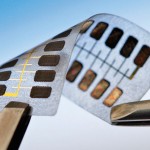
Xerox on Wednesday announced a pair of printed packaging labels with embedded memory designed to help curb counterfeiting. Also known as printed memory, the labels are equipped with up to 36 bits of rewritable memory. That may not sound like much in a world that deals largely in gigabytes and terabytes but according to Xerox, it’s enough to store up to 68 billion points of data. The product line-up is made up of the aforementioned Xerox Printed Memory and the second offering is the same except t...
More
3D printed objects may be toxic

Parts produced by some commercial 3D printers may be toxic, according to a new study that raises concerns about how to dispose of parts and waste materials from the devices which are becoming increasingly popular. Researchers at the University of California, Riverside studied two common types of 3D printers, one that melts plastic to build a part, and another that uses light to turn a liquid into a solid part. They found that parts from both types of printers were measurably toxic to zebrafish e...
More
New graphene based inks for high-speed manufacturing of printed electronics.
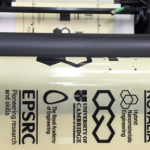
Developed by researchers at the University of Cambridge in collaboration with Cambridge-based Technology Company Novalia, the method allows graphene and other electrically conducting materials to be added to conventional water-based inks and printed using typical commercial equipment. This is the first time that graphene has been used for printing on a large-scale commercial printing press at high speed. A low-cost, high-speed method for printing graphene inks using a conventional roll-to-roll p...
More
ScanMarker – The incredible digital highlighter.
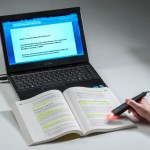
Scanmarker is a pen-shaped digital highlighter. Just slide it across any printed text, and it instantly transfers the text into any application on your computer. The pen tip is clear and relatively slim, allowing the user to see what he/she is scanning. It feels similar to a pen in your hand, but as you move over sentences on the page, it will scan them and type them onto your computer. It can retype text 30 times faster than manual typing, and your computer will read out loud what you have scan...
More
World’s first 3D-printed electric car
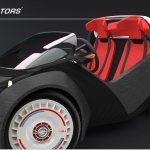
Order and pick up your customized personal car. That's the vision of Arizona-based company Local Motors.
Local Motors plans to transform the traditional automotive world with the launch of a three dimensional (3D) printed car next year. Strati is an electric car developed by Local Motors and manufactured in collaboration with Cincinnati Incorporated and Oak Ridge National Laboratory. It is made from ABS plastic that has been enforced with carbon fibre.
The car was manufactured using a Larg...
More
Tires That Cannot Go Flat

Biomimicry, the science that imitates nature to create new products, is the field responsible for new, airless, tubeless, tires that cannot go flat.
Resilient Technologies, a Wisconsin based company, is behind this invention. The inspiration for the design of the tire was found in nature: the honeycomb. Instead of using a pressurized air cavity, the tire design relies on a geometric pattern of six-sided cells that are arranged in a matrix like a honeycomb.
The tire has uniform flexibility ...
More