NASA’s Cassini Probe Spies an ocean under the Icy shell of Saturn’s moon Enceladus

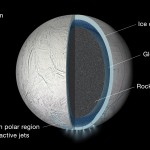
New research using data from its Cassini spacecraft shows a global ocean lies beneath the icy crust of Saturn’s moon Enceladus. NASA’s Cassini mission has confirmed the presence of what it termed a “global ocean” beneath the icy crust of Saturn’s moon, Enceladus and it has managed to deduce the presence of the ocean after analyzing new data from the Cassini mission. This exciting discovery expands the region of habitability for Enceladus from just a regional sea under the South Pole to all of...
More
Posted in Uncategorized

Delivering missing protein heals damaged hearts in animals

Researchers have discovered that a particular protein, Fstl1, plays a key role in regenerating dead heart-muscle cells. Scientists at the Stanford University School of Medicine and their colleagues have enabled damaged heart tissue in animals to regenerate by delivering a protein to it via a bioengineered collagen patch. There is currently no effective treatment to reverse the scarring in the heart after heart attacks. Heart attacks cause millions of deaths annually worldwide and are predi...
More
Posted in Uncategorized

Stem Cells Used to Strengthen Babies’ Bones in the Womb

The first clinical trial injecting fetal stem cells into babies in the womb will start in January and will be led by Sweden's Karolinska Institute and in the UK by Great Ormond Street Hospital. The stem cells will come from terminated pregnancies. It is hoped the cells, which are able to transform into a range of tissues, will lessen symptoms of incurable brittle bone disease. Severe brittle bone disease is rare but can be so devastating that many women decide to end their pregnancy on being ...
More
Posted in Uncategorized

Scientists reveal birth date of earth’s inner core.

A reassessment of ancient rocks has led scientists to estimate that Earth's inner core started to form earlier than was previously thought, around 1.3 billion years ago. As it started to freeze, the core began generating a bigger magnetic field, which continues to today. Earth's active core contrasts sharply with that of our neighbor Mars, whose strong early magnetic field died around four billion years ago. Our planet's magnetic field is generated deep in the planet by the turbulent motion o...
More
Posted in Uncategorized

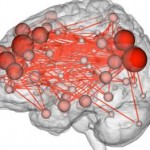
Unique brain ‘Fingerprint’ offers new method of identification.

Neurologists at Yale University have discovered that it is possible to identify an individual's unique identity by mapping brain activity. Unlike a fingerprint, which is based on the physical structure of a finger or thumb, a brain profile is based on brain activity, which is similarly unique. The research, published in the journal Nature Neuroscience, used data obtained through functional MRI (fMRI) scans to build an individual's connectivity profile. Neuroscientists have found that they can...
More
Posted in Uncategorized

Coffee lowers risk of Parkinson’s, type 2 Diabetes, Five Cancers, and More

Harvard scientists have had coffee under the microscope for years, and last year announced the discovery of six new human genes that relate to coffee, reconfirming existence of two others previously identified. The long-running Harvard Nurses Health Study has found that coffee has protective qualities against type 2 diabetes and cardiovascular disease, and investigators are revisiting a 2001 study finding that it can also protect against Parkinson’s disease. Powell notes that this research at Ha...
More
Posted in Uncategorized

How the brain keeps time

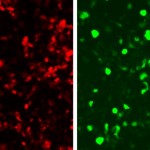
Neuroscientists at MIT and Columbia University have now figured out how neurons in one part of the brain measure time intervals and accurately reproduce them. Keeping track of time is critical for many tasks, such as playing the piano, swinging a tennis racket, or holding a conversation. The researchers found the lateral intraparietal cortex (LIP), which plays a role in sensorimotor function, represents elapsed time, as animals measure, and then reproduce a time interval. They also demonstrated ...
More
Posted in Uncategorized

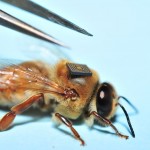
Tiny technology helps save the honey bees.

Microsensors may be the key to solving the mystery behind the collapse of honeybee colonies. Australian researchers announced  that they have attached tiny, top-of-the-line trackers to about 10,000 healthy honeybees in an effort to find out what is driving a decline in the pollinators’ global population. The experiment, supported by an international group of scientists, farmers, beekeepers, and tech companies, is the latest to use tracking and tagging technology to study animal behavior and resp...
More
Posted in Uncategorized

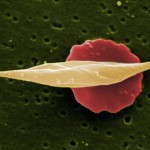
Gene-editing study reveals pathway that could help short circuit blood disorder

CRISPR is able to circumvent the genetic mutation that causes sickle cell disease. The latest Sickle Cell Research from Dana-Farber/Boston Children’s Cancer and Blood Disorders Center is that they have found that changes to a small stretch of DNA may circumvent the genetic defect behind sickle cell disease. They are developing gene-editing approaches to treat the disease and other hemoglobin disorders. This stretch of DNA, called an enhancer, controls a molecular switch that determines whe...
More
Posted in Uncategorized

Tension helps heart cells develop normally in the lab.

Stanford researchers Beth Pruitt and Alexandre Ribeiro have discovered that a heart cell matured from stem cells in the lab looks and behaves like a normal adult heart cell when grown in a long, thin shape and on a surface that provides some tension. Pruitt and her colleagues at the Stanford University School of Medicine began working on the problem of how to develop more normal looking heart cells through a Stanford Bio-X grant in 2010. At the time, their goal was to find ways of probing the me...
More
Posted in Uncategorized

Big range of behaviors for tiny graphene pores

Researchers at MIT have created tiny pores in single sheets of graphene that have an array of preferences and characteristics similar to those of ion channels in living cells. The surface of a single cell contains hundreds of tiny pores, or ion channels, each of which is a portal for specific ions. Ion channels are typically about 1 nanometer wide. By maintaining the right balance of ions, they keep cells healthy and stable. Like biological channels, graphene pores are selective for certain type...
More
Posted in Uncategorized

Self-Propelling healing powder stops internal bleeding.

Scientists at the University of British Columbia have developed a self-propelled powder capable of delivering coagulants to hard-to-reach severe bleeding sites, like a ruptured uterus or severed aorta. Kastrup and his research partners developed gas-generating calcium carbonate micro-particles, which can bind with tranexamic acid, a clotting agent, and deliver it to internal bleeding sources. UBC researchers have created the first self-propelled particles capable of delivering coagulants agai...
More
Posted in Uncategorized

Miniature human kidney grown in a dish.

Miniature human kidneys have been grown in a Petri dish using stem cells as the starting point, report scientists in Australia. The mini-kidneys, measuring up to 1cm, were the equivalent of the developing organ in a 13-week-old foetus. The team say the findings, published in the journal Nature, could lead to new ways of testing drugs and eventually a way of replacing damaged kidneys. Experts said there was still a long way to go. The scientists were mimicking the process that takes place insi...
More
Posted in Uncategorized

On Understanding Sleep

Scientists find what controls waking up and going to sleep. The latest finding from an Indian-American circadian rhythms expert at Northwestern University is that he has discovered how an animal’s biological clock wakes it up in the morning and puts it to sleep at night. In a study of brain circadian neurons that govern the daily sleep-wake cycle’s timing, doctor Ravi Allada and his team found that high sodium channel activity in these neurons during the day turn the cells on and ultimatel...
More
Posted in Uncategorized

WATCHMAN device offers option to patients with irregular heart beats

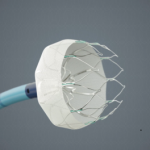
FDA approved WATCHMAN Left Atrial Appendage Closure Device is a first-of-its-kind, proven alternative to long-term warfarin therapy for stroke risk reduction in patients with non-valvular atrial fibrillation. The WATCHMAN™ LAAC Device is designed specifically for the left atrial appendage. Featuring an intra-LAA design to avoid contact with the left atrial wall, the WATCHMAN device is engineered to conform to the unique anatomy of the LAA to reduce embolization risk. The device offers a new stro...
More
Posted in Uncategorized

Fovista® Treatment for wet Age-Related Macular Degeneration (AMD).

Fovista is a promising new treatment for wet AMD is currently in Phase 3 clinical trials. It is designed to target platelet derived growth factor (PDGF) in combination with anti-VEGF drugs to disrupt the formation of abnormal new blood vessels in wet AMD. Patients with wet AMD are helped by drugs that block the growth and leakage of abnormal blood vessels. Currently, the most frequently used drugs that are injected into the eye are Eylea®, Lucentis®, or Avastin®. On average, patients who rece...
More
Posted in Uncategorized

The Aethlon Hemopurifier

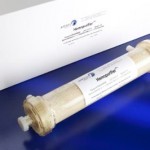
A new device that provides the broad-spectrum elimination of infectious viruses from the circulatory system of infected individuals has been invented. Aethlon Medical, Inc. (OTCQB:AEMD), the pioneer in developing targeted therapeutic devices to address infectious diseases and cancer,  announced that the first patient enrolled in the Company's FDA approved feasibility study has completed their full Hemopurifier® treatment protocol without any device-related adverse events. The Aethlon Hemop...
More
Posted in Uncategorized

Protein-based sensor detects viral infection, kills cancer cells

A revolutionary discovery that protein-based sensor could detect viral infection or kill cancer cells. MIT biological engineers is that they have developed a modular system of proteins that can detect a particular DNA sequence in a cell and then trigger a specific response, such as cell death. This system can be customized to detect any DNA sequence in a mammalian cell and then trigger a desired response, including killing cancer cells or cells infected with a virus. This technology is ...
More
Posted in Uncategorized

A noninvasive way to measure pressure in the brain.

MIT researchers team up with Boston Medical Center and Philips to test a noninvasive way to measure intracranial pressure. Current methods to check for increased pressure in a patient’s brain are invasive. One widely used technique is to drill a hole in the skull to insert a catheter or sensor into the brain tissue. Because of the risk of brain injury and infection, doctors typically only measure intracranial pressure or ICP when a patient is very sick, even though knowledge of this pressure cou...
More
Posted in Uncategorized

Researchers disguise drugs as platelets to target Cancer

The latest technique that coats anticancer drugs in membranes made from a patient’s own platelets has been discovered. It allows the drugs to last longer in the body and attack both primary cancer tumors and the circulating tumor cells that can cause a cancer to metastasize .The work was tested successfully in an animal model. “There are two key advantages to using platelet membranes to coat anticancer drugs,” says Zhen Gu, corresponding author of a paper on the work and an assistant professor i...
More
Posted in Uncategorized

UV-light enabled catheter fixes heart defects without surgery

The newly designed catheter device utilizes UV light technology and can be used to place the patch in a beating heart without open heart surgery. Researchers from Boston Children’s Hospital, the Wyss Institute for Biologically Inspired Engineering at Harvard University, Harvard John A. Paulson School of Engineering and Applied Sciences (SEAS) and the Karp Lab at Brigham and Women’s Hospital have jointly designed a specialized catheter for fixing holes in the heart using a biodegradable adhesive ...
More
Posted in Uncategorized

New prosthetic heart valve offers alternative to open heart surgery

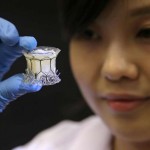
A team of researchers from the National University of Singapore (NUS) have developed a novel prosthetic heart valve, known as VeloX, which can be implanted through a small incision for the treatment of a serious heart valve disorder called mitral regurgitation. This is a condition in which the mitral valve on the left side of the heart does not close properly. The device is particularly beneficial to patients who are of high surgical risk or are unsuitable for existing clinical interventions. ...
More
Posted in Uncategorized

Synthetic tumor environments add realism to Cancer research

Scientists at the University of Illinois have developed a new technique to create hydrogels, which can realistically and quickly recreate microenvironments found across biology. To illustrate the potential of their method, the Illinois team mixed breast cancer cells and macrophages that signal cancer cells to spread and grow into a tumor. They were able to observe how differently cells act in the three-dimensional, gel-like environment, which is much more like body tissues than the current resea...
More
Posted in Uncategorized

Killing HIV by targeting its sweet tooth

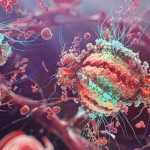
Scientists have discovered that HIV has a voracious sweet tooth, which may be its Achilles’ heel, reports a new study from Northwestern Medicine and collaborators. After the virus invades an activated immune cell, it craves sugar and nutrients from the cell to replicate and fuel its wild growth throughout the body. Teams from Northwestern University and Vanderbilt University have reportedly discovered a way to block the virus from feasting on the glucose in an infected patient’s bloodstream. ...
More
Posted in Uncategorized

Nature inspires first artificial molecular pump

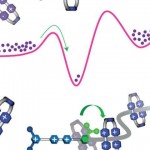
The first artificial molecular pump that uses non-equilibrium chemistry was developed by a team of Northwestern scientists, in which molecules pump other molecules. This tiny machine is no small feat. The pump one day might be used to power other molecular machines, such as artificial muscles. The new machine mimics the pumping mechanism of life-sustaining proteins that move small molecules around living cells to metabolize and store energy from food. For its food, the artificial pump draws p...
More
Posted in Uncategorized

Viruses are Alive

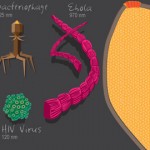
A new analysis supports the hypothesis that viruses are living entities that share a long evolutionary history with cells. The study offers the first reliable method for tracing viral evolution back to a time when neither viruses nor cells existed in the forms recognized today. Until now, viruses have been difficult to classify because of the abundance and diversity of viruses. Less than 4,900 viruses have been identified and sequenced so far, even though scientists estimate there are more th...
More
Posted in Uncategorized

Level of your hunger could determine your bone structure.

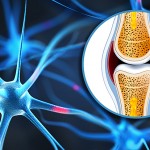
Yale School of Medicine researchers have found that Brain neurons which control hunger and appetite also regulate bone mass. “We have found that the level of your hunger could determine your bone structure,” said one of the senior authors, Tamas L. Horvath, the Jean and David W. Wallace Professor of Comparative Medicine, and professor of neurobiology and obstetrics, gynecology, and reproductive sciences.“The less hungry you are, the lower your bone density, and surprisingly, the effects of th...
More
Posted in Uncategorized

New Harvard research says butter apparently isn’t better

Scientists have discovered that those who replaced saturated fats with whole grains or unsaturated fats found in vegetable oils and nuts, had a lowered risk of heart disease. While research last year seemed to exonerate butter as being a health food, recent research out of Harvard has suggested otherwise. The findings contradict a controversial paper published in 2014 that said there was little evidence that reducing saturated fat lead to lessened risk for heart disease. But researchers said ...
More
Posted in Uncategorized

Scientists identify key culprit responsible for dengue virus infections.

Scientists at the University of California, Berkeley, have identified a key culprit responsible for the fluid loss and resulting shock that are the hallmark of severe and potentially fatal dengue virus infections. A team of researchers led by molecular virologist Eva Harris, a UC Berkeley School of Public Health professor in the Division of Infectious Diseases and Vaccinology, presented new evidence that the guilty party is a protein secreted by cells infected with the mosquito-borne dengue v...
More
Posted in Uncategorized

Young scientist bags Google science prize for Ebola express detection kit.

Olivia Hallisey of Greenwich, won the top prize for her Ebola test kit in the fifth annual Google Science Fair, which honored nine students aged 13 to 18 from all over the world last week. The Connecticut-based sophomore from Greenwich High School invented the much needed "novel temperature-dependent, rapid, simple and inexpensive Ebola detection platform." It could soon be much easier to diagnose Ebola thanks to this student’s new invention. Aid workers in Ebola-stricken regions could soon b...
More
Posted in Uncategorized