GMO Chickens Could Block Bird Influenza and Prevent Outbreaks

The latest innovative development by Researchers from the University of Edinburgh and the University of Cambridge are genetically modified glow-in-the-dark chickens developed in order to block the bird flu. The genetically modified organism chickens are given a shot of a fluorescent protein. The modified birds contain a protein to differentiate themselves from other chickens. Under ultraviolet light, their beaks and feet emit a haunting green hue. This sets them apart from regular birds To...
More
Posted in Uncategorized

New Modification Method Could Bring Lifesaving Medications to Market

A safe and efficient technique using cellulose to get drugs to safely reach their target to save lives was created. Xiangtao Meng, a fourth-year graduate student in the College of Natural Resources and Environment has developed a new technique that can get drugs to market, and to patients, that would otherwise fail. Taking medications orally is typically much more practical for patients than methods like intravenous injections, but the bioavailability of a drug the amount that actually rea...
More
Posted in Uncategorized

Latest Intuos Tablets Make Creative Dreams Come True

Wacom®, the world leader in pen-based creative tablets, introduced its next generation Intuos® product family to empower and inspire creative enthusiasts. The new range of Intuos Pen & Touch tablets consists of four models: Intuos Art, (for beginners with a passion for creativity), Intuos Comic, (more advanced painting and artistic skill) Intuos Photo (for photo editors who want to try new creative techniques) and Intuos Draw. (For comic and manga enthusiasts). Each model includes free...
More
Posted in Uncategorized

New Technology to Monitor Cancer Cells

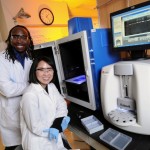
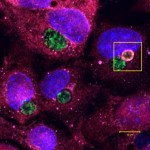
Deborah Kelly, a biologist at Virginia Tech Carilion Research Institute, has developed a "microchip-based toolkit" to watch the breast cancer affiliated BRCA1 gene act inside a human breast cancer cell. This new technology allows scientists to watch cancer cells in action at unprecedented resolution. They can now peer closely into the world of cells and molecules within a native, liquid environment. Kelly and colleagues have developed a way to isolate biological specimens in a flowing, liquid en...
More
Posted in Uncategorized

Temperature Increase Could Lead to Drastic Sea Level Rise

Antarctic ice shelf collapse and unstoppable sea level rise 'very likely' without tough climate action, say scientists. Warming of 1.5 to 2 degrees Celsius above current levels could lead to "unstoppable" sea level rise that would last for thousands of years. The new model, published today in Nature, shows that such temperatures would result in 80 to 85 per cent loss of major Antarctic ice shelves, something that is possible by the end of the century under existing IPCC scenarios. Collapse of th...
More
Posted in Uncategorized

Seasonal paradox – why MS symptoms may improve as days get shorter

A new approach regarding Melatonin for MS Symptom Seasonal Variations Harvard-affiliated researchers from the Ann Romney Center for Neurologic Diseases at BWH wanted to understand why symptoms of multiple sclerosis change with the seasons, improving as the days get shorter. They have found an explanation that could lead to a deeper understanding of the disease and more targeted treatment options for patients. Multiple sclerosis is a disease that affects the central nervous system, includin...
More
Posted in Uncategorized

Disappearing Carbon Circuits on Graphene

Georgia Tech researchers have deposited carbon atoms onto graphene using a focused electron beam process to create patterns that evolve over time on the graphene. The patterns could be used to make reconfigurable electronic circuits, which evolve over a period of hours before ultimately disappearing into a new electronic state of the graphene. Graphene is also made up of carbon atoms, but in a highly-ordered form. Beyond allowing fabrication of disappearing circuits, the technology could be u...
More
Posted in Uncategorized

Kidney created from stem cells

Harvard Stem Cell Institute (HSCI) principal faculty at Brigham and Women’s Hospital (BWH) have established a highly efficient method for making kidney structures from stem cells derived from skin taken from patients. The kidney structures formed could be used to study abnormalities of kidney development, chronic kidney disease, and the effects of toxic drugs, and could be incorporated into bioengineered devices to treat patients with acute and chronic kidney injury. In the longer term, these me...
More
Posted in Uncategorized

Potential breakthrough in bid for Alzheimer’s treatment.

A potential drug target has been discovered that could help scientists develop radical new treatments for Alzheimer’s disease. Blocking activity of the protein, known as GPR3, results in toxic deposits thought to play a key role in the disease clearing away from the brain. Laboratory mice suffering from Alzheimer’s-like symptoms showed improvements in learning, memory and social skills when they lacked GPR3, according to research published in the journal Science Translational Medicine. Further t...
More
Posted in Uncategorized

UBC students develop “pro-bee-otic”, a probiotic for bees

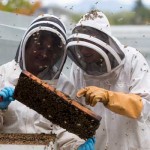
University of British Columbia students have developed a probiotic for honey bees, which they’ve coined the ‘pro-bee-otic.’ This innovative study by a group of UBC students is regarding the development a probiotic for honey bees. This is a particularly important solution, as global bee declines are a major problem and so much of the food we eat depends on pollination by insects. The students want to address this important issue and they feel that betting probiotics could be the key to prot...
More
Posted in Uncategorized

Scientists discover how to trap cancer cells before they spread.

Researchers at the Francis Crick Institute and the University of Copenhagen have discovered a new way to 'fence in' a tumor and help stop cancer cells from spreading. Tumors cause cells called fibroblasts to stiffen the surrounding tissue so that cancer cells can grip it, allowing them to tunnel through to the blood stream and spread around the body. They showed that adding experimental drugs, reprogrammed fibroblasts helped in stopping them from 'stiffening' the tissue around tumors. This he...
More
Posted in Uncategorized

UCSB researchers create nanoparticles to act like blood platelets

Researchers at the University of California, Santa Barbara have created nanoparticles that resemble blood platelets that can be used to speed up the healing process and create clots faster to decrease blood loss from an injury. They have turned to the human body’s own mechanisms for inspiration in dealing with the necessary and complicated process of coagulation. By creating nanoparticles that mimic the shape, flexibility and surface biology of the body’s own platelets, they are able to accelera...
More
Posted in Uncategorized

How a moth slows its brain to see in the dark

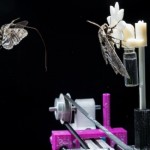
Hawkmoths are big, agile insects that hover in place expertly as they feed on nectar at dawn, dusk, and in the evenings. So, not only is it dark out, but the flowers are moving targets thanks to the breeze. Now, with the help of a robotic flower, researchers reveal how hawkmoths forage in the darkness: Their twilight or night vision is exquisitely attuned to flowers swaying in the wind. The findings, suggest that hawkmoth sight and flight evolved to perfectly match the movements of their only so...
More
Posted in Uncategorized

Neutrinos scoop the 2015 Nobel Prize in Physics

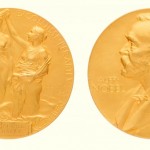
Neutrinos have the smallest mass of any known particle, and are created in several ways, including during radioactive decay, directly in the Sun’s core, and when cosmic rays from the Sun hit the Earth’s atmosphere. Thousands of billions of neutrinos are streaming through our bodies each second. The prize has been awarded to two physicists who discovered a strange property of neutrinos, which Imperial scientists are still unravelling today. Today’s physics laureates, Professor Arthur B. McDona...
More
Posted in Uncategorized

NASA’S New Horizons finds blue skies and red water ice on Pluto.

Images sent back by NASA’s New Horizons spacecraft last week reveal that Pluto has blue atmospheric hazes and water ice on its surface. Pluto’s haze layer shows its blue color in this picture taken by the New Horizons Ralph/Multispectral Visible Imaging Camera (MVIC). The high-altitude haze is thought to be similar in nature to that seen at Saturn’s moon Titan. The source of both hazes likely involves sunlight-initiated chemical reactions of nitrogen and methane, leading to relatively small, ...
More
Posted in Uncategorized

Scientists produce clearest-ever images of enzyme that plays key roles in aging, cancer.

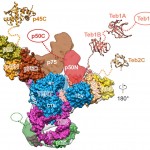
An enzyme called telomerase plays a significant role in aging and most cancers, but until recently many aspects of the enzyme’s structure could not be clearly seen. Scientists from UCLA and UC Berkeley have produced images of telomerase in much higher resolution than ever before, giving them major new insights about the enzyme. Their findings, could ultimately lead to new directions for treating cancer and preventing premature aging. “Many details we could only guess at before, we can now see...
More
Posted in Uncategorized

Brain cells can be activated by a prosthetic hand.

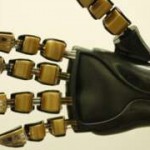
Researchers from Stanford University have improved artificial hands by attaching some flexible sensors on the fingertips, which can generate some electrical signals that can communicate with our brain directly instead of via a processor or a computer to translate back the signals to our brain. Engineers have built a flexible sensor that detects touch and, just like skin, produces electrical pulses that get faster when the pressure increases. They have also used those pulses to drive neuronal ...
More
Posted in Uncategorized

Predictive technique could help determine breast cancer therapies

Researchers at the Georgia Institute of Technology have developed a predictive model that can provide doctors with an "invasiveness index" for cancer based on blood samples from individual patients, according to a new study. The test is based on chemical expression by specific cells in the body that help cancer move from the breast to other parts of the body. We want women to have more information to make a personal decision beyond the averages calculated for an entire population," said Manu ...
More
Posted in Uncategorized

COMPASS method points researchers to protein structures.

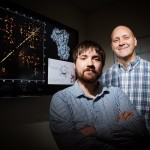
University of Illinois researchers developed a new approach, dubbed COMPASS that points directly to a protein’s likely structure using a combination of advanced molecular spectroscopy techniques, predictive protein-folding algorithms and image recognition software. Led by U. of I. chemistry professor Chad Rienstra, the team published its results in the journal Structure. “We’ve taken a process that would take months and brought it down to hours,” said Joseph Courtney, an Illinois graduate studen...
More
Posted in Uncategorized

Malaria protein may hold key for cancer cure.

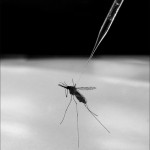
Danish scientists who were working on ways to fight malaria in pregnant women have accidentally discovered that the malaria protein they were using in their vaccine, when armed with a toxin, could kill cancer cells. The test was conducted on mice, and showed that the malaria protein first attached itself to the carbohydrate of the cancer cell, which later was killed off by the toxin. They hope to be able to begin tests on humans in the next four years. For decades, scientists have been search...
More
Posted in Uncategorized

Skin Cells Converted into Placenta-Generating Cells

Researchers at the Hebrew University of Jerusalem successfully converted skin cells into placenta-generating cells using the reprogramming method. The intent is to help women who have recurrent miscarriage and placental dysfunction diseases give birth to healthy babies, although researchers said more work will need to be done before that is possible. The placenta is the least understood human organ, but arguably one of the most important ones. It influences not only the health of a woman and ...
More
Posted in Uncategorized

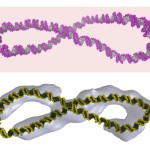
Supercoiled DNA is far more dynamic than the “Watson-Crick” double helix

Researchers have imaged in unprecedented detail the three-dimensional structure of supercoiled DNA, revealing that its shape is much more dynamic than the well-known double helix. As reported online today in the journal Nature Communications, the simulations also show the dynamic nature of DNA, which constantly wiggles and morphs into different shapes, a far cry from the commonly held idea of a rigid and static double helix. Improving our understanding of what DNA looks like when it is in the...
More
Posted in Uncategorized

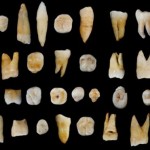
Fossil teeth place humans in Asia “20,000 years early.”

The discovery of 47 human teeth from a cave in southern China has rewritten the narrative of our ancestors' spread out of Africa. Scientists excavating an area in Daoxian say the fossils belong to modern humans and date to at least 80,000 years ago. The date is 20,000 years earlier than had been previously thought, and fills a gap our knowledge on the spread of modern humans around the world. It suggests that modern humans reached southern China from Africa long before they had arrived in northe...
More
Posted in Uncategorized

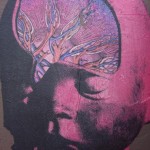
How the Brain Controls Sleep

MIT neuroscientists have discovered a brain circuit that can trigger small regions of the brain to fall asleep or become less alert, while the rest of the brain remains awake. This circuit originates in a brain structure known as the thalamic reticular nucleus (TRN), which relays signals to the thalamus and then the brain’s cortex, inducing pockets of the slow, oscillating brain waves characteristic of deep sleep. Slow oscillations also occur during coma and general anesthesia, and are associate...
More
Posted in Uncategorized

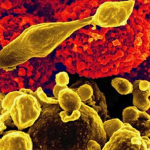
Novel theoretical approach to reduce antibiotic resistance.

Moffitt Cancer Center researchers have developed novel theoretical approach to reduce antibiotic resistance. The increasing rate of antibiotic resistance and slowing discovery of novel antibiotic treatments presents a growing threat to public health. It is estimated that each year in the United States 2 million people become infected with bacteria that are resistant to one or more types of antibiotics, and at least 23,000 people will die because of these infections. This problem is being exacerb...
More
Posted in Uncategorized

GM pig organs could soon be transplanted into humans

Pig organs could soon be transplanted into patients after Harvard University scientists discovered a way to genetically modify pig DNA so it is more compatible with humans. Scientists have spent decades trying to engineer pig tissue so that it would not be rejected by the human body, but the immune system has always prevented success. A major hurdle in transplanting pig organs into humans has been overcome by the scientists. All pig DNA carries the porcine endogenous retrovirus which infects ...
More
Posted in Uncategorized

Antiviral compound fully protects monkeys from Ebola

Rhesus monkeys were completely protected from the deadly Ebola virus when treated three days after infection with a compound that blocks the virus's ability to replicate. These encouraging preclinical results suggest the compound, known as GS-5734, should be further developed as a potential treatment, according to research findings to be presented tomorrow at the IDWeek conference. Travis Warren, Ph.D., a principal investigator at the U.S. Army Medical Research Institute of Infectious Disease...
More
Posted in Uncategorized

Molecular “kiss of death” wins Noble Prize in Chemistry

Three researchers who unraveled the mechanism behind a molecular kiss of death, a tag that marks proteins for destruction, have been awarded this year's Nobel Prize in Chemistry. Irwin Rose of the University of California, together with Aaron Ciechanover and Avram Hershko from the Israel Institute of Technology in Haifa, transformed cell biology during the early 1980s through their studies of how proteins are broken down inside cells. Their work sparked new ideas about how cells regulate themsel...
More
Posted in Uncategorized

Scientists explain earthworms’ ability to counteract plant toxins

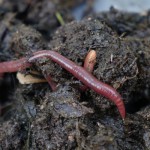
Earthworms have chemical compounds that help them overcome toxic plant defenses to digest difficult leaf litter. Researchers have identified unique chemical compounds in the digestive tracts of earthworm species which counteract the defensive toxins produced by plants, allowing earthworms to consume them safely. Many plants produce defensive chemicals called polyphenols. By binding gut enzymes, polyphenols inhibit the digestion of plant matter. Dead plants retain these chemicals even as th...
More
Posted in Uncategorized

How the brain loses and regains consciousness

Massachusetts General Hospital (MGH) investigators have identified specific EEG (electroencephalogram) signatures that indicate when patients lose and regain consciousness under the general anesthetic drug propofol. The study reveals brain patterns produced by the general anesthesia drug which could help doctor’s better monitor patients. "We have discovered highly structured EEG patterns that indicate when people are sedated during administration of propofol, when they are unconscious and whe...
More
Posted in Uncategorized