Search for better biofuels microbe’s leads to the human gut

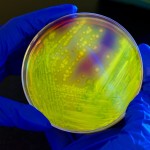
Microbes in the human gut can digest fiber in order to ferment them into nutrients that nourish human cells. The latest research by scientists is that microbes in the human gut can digest fiber, breaking it down into simple sugars in order to ferment them into nutrients that nourish human cells. Scientists have scoured cow rumens and termite guts for microbes that can efficiently break down plant cell walls for the production of next-generation biofuels, but some of the best microbes actua...
More
Posted in Uncategorized

Lowering Beta-blocker dose may boost survival after heart attack

A new study suggests that low dose beta-blockers may be as effective as high dose after a heart attack. Surprisingly, heart attack patients live as long or even longer on one-fourth the suggested dose. In a surprising new finding, heart attack patients treated with a substantially lower dosage of beta-blockers than used in earlier clinical trials, survived at the same rate, or even better, than patients on the higher doses used in those trials. In fact, patients who received one-fourth of ...
More
Posted in Uncategorized

Genetic Mutations Clue to Breast Cancer Relapse

Scientists have discovered a genetic clue to why some breast cancers relapse, which could lead to better treatment. The latest research on breast cancer was presented at the European Cancer Congress (ECC) in Vienna by Rd. Lucy Yates, leader of the team from the Wellcome Trust Sanger Institute at the University of Cambridge, Xinhua. The research team has found genetic mutations as clues to breast cancer relapse, which could tell whether breast cancer is likely to relapse after treatment. ...
More
Posted in Uncategorized

Harvard Scientists Make Solar Power Production More Efficient

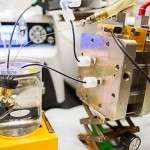
Solar power could be increased tenfold without additional storage in the near future. A team of Harvard scientists and engineers demonstrated a rechargeable battery that could make storing electricity from intermittently available energy sources, like sun and wind which is safe and cost-effective for both residential and commercial use. Much of the nation’s energy policy is premised on the assumption that clean, renewable energy, such as wind and solar power, will require huge quantities o...
More
Posted in Uncategorized

How flu viruses gain the ability to spread

New study reveals the soft palate is a key site for evolution of airborne transmissibility. Researchers from MIT and the National Institute of Allergy and Infectious Diseases (NIAID) made the surprising finding on Flu virus, while examining the H1N1 flu strain, which caused a 2009 pandemic that killed more than 250,000 people Scientists have discovered that the soft palate which is the soft tissue at the back of the roof of the mouth, plays a key role in viruses’ ability to travel through ...
More
Posted in Uncategorized

Combination drug therapy shrinks pancreatic tumors in mice

A combination of two drugs appears to be effective at shrinking pancreatic cancers in laboratory mice Pancreatic cancer is one of the most deadly of all human cancers, and its incidence is increasing. A combination of two drugs, one already approved by the Food and Drug Administration, appears to be effective at shrinking pancreatic cancers in laboratory mice, according to a new study by researchers at the Stanford University School of Medicine. The drugs, which affect the structure and fu...
More
Posted in Uncategorized

Cheaper, Faster, More Accurate Test to Identify Gene Defects in Heart Patients

Stanford researchers have designed a new technique to test cardiac patients for any genes that might be causing problems. This new technique could eventually enable doctors to diagnose genetic heart diseases by rapidly scanning more than 85 genes known to cause cardiac anomalies. For the subset of heart patients whose illness isn’t caused by a lifetime of cigarettes, trans fats or high glycemic foods, a new genetic test developed at the Stanford University School of Medicine may be able to...
More
Posted in Uncategorized

Telomere Changes Predict Cancer

A simple blood test may be able to predict cancer years before a diagnosis. A distinct pattern in the changing length of blood telomeres, the protective end caps on our DNA strands, can predict cancer many years before actual diagnosis, according to a new study from Northwestern Medicine in collaboration with Harvard University. "Understanding this pattern of telomere growth may mean it can be a predictive biomarker for cancer," Dr. Lifang Hou, the lead study author and a professor of prev...
More
Posted in Uncategorized

Penn scientists make breakthrough in Alzheimer’s disease research

Scientists reveal a cure for Alzheimer's disease may be closer than we thought. University of Pennsylvania researchers have made some exciting strides in the fight against Alzheimer's and they hope the discoveries will lead to a delay in the onset of the disease. Alzheimer's disease is a heartbreaking condition for both patients and their family members. Almost half the people who live to be 85 years old will develop Alzheimer's disease. Dr. Lee and Dr. John Trojanowski have lead the wa...
More
Posted in Uncategorized

Scientists produce cancer drug from rare plant in lab

Stanford scientists produce cancer drug from rare plant in lab to benefit human health. Elizabeth Sattely, an assistant professor of chemical engineering at Stanford, and her graduate student Warren Lau have isolated the machinery for making a widely used cancer-fighting drug from an endangered plant. Many of the drugs we take today to treat pain, fight cancer or other diseases were originally identified in plants, some of which are endangered or hard to grow. In many cases, those plants a...
More
Posted in Uncategorized

A revolutionary way to treat acne with nanoparticles

Lauric acid – a natural product found in coconut oil and human breast milk -- shines as a possible new acne treatment. A revolutionary and Innovative system of using ‘nano- bombs’ to treat acne has been developed by Dissaya Nu Pornpattananangkul, a doctoral bioengineering student at the University of California San Diego . Common acne also known as "acne vulgaris," afflicts more than 85 percent of teenagers and over 40 million people in the United States and current treatments have undesir...
More
Posted in Uncategorized

Israeli Mini-Scanner Can Tell The Difference Between Food, Drink or Pills

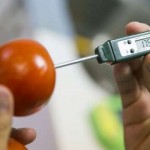
An Israeli start-up has launched a pocket device which analyses instantly the composition of food, drink, medication or other objects. It is the first molecular sensor that fits in the palm of your hand. The process it uses is simple. Its SCiO tool sends data on the chemical makeup of a substance to the user's smartphone, where a variety of applications will present the results. The SCiO does not need physical contact with the substance being tested because it uses a beam of light in wh...
More
Posted in Uncategorized

Personalized heart models for surgical planning

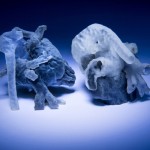
A new system can convert MRI scans into 3D-printed, physical models in a few hours. Researchers at MIT and Boston Children’s Hospital have developed a system that can take MRI scans of a patient’s heart and, in a matter of hours, convert them into a tangible, physical model that surgeons can use to plan surgery. The models could provide a more intuitive way for surgeons to assess and prepare for the anatomical idiosyncrasies of individual patients. MRI data consist of a series of cross ...
More
Posted in Uncategorized

Aspirin’s disease-fighting abilities

A new study provides key insights into aspirin's disease-fighting abilities. A recent study led by researchers at the Boyce Thompson Institute (BTI) shows that salicylic acid, an active metabolite of aspirin, blocks HMGB1, an inflammatory protein associated with a wide variety of diseases. Aspirin is one of the oldest and most commonly used medicines, but many of its beneficial health effects have been hard for scientists and physicians to explain. Researchers have identified a key targ...
More
Posted in Uncategorized

Penn Research Simplifies Recycling of Rare-earth Magnets

Chemical technology can instantaneously separate elements and enable a smaller scale recycler. The latest news from researchers at the University of Pennsylvania is that they have pioneered a process that could enable the efficient recycling of two metals, neodymium and dysprosium. These elements comprise the small, powerful magnets that are found in many high-tech devices. Despite their ubiquity in consumer electronics, rare-earth metals are, as their name suggests, hard to come by. Mi...
More
Posted in Uncategorized

Drug disarms deadly C. difficile bacteria without destroying healthy gut flora

Scientists find way to disarm deadly bacteria without destroying the good ones in your gut. The new discovery of a drug that blocks the intestinal pathogen without killing resident, beneficial microbes may prove superior to antibiotics, currently the front-line treatment for infection. Nearly half a million Americans get infected in a single year by Clostridium difficile, a dangerous bacteria that causes life-threatening diarrhea. It kills 15,000 people a year. It's the most common cause o...
More
Posted in Uncategorized

Building a brain from the inside out

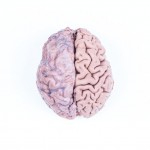
Researchers at UC San Francisco have succeeded in mapping the genetic signature of a unique group of stem cells in the human brain that seem to generate most of the neurons in our massive cerebral cortex. The human cerebral cortex contains 16 billion neurons, wired together into arcane, layered circuits responsible for everything from our ability to walk and talk to our sense of nostalgia and drive to dream of the future. In the course of human evolution, the cortex has expanded as much as...
More
Posted in Uncategorized

Paralyzed man walks again after cell transplant

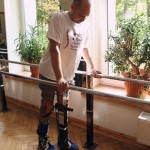
The world's first cell transplant enables paralyzed man to walk. A ground-breaking cell transplant, the world's first, was carried out by surgeons in Poland in collaboration with scientists in London on Darek Fidyka who was paralyzed from the chest down after a brutal knife attack in 2010 left with an 8mm gap in his spinal column. He showed no sign of recovery despite many months of intensive physiotherapy. Darek's injuries were so severe that no level of therapy could give him feeling bac...
More
Posted in Uncategorized

Genetic investigation of Blood Pressure Regulation

A new study pinpoints several gene networks closely linked to the regulation of blood pressure. Framingham Heart Study launched a major initiative to identify and study the genes underlying cardiovascular and other chronic diseases in individuals as this research could lead to new treatments and better strategies for disease prevention. The study, which takes a close look at networks of blood pressure-related genes is published in the journal Molecular Systems Biology. More than one bil...
More
Posted in Uncategorized

Kidney Transplant Breakthrough

Yokoo and his team who have found a way to grow a full-sized kidney using stem cells. The American Cancer Society estimates there will be 61,000 new cases of kidney cancer in the United States this year. About 14,000 Americans will die from the disease in 2015. Kidney cancer is rare in people under the age of 45. The average age in the United States for diagnosis is 64. Still, there are more than 100,000 people in the United States awaiting kidney transplants, according to the National Kidney...
More
Posted in Uncategorized

Vertical Farming

An eco-friendly architectural concept for cultivating food within skyscrapers. Dickson Despommier, a microbiologist and professor of environmental health sciences at Columbia University, is credited with popularizing the concept of vertical farming. It is estimated that over the next four decades, our population will increase by 3 billion people and that 80% of us will be living in cities Many scientists are concerned that the amount of land required to feed us in the future will not be...
More
Posted in Uncategorized

Drawing in the third dimension

Storybooks and graphic novels could soon be three dimensional. A new software platform from small business Mental Canvas reimagines drawing in the digital age. The company has introduced a new concept of picture books and graphic novels which are not flat two dimensional but could let us spin the whole story in a three dimensional setup. The company believes that digital illustration does not enhance the sketch value whereas if the image is presented in 3D, it acts as a communication tool ...
More
Posted in Uncategorized

Ultra-Flexible Devices to Monitor the Brain

Brain activity can be monitored with tiny flexible electronics which could roll up to fit in a pocket. Charles Lieber, a nanoscientist and nanotechnologist at Harvard University, has designed latest ultra-thin electronics flexible enough to get stuffed into the needle of a syringe with a diameter as small as the average width of a human hair. Currently available flexible electronics are usually flat sheets, designed to lie on surfaces. They help to monitor and manipulate living tissue but ...
More
Posted in Uncategorized

OncoSec’s novel intratumoral therapies

OncoSec Medical Incorporated ("OncoSec") has designed "smart" catheter-based devices to perform minimally invasive intratumoral immunotherapy. The new catheter-based electrodes are designed to be compatible with standard medical instruments which can access deep visceral tumors and are capable of treating the tumor. These all-in-one devices have the ability to inject a DNA-based agent while deploying electrodes to perform electroporation in a single procedure. They have an adjustable ne...
More
Posted in Uncategorized

Facial replacement via 3D printing

Amazing innovative technology was created to rebuild the human face with 3D printing in silicone. English chemist Frederick Kipping did his pioneering work on the study of the organic compounds of silicon which led to synthetic rubber and silicone-based lubricants used to enhance the decollete of dancers, seal fish tanks and now rebuild the human face. Industrial designer Tom Fripp was contacted by researchers at the University of Sheffield and asked if it would be possible to print struct...
More
Posted in Uncategorized

Rubber That Can Use Energy from body movements to Generate Power

Power-generating rubber material could harness walking and other movement to charge electronic devices. Researchers at Princeton University have recently invented a new energy-harvesting rubber material composed of ceramic nanoribbons that could harvest energy from your breathing and walking. This material is composed of ceramic nanoribbons embedded onto silicone rubber sheets which generates electricity when flexed and is highly efficient at converting mechanical energy to electrical ener...
More
Posted in Uncategorized

Sugar Preserves Vaccines without Refrigeration

A sugar–glass cartridge can store vaccines without refrigeration. Scientists at Nova Bio-Pharma Technologies and the University of Oxford have developed a new way of preserving vaccines without refrigeration by sealing the vaccine's live viruses inside glass made of sugar. Currently, vaccines need to be stored in a fridge or freezer which means there is a need for electricity supply and refrigeration trucks for distribution as exposure to inappropriate temperatures can reduce the vaccine p...
More
Posted in Uncategorized

Live imaging reveals how wound healing influences cancer

"See-through" larvae of zebrafish reveal how wound healing leads to skin cancer. Genetically modified larvae of zebrafish were studied by the researchers in the United Kingdom and Denmark   to watch the relationship between wound-associated inflammation and melanoma. The cellular events and changes were observed by live imaging with a special confocal laser-scanning microscope. The experiments showed that neutrophils, the protective inflammatory cells of the body's immune system, gets d...
More
Posted in Uncategorized

Smart Bird – the ultra-light robot bird

A flying robot that imitates a bird has been created. Plenty of robots can fly but none can fly like a real bird. Markus Fischer and his team at Festo built SmartBird, a large, lightweight robot, modeled on a seagull that flies by flapping its wings. This invention of a flying robot imitates a bird. It takes off, lands and flies like a real bird. The flying robot has a two-meter wingspan, and is made of a lightweight (450 gram) carbon-fiber skeleton body. It uses hybrid drive technol...
More
Posted in Uncategorized

NOAA’s Science On a Sphere is a room sized, global display system

Novel and revolutionary Science On a Sphere® (SOS) is an educational tool that uses computers and video projectors to help illustrate Earth System science to people of all ages. This tool has been developed by Dr. Sandy MacDonald along with researchers at NOAA. Unique and captivating, it's been used in science museums, visitor centers, zoos, aquariums, laboratories, and schools around the world. It consists of a spherical projection system created by NOAA which presents high-resolution vid...
More
Posted in Uncategorized