
In many operating rooms, one of the most important numbers is still an educated guess: how much blood has the patient lost? Chiang Mai University in Thailand says it has built an AI system to replace that guess with a measurement. In a university announcement dated 2 November 2026, the team introduced ESTIMATA-EX, which estimates blood loss and counts blood-soaked surgical materials from photos taken on a smartphone or tablet. This article covers the announcement as news and is not medical ...
More
Article Type
Newcastle and Ufonia Trial Dora, an Empathetic AI Phone Assistant
Picture a follow-up phone call that never gets rushed, never runs late and never depends on whether a clinic has enough staff that week. That is the idea behind Dora Care, a generative AI assistant now being trialled in the UK's National Health Service. According to a Newcastle University press release published on 6 November 2026, the assistant holds spoken telephone consultations with patients who live with a long-term illness, helping clinicians keep track of how they are doing. This art...
More
Battery that self destructs in Water in 30 Minutes

A breakthrough invention in developing transient batteries has been developed: a self-destructing battery that completely dissolves in water without leaving behind any trace.
Researchers at Iowa State University have designed a one-millimeter-thick, five-millimeter-long and six millimeters wide battery that use typical lithium-ion technology. The transient battery is made up of eight layers, including an anode, a cathode and the electrolyte separator, all wrapped up in two layers of a polyvi...
More
Altered: The Innovative Faucet Solution that Uses 98% Less Water

The Altered Company has created a nozzle that uses 2% of your normal water usage. It’s flexible, designed to fit over any tap, customizable, with two modes depending on the needed amount of water, and an environmentally conscious solution to the everyday problem of water waste.
Water stress is a global issue that affects one billion people at present, and will impact an estimated 3 billion people in 2020. Furthermore, when one uses a regular tap, much of the water simply bounces off the surfa...
More
Walk-Man – The Humanoid Search and Rescue Robot

Scientists from the Istituto Italiano di Tecnologia (Italian Institute of Technology) and University of Pisa in Italy have developed an anthropomorphic robot that can use human tools and interact with its surrounding environment in the same way as a human. The researchers hope that the robot, colloquially known as Walk-Man, will find use in search and rescue situations that are too dangerous for humans to engage in. Lead researcher Nikos Tsagarakis believes Walk-Man will be well accommodated in ...
More
“Li-Fi” 100 Times Faster Than “Wi-Fi”

Li-fi is a new means of delivering data using visible spectrum as against the radio waves used by most other methods. This new technology has already been tested in a functional office. What makes Li-fi stand apart is the astonishing speed at which can deliver access to the internet, often 100 times faster compared to Wi-fi at a mind-boggling speed of 1Gbps. You need a light source similar to an LED bulb, a photo detector and an internet connection to use Li-fi. The visible spectrum of light use...
More
This Saltwater-Powered Lamp can also charge your cell phone!

Lighting is something that we take for granted in the developed world, but there are still many areas around the globe where people lack reliable access to light at night. Around one-fifth of the world’s population has no access to electricity. They often use kerosene lamps, which contribute to indoor pollution and have to be refilled with oil regularly. Also they are bad for the environment and human health. To solve this problem, an engineering start-up called SALt(Sustainable Alternative Ligh...
More
Porous Liquid.

Researchers in the School of Chemistry and Chemical Engineering at Queen’s, along with colleagues at the University of Liverpool, UK, and other, international partners, have invented the new liquid and found that it can dissolve unusually large amounts of gas, which are absorbed into the ‘holes’ in the liquid. Porous materials, as their name would suggest, are materials with holes. These are materials that look totally solid to the naked eye, but on a molecular level, contain lots of empty space...
More
Old laptop batteries could power slums.

Old laptop batteries still have enough life in them to power homes in slums, researchers have said. An IBM study analyzed a sample of discarded batteries and found 70% had enough power to keep an LED light on more than four hours a day for a year. Researchers said using discarded batteries is cheaper than existing power options, and also helps deal with the mounting e-waste problem.
The IBM team created what they called an UrJar, a device that uses lithium-ion cells from the old batteries to ...
More
Cyborg Rose: Researchers implant electronic circuits inside plants.

A team of Swedish researchers, by using living roses, has created analogue and digital electronic circuits inside living plants, calling them "electronic plants". The experiment demonstrates wires, digital logic and displays elements fabricated inside the plants that could develop new applications for organic electronics and new tools in plant science. The group at Linkoping University in Sweden, under the leadership of professor Magnus Berggren, used the vascular system of living roses to build...
More
Battery-free pacemaker powered by the heart itself
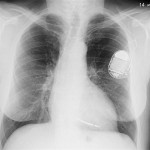
Scientists are developing next-generation battery-free implantable pacemakers that may be powered by an unlikely source, the heart itself. The advancement is based upon a piezoelectric system that converts vibrational energy, created inside the chest by each heartbeat, into electricity to power the pacemaker. "Essentially, we're creating technology that will allow pacemakers to be powered by the very heart that they are regulating," said M Amin Karami, assistant professor of mechanical engineeri...
More
3D printed objects may be toxic
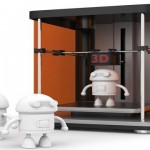
Parts produced by some commercial 3D printers may be toxic, according to a new study that raises concerns about how to dispose of parts and waste materials from the devices which are becoming increasingly popular. Researchers at the University of California, Riverside studied two common types of 3D printers, one that melts plastic to build a part, and another that uses light to turn a liquid into a solid part. They found that parts from both types of printers were measurably toxic to zebrafish e...
More
Researchers Discover How Termites Ventilate

Termites build massive, empty structures above their underground nest in order to control their local environment.
Hunter King and Samuel A. Ocko, under the supervision of Applied Mathematics professor Lakshminarayan Mahadevan discovered the key to ventilation in the mounds of an Indian termite species.
It is well known that termites build such massive, empty structures above their underground nest in order to control their local environment. The researchers conducted tests on live and dea...
More
New Technology to Monitor Cancer Cells
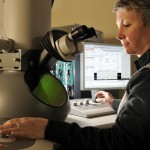
Deborah Kelly, a biologist at Virginia Tech Carilion Research Institute, has developed a "microchip-based toolkit" to watch the breast cancer affiliated BRCA1 gene act inside a human breast cancer cell. This new technology allows scientists to watch cancer cells in action at unprecedented resolution. They can now peer closely into the world of cells and molecules within a native, liquid environment. Kelly and colleagues have developed a way to isolate biological specimens in a flowing, liquid en...
More
Scientists paint quantum electronics with beams of light.
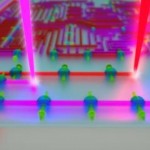
A team of scientists from the University of Chicago and Penn State University have accidentally discovered a new way of using light to draw and erase quantum-mechanical circuits in a unique class of materials called topological insulators. Researchers may be able to "paint" quantum electronics with beams of light.
The electrons in topological insulators have unique quantum properties that many scientists believe will be useful for developing spin-based electronics and quantum computers. Howev...
More
Bluesmart Carry-on smart suitcase knows its location and weighs itself.

Bluesmart, the world's first smart, connected carry-On, is a suitcase that includes proximity tracking to alert you if you walk away from your luggage, a TSA-approved lock that's controlled by your smartphone and a built-in battery to charge your gadgets along with a host of other features. There's also a scale integrated into the handle that will tell you how much your bag weighs just by lifting it off the ground, and a quick-access compartment for storing your laptop. With an abundance of sens...
More
Synthetic tumor environments add realism to Cancer research
Scientists at the University of Illinois have developed a new technique to create hydrogels, which can realistically and quickly recreate microenvironments found across biology. To illustrate the potential of their method, the Illinois team mixed breast cancer cells and macrophages that signal cancer cells to spread and grow into a tumor. They were able to observe how differently cells act in the three-dimensional, gel-like environment, which is much more like body tissues than the current resea...
More
NASA Confirms Evidence That Liquid Water Flows on Mars

New findings from NASA's Mars Reconnaissance Orbiter (MRO) provide the strongest evidence yet that liquid water flows intermittently on present-day Mars.
NASA researchers using an imager aboard the Mars Reconnaissance Orbiter confirmed the watery flows by looking at light waves returned from seasonal dark streaks on the surface, long suspected to be associated with liquid water.
They detected signatures of hydrated minerals on slopes where mysterious streaks are seen on the Red Planet. The...
More
Stretchy, origami battery powers Samsung smartwatch
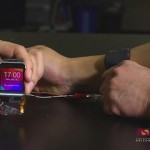
Stretchy batteries inspired by origami could power smartwatches and other wearable electronics.
Newly introduced, stretchy origami-style batteries could power the wearable devices of the future, say researchers who have managed to power a Samsung Galaxy Gear 2 with a battery of their own invention.
The lithium-ion batteries developed by a team from Arizona State University are capable of stretching to 150 percent of their natural size and of powering existing smartwatches.
Scientists wo...
More
Harvard Scientists Make Solar Power Production More Efficient
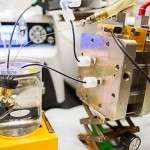
Solar power could be increased tenfold without additional storage in the near future.
A team of Harvard scientists and engineers demonstrated a rechargeable battery that could make storing electricity from intermittently available energy sources, like sun and wind which is safe and cost-effective for both residential and commercial use.
Much of the nation’s energy policy is premised on the assumption that clean, renewable energy, such as wind and solar power, will require huge quantities o...
More
AquaVenture’s SeaBird – Fastest Personal Submarine
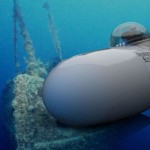
Sea Bird is one of the fastest personal submersible vehicles today, without a motor of its own.
An innovative and exciting way to satisfy your adventurous needs and see what lies beneath the waves, Seabird is the latest personal submarine SeaBird from Aquaventure’s.
The company recently announced a new version of its SeaBird submarine .This unique submarine doesn’t rely on an engine in order to move through water. It is attached to a boat on the surface via a 400 feet long cable and is tow...
More
Amazing Batteries that Run on Any Liquid

A new, “organic” battery has been invented which generates a charge within 10 seconds and will last anywhere from two days to a week depending on the liquid.
The world’s first chlorophyll organic battery has been invented by Chungpin Liao, a professor at the Graduate School of Electro-Optic and Material Science of National Formosa University in Taiwan.
He claims that his battery can be filled up with almost anything, including water and urine, and it can provide electricity from two to sev...
More
Spray-On Pancake Batter

Imagine if you had a ready-to-spray pancake batter--how easy would it be to create a delicious pancake breakfast?
An Austin-based company has come out with a novel product which is essentially that: pancakes in an aerosol can.
We all like the easy way out sometimes, especially when it comes to cooking meals. But making those meals from scratch with all the ingredients, all that preparation, the utensils, the dishes and the mess to clean up are tiresome and time consuming.
Everyone loves...
More
New Technology Creates “Cyborg Insects”

Scientists at the University of California demonstrated a new technology for creating "cyborg insects." That is, beetles implanted with miniaturized electronics that allows the insects to be controlled.
The flying beetle is powered by a wireless signal from a mobile transmitter that controls the insect. Varying impulses trigger an appropriate response from the beetle so that it flies according to its handler.
The movements of flying insects is controlled using a radio transmitter and a min...
More
Amazing Water Drop Lenses

A new discovery has led to the creation of liquid optical lenses.
Bruno Berge, physicist and inventor, has created liquid optical lens by a process known as electro-wetting. In this process, a water drop is deposited on a metal substrate and covered by a thin insulating layer. When a voltage is applied to the metal, it modifies the angle of the liquid drop.
The liquid lens is comprised of two liquids, water and oil; one is a conductor while the other is an insulator.
A variation in the ...
More
Painless Glaucoma Diagnostic Device

BioCOM Inc. has made a convenient pain-free tonometry device to detect glaucoma.
The latest Glaucoma IOP Eye Test THROUGH THE EYELID technology by BiCOM Inc. with the DIATON tonometer enables any healthcare professional to quickly and painlessly determine whether a patient has glaucoma and take preventive measures or determine treatment plans to save eyesight.
In a study published by the British Journal of Ophthalmology, the number of people with glaucoma worldwide is expected to be 79.6 m...
More
Non-Toxic Sterilizing Spray Invented

An innovative product promises dirt and germ free surfaces without using toxic coatings.
This latest science invention from the Saarbrücken Institute for New Materials in Turkey and patented by Nanopool GmbH Germany is a spray-on invisible thin glass coating that sterilizes, protects and strengthens surfaces. It is a flexible and breathable spray-on glass film which repels water, dirt, stains, fungus, bacteria and viruses.
The film is approximately 500 times thinner than a human hair and h...
More